
Overview
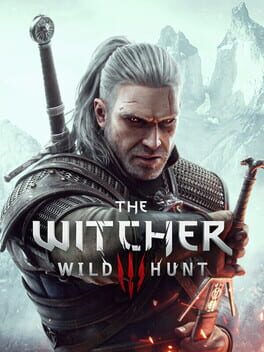
When CD Projekt Red launched The Witcher 3: Wild Hunt in 2015, it did more than set a new benchmark for open‑world design; it also cemented a vocal identity that resonated across continents. Central to that identity was Jacek Rozenek, whose gravelly Polish delivery of Geralt of Rivia became an instant cultural touchstone for fans in Poland and beyond. Over the past decade, Rozenek’s performance has been replayed in countless fan‑made videos, livestreams, and even academic analyses of character embodiment, turning his voice into a brand asset as valuable as the game’s narrative depth.
In recent years, the industry has witnessed a surge in artificial‑intelligence‑driven voice synthesis, a trend accelerated by the pandemic‑induced shift toward remote production and the ever‑tightening budgets of AAA studios. While Hollywood studios have flirted with AI‑generated dialogue for background characters, the gaming sector has been more cautious, aware that player immersion can shatter at the slightest hint of uncanny‑valley audio. CD Projekt Red, however, has been quietly experimenting with these tools, first to streamline localisation pipelines for The Witcher 2 and later to augment ambient NPC chatter in Cyberpunk 2077. The current announcement sits at the intersection of necessity—Rozenek’s post‑stroke vocal changes—and ambition, as the studio seeks to prove that AI can preserve a beloved performance without compromising authenticity.
What Happened?
The upcoming expansion, Songs of the Past, slated for release in early 2025, marks the first major post‑launch content for The Witcher 3 that openly incorporates AI‑assisted voice work. CD Projekt Red confirmed a partnership with a specialised AI voice generation firm that specialises in deep‑learning models trained on high‑fidelity actor recordings. By feeding the system thousands of hours of Rozenek’s original lines, the algorithm has learned the subtle inflections, breath patterns, and emotional cadence that define Geralt’s Polish voice. The studio then used the model to “fill in” gaps where Rozenek’s post‑stroke recordings fell short, effectively stitching together a seamless vocal performance that mirrors his pre‑stroke timbre.
Crucially, Rozenek himself returned to the studio for a series of supervised recording sessions, providing fresh material that the AI could blend with the legacy dataset. According to a statement from CD Projekt Red’s localisation lead, the process involved a rigorous quality‑control loop where sound engineers manually compared AI‑generated takes against the original archive, rejecting any output that exhibited tonal drift or robotic artefacts. The result, the studio claims, is a Geralt voice that feels “identical to the 2015 experience” while respecting the actor’s current health limitations. This hybrid approach—human‑in‑the‑loop AI—sets a new precedent for how studios might handle voice talent who face unforeseen medical challenges.
Analysis
From a market perspective, the move signals a strategic hedge for CD Projekt Red against future talent volatility. By investing in a proprietary AI voice model, the publisher not only safeguards the continuity of its flagship IP but also creates a reusable asset for upcoming projects, including potential remasters of The Witcher 2 and The Witcher 3 on next‑gen consoles. Competitors such as Ubisoft and Square Enix have publicly explored similar technologies, yet few have demonstrated a public‑facing implementation that directly addresses a real‑world health issue. This could give CD Projekt Red a competitive edge in localisation speed, especially as the industry eyes the burgeoning Asian markets where high‑quality dubbing is a decisive factor for sales.
Technical hurdles remain, however. AI‑generated speech still struggles with dynamic emotional ranges, and any misstep can alienate a community that is notoriously vocal about authenticity. Moreover, the ethical debate surrounding the use of an actor’s digital likeness continues to evolve; unions in Europe are already drafting guidelines to ensure fair compensation when AI reproduces an actor’s voice beyond the original contract scope. CD Projekt Red’s transparent collaboration with Rozenek may serve as a blueprint for consent‑driven AI usage, potentially influencing future collective bargaining agreements across the industry.
XPLog Opinion
At XPLog UK we view the Songs of the Past AI integration as a bold, if cautious, experiment that could redefine the relationship between talent and technology. While purists may argue that any synthetic overlay dilutes the organic charm of Rozenek’s performance, the practical reality is that the alternative—a silent Geralt or a noticeably altered voice—would have fractured the immersive continuity that fans have defended for over a decade. By placing the actor at the centre of the process and using AI as a supportive tool rather than a replacement, CD Projekt Red demonstrates a responsible path forward that balances artistic integrity with pragmatic production needs.
Final Thoughts
Ultimately, Songs of the Past will be judged not just on its narrative ambitions but on how convincingly it restores Geralt’s iconic Polish timbre. If the AI‑enhanced voice passes the community’s scrutiny, CD Projekt Red will have unlocked a scalable solution for preserving legacy performances across its catalogue, setting a new industry standard for post‑stroke or post‑retirement voice continuity. Players should keep an eye on the official launch window in Q1 2025, as well as on the forthcoming developer diaries that promise deeper insight into the AI pipeline—a development that could reshape localisation strategies for the next generation of RPGs.