
Overview
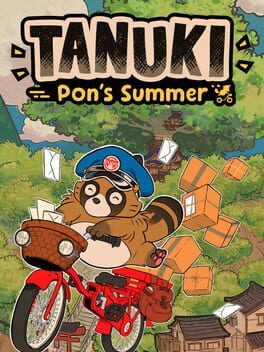
When the gaming calendar is dominated by heavyweight releases and the endless churn of live‑service updates, a modestly sized indie title can feel like a breath of fresh air. Tanuki: Pon's Summer, developed by the Japanese studio Tanuki Works, lands at a moment when players are craving experiences that blend nostalgia with novel mechanics, and it does so with a palette as bright as the season it celebrates. The game positions itself as a hybrid of the beloved mail‑delivery simulators that have quietly cultivated a dedicated following and the high‑octane, trick‑laden world of bike‑based extreme sports, reminiscent of the early 2000s Tony Hawk series but reimagined on two wheels. By anchoring its narrative around the restoration of a shrine before the waning days of summer, the developers tap into a cultural motif deeply rooted in Japanese tradition, where seasonal transitions often carry symbolic weight, thereby granting the title an emotional resonance that extends beyond mere gameplay loops.
Industry analysts have noted a resurgence of “summer‑themed” releases, a trend that began in the late 2010s when publishers discovered that seasonal branding could boost discoverability on crowded storefronts. Tanuki: Pon's Summer rides this wave, but it distinguishes itself by embedding its seasonal urgency into core design rather than treating it as a superficial veneer. Moreover, the title arrives at a juncture where indie developers are increasingly leveraging cross‑genre experimentation to stand out; titles like *Stardew Valley* blended farming with RPG elements, while *A Short Hike* merged exploration with narrative charm. Tanuki Works follows suit, marrying the procedural satisfaction of delivering parcels with the kinetic joy of performing BMX flips, thereby appealing to both the methodical completionist and the adrenaline‑seeking trickster within the player base.
What Happened?
On 10 November 2026, Tanuki Works announced the worldwide launch of Tanuki: Pon's Summer across PC, Nintendo Switch, and PlayStation 5, with a simultaneous release on Xbox Series X|S slated for the following quarter. The announcement was accompanied by a vibrant trailer showcasing the titular raccoon‑dog protagonist, Pon, weaving through sun‑drenched streets, executing complex bike tricks, and delivering parcels to a cast of whimsically designed townsfolk. In a developer diary released alongside the trailer, lead designer Haruka Saito explained that the game’s core loop was iterated over three years, beginning as a simple delivery simulator before the team introduced BMX mechanics to “inject a sense of kinetic freedom that mirrors the fleeting energy of summer.” The studio also disclosed that the game’s art direction draws heavily from *Shōwa‑era* pop culture, employing saturated colors and hand‑drawn textures to evoke a nostalgic yet fresh aesthetic.
The launch package includes a robust set of post‑launch support promises: a seasonal “Festival Pass” that will unlock time‑limited shrine restoration challenges, a community‑driven mail‑route editor, and cross‑platform leaderboards that track both delivery efficiency and trick scores. Tanuki Works has also partnered with several Japanese cultural institutions to feature authentic shrine‑restoration lore, ensuring that the narrative stakes feel grounded in real‑world tradition. Early pre‑order numbers suggest a strong uptake, particularly on the Switch, where the title’s portable nature aligns with the platform’s demographic of on‑the‑go gamers seeking bite‑sized yet deep experiences.
Analysis
From a market perspective, Tanuki: Pon's Summer exemplifies the strategic sweet spot that mid‑tier indie studios have been targeting: a product that is inexpensive to develop relative to AAA blockbusters yet offers enough unique selling points to carve out a distinct niche. The hybridization of delivery simulation and BMX stunt mechanics taps into two proven revenue streams—micro‑task completion loops that encourage repeat play and skill‑based competitive scoring that fuels community engagement. This dual‑layered design is likely to extend the game’s lifecycle, as players will gravitate toward both the “casual” mode of parcel delivery and the “hardcore” mode of perfecting trick combos, a dichotomy that has historically driven sustained sales for titles like *Rocket League* and *Fall Guys*.
Technically, the game’s use of a lightweight, custom engine optimized for both high‑frame‑rate physics on consoles and efficient rendering on the Switch demonstrates a savvy allocation of resources. By avoiding the overhead of a heavyweight engine, Tanuki Works can push more frequent updates without the typical bottlenecks that plague larger studios. Competitively, the title enters a crowded space of summer‑themed releases, but its cultural anchoring and cross‑genre appeal give it a defensible position against both indie and mid‑tier competitors. Should the post‑launch content roadmap deliver on its promises, we can anticipate a virtuous cycle of community‑generated content, increased visibility on storefront algorithms, and potentially even esports‑style events centered on trick‑ranking challenges.
XPLog Opinion
At XPLog UK, we view Tanuki: Pon's Summer as a bold statement that indie developers can still surprise the market with fresh, genre‑blending concepts that feel both nostalgic and forward‑looking; the game’s clever marriage of everyday chores with extreme sport thrills not only broadens its appeal but also signals a maturation in how indie studios approach thematic cohesion, turning a simple summer backdrop into a narrative engine that drives player motivation and community participation.
Final Thoughts
In sum, Tanuki: Pon's Summer arrives as a sun‑lit beacon for players yearning for a game that balances relaxation with high‑energy challenge, and its success could very well influence how future indie titles leverage cultural motifs to deepen engagement. Keep an eye on the upcoming Festival Pass updates slated for December and the planned cross‑platform tournament slated for early 2027, as these milestones will be key indicators of the game’s staying power within an increasingly competitive summer release window.