
Overview
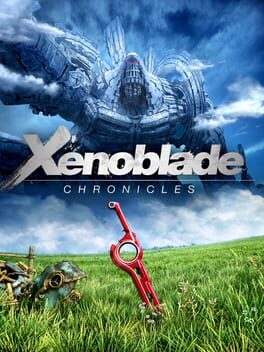
When Nintendo announced the next‑generation version of its seminal 1998 title, The Legend of Zelda: Ocarina of Time, the industry buzzed not only about the graphical overhaul but also about the mysterious web of development partners that have quietly stitched themselves into Nintendo’s most treasured franchises. The original Ocarina of Time set a benchmark for 3‑D adventure design, narrative pacing, and puzzle integration, and its upcoming incarnation for the as‑yet‑unnamed Switch 2 promises to marry that legacy with the power of modern hardware. Yet, behind the curtain, a coalition of seasoned developers is lending their expertise—most notably Monolith Soft, the studio behind Xenoblade Chronicles, and now, surprisingly, Bandai Namco, a heavyweight known for its own flagship properties ranging from Tekken to the Souls series.
This convergence of talent is emblematic of a broader shift in the console ecosystem: first‑party publishers increasingly outsource specialized tasks to external studios to accelerate timelines, mitigate risk, and inject fresh technical perspectives. Over the past decade, Nintendo has cultivated a collaborative model, partnering with studios such as PlatinumGames for Bayonetta 2 and Square Enix for the upcoming Final Fantasy VII Remake on Switch. The inclusion of Bandai Namco—long an ally in publishing but rarely a direct contributor to Nintendo’s core IPs—signals an escalation in that strategy, suggesting that Nintendo is willing to tap into the deep pipeline of visual effects and gameplay systems that Bandai Namco has honed across its own high‑profile releases.
What Happened?
Monolith Soft publicly confirmed its involvement in the Ocarina of Time remake earlier this month, detailing contributions that spanned game design, programming, and graphics. Their role, while substantial, was framed as an extension of the studio’s previous work on the Zelda franchise, including the acclaimed Tears of the Kingdom expansion. In a follow‑up interview, a senior producer at Bandai Namco stepped forward to disclose the company’s participation, emphasizing that their team focused on “various visual elements,” a phrase that, while vague, hints at a range of responsibilities from high‑fidelity texture pipelines to dynamic lighting and particle effects that will bring Hyrule’s iconic locales to life on the Switch 2’s upgraded GPU.
The announcement came via a press release that highlighted Bandai Namco’s legacy of pushing graphical boundaries in titles such as Dark Souls III and the recent Tekken 8. By aligning those capabilities with Nintendo’s desire to preserve the delicate balance of nostalgia and innovation, the partnership aims to ensure that the remake not only looks spectacular but also retains the tight, responsive controls that made the original a benchmark for action‑adventure design. While Nintendo has not disclosed exact staffing numbers, industry insiders estimate that a dedicated “visual fidelity” pod of roughly 30–40 Bandai Namco engineers has been embedded within the larger development pipeline, working in tandem with Monolith’s engineers and Nintendo’s internal EPD team.
Analysis
The strategic inclusion of Bandai Namco in the Ocarina of Time remake could reshape the competitive dynamics of the console market in several ways. First, it underscores Nintendo’s willingness to blend in‑house craftsmanship with external technical muscle, a model that may become standard as the cost of AAA‑level visual fidelity escalates. By leveraging Bandai Namco’s expertise in shader optimization and real‑time rendering, Nintendo can deliver a product that rivals the visual polish of PlayStation 5 exclusives while still capitalizing on the nostalgic pull of a beloved classic. This hybrid approach also mitigates the risk of development bottlenecks that have plagued previous Nintendo‑led remakes, where limited internal resources sometimes led to delayed releases or compromised quality.
Second, the partnership may have ripple effects across the broader ecosystem of third‑party developers targeting Nintendo hardware. If Bandai Namco’s involvement proves successful, it could open doors for other heavyweight studios to contribute to Nintendo’s flagship titles, effectively blurring the line between first‑party and third‑party development. This could attract more AAA talent to the Switch platform, reinforcing its position as a viable home for high‑budget experiences and potentially extending the console’s lifespan beyond the typical three‑year cycle. However, the arrangement also raises questions about creative control; Nintendo’s brand identity is tightly curated, and an influx of external influence could challenge the studio’s traditionally insular design philosophy.
XPLog Opinion
From XPLog’s perspective, Bandai Namco’s quiet entry onto the Ocarina of Time stage is a bold statement that Nintendo is no longer content to rely solely on its internal muscle for legacy revivals. The move signals a pragmatic acknowledgment that the bar for visual fidelity has risen dramatically, and that delivering a truly next‑gen experience will require specialized talent that sits outside Nintendo’s historic development bubble. While purists may fear dilution of the original’s spirit, the synergy between Monolith’s deep familiarity with Zelda mechanics and Bandai Namco’s cutting‑edge visual pipeline could produce a remake that honors the past while finally giving it the graphical respect it deserves. In short, this collaboration could set a new benchmark for how classic IPs are resurrected in the modern era.
Final Thoughts
As the Switch 2’s launch window approaches, the Ocarina of Time remake stands as a litmus test for Nintendo’s evolving development model. The combined forces of Monolith Soft and Bandai Namco promise a version of Hyrule that is both technically stunning and faithful to its roots, while also hinting at a future where Nintendo’s flagship titles may routinely enlist heavyweight partners to meet the escalating expectations of a discerning player base. Keep an eye on Nintendo’s E3 showcase later this year for a hands‑on demo, and watch for further disclosures from Bandai Namco regarding the specific technologies they are deploying—details that will likely influence how other legacy franchises are approached across the industry.