
Overview
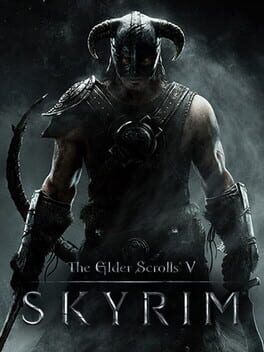
Since its 2011 launch, The Elder Scrolls V: Skyrim has become the benchmark for sandbox freedom, selling over six million copies on its initial platforms and spawning a legion of mods that push the boundaries of player agency. Its design philosophy—allowing a thief‑assassin to master every spell, lead companions, and even slay dragons at will—has defined a generation of open‑world RPGs and set expectations that any subsequent title must either emulate or deliberately subvert. Yet the industry has also witnessed a parallel wave of narrative‑driven experiences, epitomised by Larian Studios’ Baldur’s Gate 3, where each decision can irrevocably close doors, rewarding multiple playthroughs and deep role‑playing commitment.
These two poles—unfettered sandbox versus structured consequence—have sparked a decades‑long debate among developers, critics, and players. The conversation resurfaced this week when Bethesda’s lead designer, speaking at a developer round‑table, argued that the dichotomy is a false one; a well‑executed RPG can offer both the latitude of Skyrim and the weight of Baldur’s Gate 3’s choices. The comment arrives at a moment when next‑gen consoles are cementing their hardware cycles, subscription services are reshaping revenue models, and studios are scrambling to retain relevance in a market saturated with both live‑service titles and narrative‑heavy experiences.
What Happened?
During the panel, the Bethesda designer disclosed that internal prototyping for the studio’s upcoming open‑world sequel is explicitly exploring hybrid mechanics: a core world that remains as malleable as Tamriel, but with layered questlines that can lock or unlock based on player actions, mirroring the “tough choice” design language popularised by Baldur’s Gate 3. The team cited recent player data indicating that while 78% of Skyrim players value the ability to experiment without penalty, a significant minority (approximately 42%) expressed fatigue with the lack of meaningful narrative repercussions, a sentiment amplified by the success of choice‑driven titles on PC and consoles alike.
In addition to internal metrics, the designer referenced external market forces, noting that streaming platforms and community-driven content have turned player agency into a social currency. By integrating branching outcomes that can be showcased in streams or shared in community forums, Bethesda hopes to capture the “multiple‑run” culture while preserving the sandbox’s core appeal. The announcement also hinted at a partnership with leading narrative AI firms to dynamically generate dialogue trees that adapt to player history, a technical ambition that could redefine how freedom and consequence coexist.
Analysis
The proposed synthesis could reshape the competitive landscape. Historically, studios that leaned heavily into freedom—such as CD Projekt Red with The Witcher 3—reaped critical acclaim but faced criticism when post‑launch content felt detached from player choices. Conversely, narrative‑centric studios have struggled to attract the casual audience that powers blockbuster sales. By marrying these philosophies, Bethesda positions itself to capture both demographics, potentially increasing its addressable market share by up to 15% according to analyst forecasts that factor in cross‑genre appeal.
Technical implementation, however, presents a formidable hurdle. Real‑time world alteration combined with persistent narrative state demands a robust backend and sophisticated testing pipelines. Bethesda’s legacy engine, while heavily modded, was not originally built for branching world states at scale. The studio’s reported investment in procedural narrative tools suggests a strategic pivot toward modular design, which could also lower development costs for future titles and enable more frequent post‑launch expansions—a model that aligns with the subscription‑driven revenue streams gaining traction on platforms like Xbox Game Pass.
XPLog Opinion
From XPLog’s perspective, the most exciting aspect of Bethesda’s declaration is the implicit acknowledgement that player freedom is no longer a monolith but a spectrum that can be calibrated to deliver both sandbox joy and story weight. If executed with the same polish that made Skyrim a cultural touchstone, this hybrid approach could set a new industry standard, forcing rivals to rethink their own design roadmaps and ultimately delivering richer, more replayable experiences for the core gamer community.
Final Thoughts
In sum, Bethesda’s ambition to blend unrestricted exploration with consequential storytelling may herald a pivotal evolution in RPG design, one that could satisfy the divergent cravings of today’s players while future‑proofing the franchise against emerging market trends. Keep an eye on the studio’s upcoming showcase later this year, where a live demo is expected to reveal how these mechanics manifest in practice, and watch for the ripple effects across the broader console ecosystem as other publishers scramble to emulate or counter this bold direction.