
Overview
In a year dominated by sprawling open‑world epics and live‑service experiments, the resurgence of tightly choreographed swordplay has emerged as a quiet but potent counter‑trend. Capcom’s revival of the classic Onimusha franchise with Onimusha: Way of the Sword and the indie‑born marvel Phantom Blade Zero have both landed amid a market hungry for visceral, skill‑based combat that rewards precision over button‑mashing. The timing is significant: PlayStation’s renewed focus on narrative‑driven titles, Microsoft’s acquisition of several studios to broaden its catalog, and Nintendo’s pivot toward mature, action‑oriented experiences have collectively widened the arena for sword‑centric games to vie for the coveted Game of the Year accolade.
Historically, the sword‑fight genre has oscillated between cinematic set‑pieces—think Devil May Cry or Bayonetta—and methodical, timing‑focused systems like those found in Dark Souls. The last decade saw a lull in pure melee excellence, with developers often relegating swords to secondary roles in hybrid combat loops. The arrival of these two titles signals a renaissance, echoing the early 2000s era when developers first experimented with realistic weapon physics in titles such as Samurai Warriors and the original Onimusha. By marrying modern animation pipelines, responsive input, and deep narrative integration, both games are poised to reshape player expectations for what a sword‑centric action game can deliver.
What Happened?
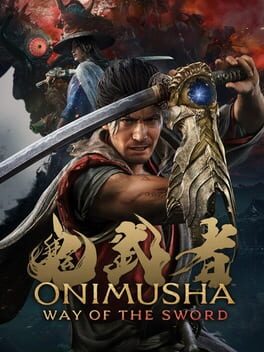
Capcom announced that Onimusha: Way of the Sword will launch across PlayStation 5, Xbox Series X|S, and PC later this winter, positioning the title as both a nostalgic homage and a forward‑looking reinvention. The studio highlighted a rebuilt combat engine that leverages haptic feedback and adaptive triggers to simulate the weight of a katana, while also introducing a “spirit‑fusion” system that allows players to channel historical Japanese mythos into temporary power‑ups. Early gameplay footage reveals layered enemy AI that forces players to read attack patterns, parry, and counter‑strike with a rhythm reminiscent of classic fighting games, but wrapped in a cinematic narrative that follows a disgraced samurai seeking redemption.
Meanwhile, indie studio Sora Interactive unveiled Phantom Blade Zero, a title that has quickly become a darling of the PC and console communities thanks to its pixel‑perfect animation and a daringly minimalist storytelling approach. The game’s core mechanic revolves around a “dual‑stance” system, where players can switch between a swift, evasive style and a heavy, crushing mode on the fly, each with its own visual flair and strategic implications. Developer interviews stress that the game was built on a proprietary physics engine designed to emulate the tactile feel of blade‑to‑blade contact, a decision that sets it apart from the more stylized combat seen in recent AAA releases.
Analysis
From a market perspective, both titles occupy a sweet spot that bridges the gap between high‑budget spectacle and indie authenticity. Capcom’s entry leverages brand equity and a built‑in fanbase, granting it immediate visibility on storefronts and the potential to dominate sales charts during the holiday window. However, its reliance on legacy IP also carries the risk of alienating new players if the game leans too heavily on nostalgia. In contrast, Phantom Blade Zero benefits from the indie sector’s current surge, where discoverability engines like Steam’s “Trending” and PlayStation’s “Indie Spotlight” can propel a well‑executed title to mainstream awareness without the overhead of massive marketing spend.
Technologically, the two games illustrate divergent paths to the same design goal: authentic melee combat. Capcom’s integration of next‑gen controller features underscores the industry’s push toward immersive hardware experiences, a trend that could dictate future development pipelines as studios seek to exploit the full capabilities of the PlayStation 5 DualSense and Xbox Series controllers. Conversely, Sora Interactive’s physics‑first approach demonstrates that sophisticated combat can be achieved without reliance on proprietary console tech, suggesting a democratization of high‑quality melee design that could inspire a wave of similar titles across all platforms.
XPLog Opinion
At XPLog UK, we view the duel between Onimusha: Way of the Sword and Phantom Blade Zero as a litmus test for the next generation of action‑adventure games: will the market gravitate toward polished, legacy‑driven experiences, or will it embrace the raw, innovative spirit of independent development? Our verdict leans toward a hybrid future—where big studios adopt the agile, physics‑driven design philosophies of the indie sector, while indie teams continue to push narrative depth and technical polish. This convergence could elevate swordplay to a cornerstone of mainstream gaming, compelling publishers to allocate more resources to melee‑centric titles and potentially spawning a new sub‑genre that balances cinematic storytelling with razor‑sharp combat mechanics.
Final Thoughts
Both Onimusha: Way of the Sword and Phantom Blade Zero are set to release in Q4 2024, with early access demos slated for November. As the holiday season approaches, the industry will watch closely to see which title captures the imagination of both veteran sword enthusiasts and newcomers alike. Whichever emerges victorious, the battle itself heralds a broader shift: the resurgence of expertly crafted melee combat as a defining pillar of next‑gen gaming, promising richer, more tactile experiences for players worldwide.