
Overview
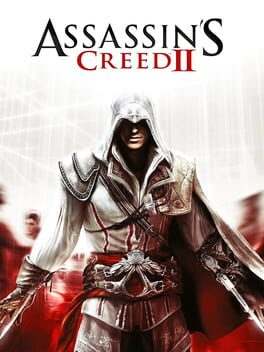
The indie resurgence of kinetic platformers has reached a new zenith as developers revisit the visceral thrill of parkour that first captivated gamers in titles like Mirror's Edge and the stealthy choreography of Dishonored. Over the past decade, the market has seen a pendulum swing from blockbuster open‑world epics to tightly‑crafted experiences that prioritize movement as a core mechanic, a shift driven by both streaming culture’s appetite for skill‑based showcases and the maturation of middleware that lowers the barrier for fluid animation systems. Within this fertile ground, a project born from a nostalgic dream of leaping through a sunken Venice—an echo of countless hours spent in Assassin's Creed II—has emerged, promising to fuse that personal yearning with the gritty aesthetic of a dystopian Rome.
Boars in Rome arrives at a moment when players are increasingly demanding narrative depth without sacrificing the immediacy of gameplay. The indie sector, buoyed by platforms such as Steam, Epic Games Store, and emerging social networks like Bluesky, has cultivated a marketplace where experimental titles can find dedicated audiences before the noise of AAA releases drowns them out. Moreover, the resurgence of “surf” mechanics popularised in Counter‑Strike maps indicates a broader appetite for precision‑based traversal, positioning Boars in Rome to sit at the intersection of nostalgic homage and forward‑looking design. This confluence of market forces, cultural nostalgia, and technical accessibility sets the stage for a potentially transformative entry in the parkour platformer niche.
What Happened?
Earlier this week, the development studio behind Boars in Rome announced the game’s official unveiling via a concise post on Bluesky, accompanied by a teaser trailer that juxtaposes crumbling marble arches with neon‑lit alleyways, all rendered in a stylised, low‑poly aesthetic. The announcement clarified that the title will launch initially on PC in an Early Access format, with plans to expand to consoles once core systems are stabilised. The developers highlighted their intent to deliver a “living, breathing Rome” that reacts to player movement, citing procedural crowd simulations and dynamic weather cycles as key pillars that differentiate the experience from its genre predecessors.
Gameplay-wise, Boars in Rome blends the fluid momentum of Mirror's Edge with the momentum‑preserving physics of Counter‑Strike surf maps, allowing players to chain wall‑runs, vaults, and slides into high‑speed runs across rooftops and subterranean catacombs. The studio’s design lead emphasized that level architecture draws heavily from historical Roman topography, reimagined through a cyber‑punk lens that introduces rusted machinery and glowing graffiti as visual signifiers of a society in decline. Additionally, the game promises a modest narrative thread—players assume the role of a courier navigating factional conflicts—providing context without eclipsing the core movement focus.
Analysis
From a market perspective, Boars in Rome occupies a sweet spot between the mainstream appeal of kinetic action and the niche loyalty of indie platformer enthusiasts. Its hybrid inspiration pool—Mirror's Edge’s sleek traversal, Dishonored’s atmospheric storytelling, and Counter‑Strike surf’s precision—creates a cross‑pollination of fanbases that could translate into robust early sales, particularly if the developers leverage community‑generated content tools. In an era where subscription services like Xbox Game Pass and PlayStation Plus are increasingly curating indie titles, a successful Early Access run could position Boars in Rome as a premium addition to these libraries, granting the publisher heightened visibility and recurring revenue streams.
Technical hurdles, however, remain a pivotal concern. Rendering a sprawling, vertically layered Rome with real‑time crowd AI demands optimisation that indie teams historically struggle to achieve without external support. Porting to console ecosystems will also require navigation of certification processes and controller‑centric control schemes, especially given the game’s reliance on nuanced analog inputs for momentum preservation. Should the studio secure a strategic partnership—perhaps with a middleware provider or a publishing ally—the path to multi‑platform release becomes more feasible, ensuring the title does not become confined to a PC‑only audience.
XPLog Opinion
At XPLog UK we view Boars in Rome as a bold statement that indie developers can still capture the awe‑inspiring freedom of movement that defined early‑2010s flagship titles, while injecting fresh cultural texture that mainstream studios have largely overlooked. If the team can deliver on their promise of a living, reactive Rome, the game could set a new benchmark for narrative‑light, movement‑heavy experiences, reminding both publishers and players that the thrill of a perfectly timed wall‑run remains one of gaming’s most universally exhilarating moments.
Final Thoughts
Boars in Rome is slated for an Early Access debut in the fourth quarter of 2026, with the developers promising regular content drops that will expand both the city’s geography and its factional intrigue. Observers should watch for the forthcoming PlayStation and Xbox compatibility roadmap, as well as community‑driven speedrun showcases that could amplify the title’s profile. In a landscape hungry for fresh kinetic experiences, Boars in Rome may well become the next touchstone for parkour‑centric design.