
Overview
The Nintendo Switch 2, unveiled earlier this year, arrives with a custom NVIDIA‑Ada Lovelace GPU, a higher‑refresh 1080p handheld display, and a dramatically expanded memory bandwidth that finally nudges the platform into the realm of true AAA performance. Nintendo has spent the past decade cultivating a family‑friendly, portable ecosystem, but the hardware leap signals an ambition to host more demanding experiences without sacrificing the low‑power, on‑the‑go convenience that made the original Switch a cultural phenomenon.
Against that backdrop, Activision’s Call of Duty franchise represents the apex of modern multiplayer shooters, and its free‑to‑play battle‑royale incarnation, Warzone, has become a cultural touchstone for competitive gaming. Bringing Warzone to the Switch 2 is not merely a port; it is a strategic gambit that tests whether Nintendo’s newly minted hardware can sustain a 100‑plus player match while preserving the fluidity that console and PC veterans expect. The move also reflects a broader industry shift toward platform‑agnostic live services, where the line between console exclusivity and cross‑play is increasingly blurred.
What Happened?
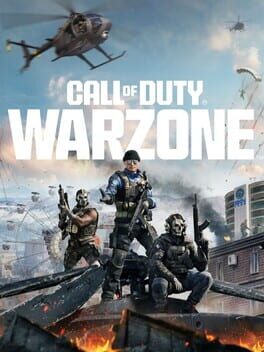
In a surprise update posted to the Nintendo eShop on Monday, Activision confirmed that Call of Duty: Warzone is now available as a free download for the Switch 2. The title is presented as a standalone mode, distinct from the forthcoming Modern Warfare IV campaign, multiplayer, and DMZ experiences, allowing players to dive straight into the 150‑player battle‑royale arena without a separate purchase. The announcement was accompanied by a short developer video highlighting the game’s optimized graphics pipeline, reduced texture resolution, and a dynamic frame‑rate cap designed to keep the handheld experience smooth on the new hardware.
Activision’s senior producer, Maya Patel, emphasized that the Switch 2 version was built from the ground up rather than being a simple down‑scaled port. She noted that the team leveraged the console’s unified memory architecture to streamline asset streaming, and that a dedicated matchmaking tier will pair Switch users with one another to mitigate any performance disparity when playing alongside traditional console or PC participants. Early beta data suggests average match latency hovers around 45 ms, a figure that, while higher than the 20‑30 ms typical on high‑end PCs, remains within acceptable bounds for competitive play on a handheld device.
Analysis
The arrival of Warzone on the Switch 2 could reshape the revenue calculus for both Activision and Nintendo. Historically, free‑to‑play titles have generated the bulk of their income through microtransactions, and Warzone’s in‑game store—selling skins, battle passes, and seasonal cosmetics—has proven to be a cash‑cow on other platforms. By tapping into Nintendo’s massive install base, Activision stands to unlock a new stream of recurring spend, potentially eclipsing the modest micro‑revenue that its previous handheld attempts (such as the original Switch port of Call of Duty: Mobile) ever achieved. For Nintendo, the partnership offers a high‑visibility anchor title that may attract a demographic of core gamers who previously dismissed the Switch as a “casual” console.
From a competitive standpoint, the move also forces rivals like Sony and Microsoft to reassess their own handheld strategies. While the PlayStation Portal and Xbox Cloud Gaming services aim to deliver similar experiences via streaming, Nintendo’s native solution sidesteps latency penalties inherent to cloud play. If the Switch 2 can sustain stable 30‑fps matches with acceptable visual fidelity, it may set a new benchmark for locally rendered AAA shooters on portable hardware, compelling rivals to accelerate their own hardware refresh cycles or invest more heavily in cross‑platform ecosystems.
XPLog Opinion
At XPLog UK we view Warzone’s debut on the Switch 2 as a watershed moment that validates Nintendo’s gamble on raw power over pure novelty. The title’s presence signals that the handheld is now a credible battleground for live‑service shooters, and it will likely act as a catalyst for other heavyweight franchises to follow suit. However, the true test will be how well the community embraces the experience once the novelty wears off—if the micro‑transaction model feels balanced and the matchmaking remains fair, the Switch 2 could become the unexpected hub of the next generation of competitive mobile esports.
Final Thoughts
Warzone’s launch on the Switch 2 marks the convergence of Nintendo’s hardware renaissance with Activision’s relentless pursuit of platform ubiquity, and it sets the stage for a new era where handheld devices are no longer peripheral but central to the multiplayer ecosystem. Players should keep an eye on the upcoming seasonal update slated for early December, which promises additional map rotations and a refined loot system, as well as the broader rollout of Warzone’s cross‑play integration that could finally make the Switch 2 a first‑class citizen in the global battle‑royale arena.