
Overview
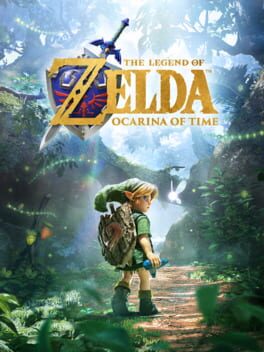
The release of *The Legend of Zelda: Ocarina of Time* on the yet‑unveiled Switch 2 marks an unprecedented convergence of nostalgia, technological ambition, and strategic market positioning for Nintendo. When the original title launched on the Nintendo 64 in 1998, it redefined 3‑D action‑adventure design, setting a benchmark that still informs modern game architecture. Fast‑forward two and a half decades, the decision to resurrect the seminal title on a next‑generation hybrid console is not merely a celebration of its 30‑year legacy; it is a calculated move to leverage the game’s enduring brand equity as a launch pillar for the Switch 2’s hardware capabilities and ecosystem growth.
Industry observers have noted that Nintendo’s current console cycle is entering a critical inflection point. While the original Switch has enjoyed a remarkable eight‑year run, sales have begun to plateau, and the company faces mounting pressure from Sony’s PlayStation 5 and Microsoft’s Xbox Series X|S, both of which have entrenched themselves as power‑gaming platforms. By re‑releasing Ocarina of Time with enhanced visuals, refined water‑physics, and optional quality‑of‑life upgrades, Nintendo signals its intent to recapture both the core retro‑enthusiast demographic and a new generation of players who have yet to experience the game’s mythic narrative. The announcement also dovetails with a broader trend of “remaster‑first” launch strategies, reminiscent of Sony’s 2022 PlayStation 5 rollout featuring *Spider‑Man: Miles Morales* and Microsoft’s *Halo Infinite* debut.
What Happened?
During a midnight launch event staged at London’s iconic O2 arena, Nintendo unveiled the Switch 2 version of Ocarina of Time, complete with a live demo that showcased the game’s updated lighting engine, dynamic weather, and a reworked Water Temple that finally addresses the long‑standing frustration of its original design. Lead producer Eiji Aonuma took the stage to explain that the project began as an internal “heritage preservation” initiative three years ago, evolving into a full‑scale development effort after the team recognized the opportunity to demonstrate the Switch 2’s hybrid performance envelope. Aonuma emphasized that the new iteration is not a mere port; it incorporates “deep‑rooted” gameplay refinements, such as a more intuitive targeting system, optional subtitles for the iconic musical cues, and a “legacy mode” that lets purists toggle the classic graphics on demand.
The announcement was accompanied by a series of “Ask the Developer” interviews released on Nintendo’s official channels, where the team disclosed that the Water Temple’s redesign involved a complete overhaul of its physics simulation, leveraging the Switch 2’s custom NPU to deliver fluid dynamics previously impossible on the original console. Moreover, the developers hinted at post‑launch support, including community‑driven challenges and a potential crossover DLC that could integrate characters from *Breath of the Wild* into the classic timeline. The event also generated a Metascore surge, with early preview scores hovering in the high 90s, underscoring the critical optimism surrounding the title’s revival.
Analysis
From a market‑performance perspective, the Switch 2’s debut with a flagship title of Ocarina of Time’s stature is a strategic masterstroke designed to boost early hardware adoption rates. Historically, console launches anchored by flagship exclusives—think *Halo* for Xbox or *God of War* for PlayStation—have translated into accelerated sell‑through and heightened brand loyalty. Nintendo’s approach mirrors this paradigm, but with a distinctive twist: by leveraging a universally acclaimed legacy title, the company sidesteps the risk of untested new IPs while still delivering a fresh experience that showcases the hardware’s upgraded GPU and SSD throughput. This tactic also positions Nintendo to capture a segment of the “retro‑revival” market that has exploded on platforms like the PlayStation 5’s *Final Fantasy VII Remake* and the Xbox Series X’s *Starfield* pre‑order hype.
Competitor dynamics further illuminate the significance of this move. Sony and Microsoft have both invested heavily in cross‑platform services and subscription models, diluting the exclusivity advantage that once defined console wars. Nintendo, however, continues to rely on its first‑party exclusives as the primary driver of console sales. By revitalizing Ocarina of Time, Nintendo not only reinforces its unique library but also creates a compelling narrative for developers who may consider the Switch 2 as a viable platform for ambitious projects that blend nostalgia with modern tech. The technical hurdles—particularly the need to faithfully recreate a 1998 engine within a contemporary architecture—demonstrate Nintendo’s growing internal capabilities, which could encourage third‑party studios to explore similar “classic‑reboot” collaborations.
XPLog Opinion
At XPLog UK, we view the Switch 2 Ocarina launch as a watershed moment that redefines Nintendo’s growth strategy: it is an affirmation that the company can marry its storied past with a forward‑looking hardware agenda, thereby securing relevance in an increasingly service‑driven industry while still delivering the handcrafted experiences that core gamers crave.
Final Thoughts
In sum, the re‑release of Ocarina of Time on Switch 2 is more than a nostalgic cash‑in; it is a calculated lever designed to accelerate hardware adoption, re‑energize Nintendo’s first‑party pipeline, and set a benchmark for how legacy titles can be re‑imagined for modern ecosystems. Players should keep an eye on the official launch window slated for early Q1 2027, the forthcoming post‑launch DLC roadmap, and the ripple effects this may have on upcoming Nintendo‑first titles slated for the same console generation.