
Overview
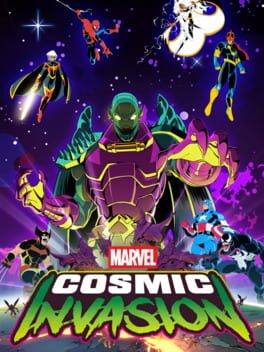
When Dotemu announced the arrival of a Doom‑themed expansion for Marvel Cosmic Invasion, the gaming press immediately sensed a convergence of two powerful trends: the relentless push for fresh live‑service content and the growing appetite for roguelike mechanics among core audiences. The original Marvel Cosmic Invasion, launched in early 2023, positioned itself as a hybrid of superhero team‑up action and strategic arena combat, a niche that resonated with players seeking both narrative depth and competitive replayability. By layering a darker, procedurally‑driven mode onto an established IP, Dotemu is attempting to revitalize the title’s player base while testing the limits of what a superhero franchise can accommodate in terms of genre‑bending design.
This move does not occur in a vacuum. Over the past five years, publishers have repeatedly turned to roguelike‑inspired DLCs to inject longevity into games that risk plateauing after their initial launch window. Titles such as Hades, Returnal, and the recent Rogue‑like expansion for Fortnite’s “Rift” mode have demonstrated that iterative, high‑risk gameplay loops can generate sustained community engagement and lucrative micro‑transaction ecosystems. Marvel Cosmic Invasion’s new “Castle Doom” mode therefore arrives at a moment when the market is primed for hybrid experiences that reward skill, adaptability, and repeated runs, while also offering a fresh narrative veneer that aligns with the franchise’s broader multimedia strategy.
What Happened?
On 10 November, Dotemu will roll out the Castle Doom DLC, a fully realized roguelike game mode that transports players into a labyrinthine fortress riddled with branching pathways, environmental hazards, and a central “Siege Gauge” that serves as the primary mission objective. In a recent livestream, Producer Rémi Lavoie and Lead Designer Kevin Chiasson walked the audience through an 18‑minute playthrough, highlighting the mode’s procedural generation engine which promises a unique layout for every run. The Siege Gauge functions as a tension meter; players must balance aggressive assaults on enemy strongholds with strategic retreats to preserve their limited resources, creating a high‑stakes rhythm that diverges sharply from the more predictable arena battles of the base game.
Beyond the structural overhaul, the DLC introduces a brand‑new hero, Sue Storm, whose moveset blends classic Invisible Woman powers with a suite of new tactical abilities designed specifically for the Castle Doom environment. Chiasson emphasized that Storm’s invisibility mechanic has been re‑engineered to interact with the mode’s line‑of‑sight puzzles, allowing players to navigate shadow‑filled corridors without triggering traps. Lavoie also noted that a suite of run modifiers—ranging from “Corrupted Core” to “Arcane Overload”—will grant temporary buffs or impose debilitating debuffs, ensuring that each foray into the castle feels both familiar and freshly challenging.
Analysis
The introduction of a roguelike layer onto a superhero title is a calculated risk that could pay dividends across multiple fronts. From a revenue perspective, DLCs that demand multiple playthroughs tend to generate higher average spend per user, as players often purchase additional cosmetic packs, progression boosters, or time‑saving passes to overcome the mode’s inherent difficulty spikes. Dotemu’s decision to embed a “Siege Gauge” system also aligns with the broader industry shift toward objective‑centric multiplayer experiences, a trend championed by titles like Apex Legends and Valorant, where clear, repeatable goals drive both competitive ladders and spectator appeal. Should Castle Doom capture a critical mass of streamers and esports organizers, the mode could act as a catalyst for a secondary competitive scene, extending the title’s lifespan well beyond the typical 12‑month post‑launch window.
Technically, the challenge lies in marrying the fast‑paced, chaotic nature of Doom‑inspired combat with the precise, timing‑based mechanics of Marvel’s hero abilities. Procedural generation must respect the balance constraints of each character’s power set, lest a particular hero become disproportionately powerful in certain map configurations. Moreover, the integration of run modifiers introduces a layer of complexity in matchmaking, as the system must ensure equitable difficulty scaling across disparate skill levels. Dotemu’s prior experience with retro‑style re‑imaginations suggests they possess the tooling to iterate rapidly, but the success of Castle Doom will ultimately hinge on their ability to fine‑tune these variables without alienating the existing fanbase that prefers the more deterministic arena battles.
XPLog Opinion
From XPLog’s perspective, Castle Doom represents a bold statement that the future of licensed superhero games may no longer be confined to linear story missions or static multiplayer maps; instead, we are witnessing an evolution toward systems that reward mastery, adaptability, and community‑driven discovery. If Dotemu can deliver a mode that feels both authentically “Doom‑ish” and faithfully Marvel, it will set a new benchmark for how IP holders can experiment without diluting brand identity—a precedent that could encourage other publishers to explore similarly audacious cross‑genre hybrids.
Final Thoughts
In the weeks leading up to its November 10 launch, Castle Doom will be scrutinized not only for its immediate fun factor but for the longer narrative it writes about the viability of roguelike expansions in mainstream, licensed franchises. Success could usher in a wave of genre‑blending DLCs that keep veteran players engaged while inviting newcomers through fresh, high‑risk gameplay loops. As the release date approaches, the community should keep an eye on early performance metrics, player sentiment on forums, and any post‑launch balance patches that will reveal whether Dotemu’s gamble has reshaped the expectations for superhero live‑service titles.