
Overview
When Owlcat Games unveiled The Expanse: Osiris Reborn, the studio was riding the momentum of its successful Pathfinder adaptations and the burgeoning popularity of narrative‑driven RPGs on both PC and console platforms. The title promised a deep, branching storyline set against the rich backdrop of the beloved sci‑fi series, and expectations were sky‑high among a community that had already invested heavily in the franchise’s lore and mechanics. In an era where live‑service models dominate and player sentiment can sway a game's trajectory within weeks, the stakes for a polished launch were immense, especially for a mid‑size developer seeking to cement its place alongside heavyweight publishers.
Yet the modern gaming ecosystem has become a two‑way street: developers broadcast teasers, while players immediately dissect every pixel, voice line, and design choice on social media, forums, and streaming platforms. Recent years have shown that missteps—whether in character representation, voice casting, or aesthetic direction—can snowball into vocal backlash that threatens pre‑orders and early‑access goodwill. Owlcat’s decision to recast the male protagonist after a wave of criticism is therefore emblematic of a broader industry pivot toward more responsive, community‑first development pipelines, a trend that has been accelerated by the transparency demanded by platforms such as Discord and Reddit.
What Happened?
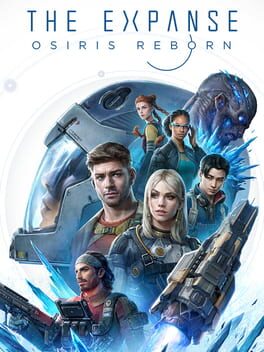
In early September, Owlcat released a short trailer that revealed the original face and voice of the game’s central hero, a charismatic yet rugged explorer meant to anchor the player’s journey through the Expanse. Within hours, the reaction was polarized: while some praised the production values, a sizable portion of the fanbase expressed disappointment, citing a mismatch between the character’s visual design and the established canon, as well as a vocal performance that felt incongruent with the gritty tone of the source material. The criticism coalesced into a coordinated feedback campaign, prompting Owlcat’s community managers to acknowledge the concerns publicly and promise a course correction.
True to that promise, the studio announced a full recasting of the protagonist, unveiling a new facial model rendered with higher‑resolution textures and a voice actor whose timbre aligns more closely with the character’s back‑story as a hardened spacefarer. The updated assets were showcased in a follow‑up video that highlighted subtle lighting adjustments, more natural facial animation, and a deeper, resonant delivery that aims to capture the internal conflict central to the narrative. Owlcat also indicated that the revised character will be integrated via a major patch slated for late Q4, ensuring that both new purchasers and early adopters will experience the intended portrayal without the need for a separate DLC.
Analysis
From a market perspective, Owlcat’s swift response can be read as a calculated risk mitigation strategy. By addressing the vocal discontent before the game’s critical launch window, the publisher safeguards its pre‑order momentum and reduces the likelihood of negative review spillover that could erode its position against heavyweight competitors such as Bethesda’s Starfield or CD Projekt’s upcoming titles. The recast also signals to investors that Owlcat is attuned to the monetisation realities of modern RPGs, where post‑launch support and community goodwill translate directly into longer player lifespans, higher DLC uptake, and stronger secondary market performance on platforms like Steam and the PlayStation Store.
Technically, the undertaking is non‑trivial. Updating a central character model after the core engine has been frozen requires re‑rigging, re‑recording dialogue lines, and re‑testing cut‑scene synchronisation across all supported platforms—PC, Xbox Series X|S, and PlayStation 5. Owlcat’s choice to bundle the change within a comprehensive patch rather than a hot‑fix demonstrates an awareness of cross‑platform certification pipelines, which can add weeks of additional QA time. Moreover, the move underscores a growing industry trend where live‑ops pipelines are being retrofitted to accommodate narrative revisions, a capability that will likely become a competitive differentiator for studios that can iterate on story assets without destabilising the underlying gameplay experience.
XPLog Opinion
At XPLog we view Owlcat’s recast as a decisive affirmation that the era of developer‑centric secrecy is ending; the most successful launches now belong to those who treat their audience as co‑authors of the final product. While the logistical overhead is undeniable, the long‑term brand equity gained by listening—and acting—far outweighs the short‑term cost of re‑tooling assets, especially for a studio whose reputation hinges on narrative fidelity. In a market saturated with high‑budget blockbusters, Owlcat’s willingness to pivot demonstrates a maturing approach that could set a new standard for mid‑tier RPG developers seeking to retain passionate, discerning fans.
Final Thoughts
The recasting of The Expanse: Osiris Reborn’s protagonist is more than a cosmetic fix; it is a litmus test for how agile, community‑responsive development can reshape expectations across the RPG landscape. Players should keep an eye on Owlcat’s upcoming patch rollout in late October, which will not only deliver the new face and voice but also serve as a benchmark for how quickly and effectively studios can integrate fan feedback into live products without compromising technical stability.