
Overview
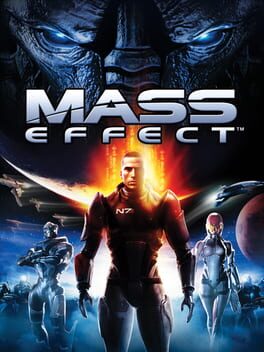
In the spring of 2026 the gaming world was rocked not just by the headline‑grabbing acquisition of Electronic Arts by Saudi Arabia’s Public Investment Fund, but by the stark reminder that even the most storied studios are not immune to corporate upheaval. BioWare, a name synonymous with narrative‑driven RPGs such as Mass Effect and Dragon Age, has been placed on the chopping block just weeks after EA’s board approved a multi‑billion‑dollar cash infusion that has fundamentally reshaped the publisher’s strategic priorities. The move reflects a broader industry shift where sovereign wealth funds and private equity firms are increasingly dictating creative direction, often at the expense of legacy development cultures that have defined the medium for decades.
Veteran designer Warren Spector, whose own career spans the seminal days of immersive sims at Origin Systems to his recent outspoken advocacy for developer rights, re‑emerged on the public stage with a blistering critique of EA’s executive compensation packages. Spector’s outburst is not merely a personal vendetta; it taps into a growing chorus of voices demanding transparency, equitable profit sharing, and a re‑evaluation of the “publish‑or‑perish” model that has dominated the last twenty‑five years. His comments arrive at a moment when the industry is grappling with the fallout of inflated valuations, aggressive studio closures, and a palpable erosion of trust between creators and the conglomerates that fund them.
What Happened?
During a livestreamed press conference, EA announced the immediate shutdown of BioWare’s primary development hub in Edmonton, citing “strategic realignment” and “the need to focus resources on high‑growth IPs.” The statement was accompanied by a stark financial disclosure: while the studio’s workforce faced mass layoffs, senior executives were slated to receive severance packages totaling upwards of $150 million, a figure that dwarfs the average annual salary of a senior developer at the studio. The abruptness of the decision—delivered without prior consultation with staff—has ignited a firestorm on social media, with former BioWare employees describing the move as a “death knell” for the studio’s creative legacy.
EA’s leadership attempted to soften the blow by emphasizing a “new partnership model” that would see BioWare’s IPs licensed to third‑party studios under tighter fiscal oversight. However, insiders revealed that the licensing terms heavily favor EA’s bottom line, effectively stripping the original creators of artistic control. Moreover, venture capital analysts who had previously warned about the risks of over‑leveraging EA’s balance sheet after the PIF deal have now pointed to this closure as a symptom of an unsustainable growth strategy that prioritises short‑term shareholder returns over long‑term brand stewardship.
Analysis
The BioWare shutdown sends a clear signal to the market: even heavyweight publishers are willing to sacrifice beloved franchises when the financial calculus dictates. EA’s stock experienced a modest dip in the days following the announcement, but analysts predict a longer‑term correction as investors reassess the viability of a portfolio increasingly dominated by live‑service titles. Competitors such as Ubisoft and Activision Blizzard, who have also faced scrutiny over studio closures, may find a window to court disaffected talent, but they too are navigating the same pressures from activist investors demanding higher profit margins.
From a technical and creative standpoint, the dissolution of BioWare’s core teams threatens to fragment the intellectual property pipeline that has historically delivered deep, choice‑driven experiences. The loss of institutional knowledge—spanning narrative design, world‑building, and the proprietary Frostbite‑based RPG engine—could result in a dilution of quality for future installments, should they be outsourced to studios lacking the same cultural DNA. This risk is compounded by the broader industry trend of consolidating development under “AAA” umbrellas, where risk‑averse pipelines often marginalise experimental storytelling in favour of monetisable mechanics.
XPLog Opinion
At XPLog UK we view EA’s handling of BioWare not merely as a misstep but as a cautionary exemplar of how financial engineering can erode the very foundations of gaming culture. When a publisher rewards its executives with multi‑digit payouts while discarding the creative teams that built its most cherished worlds, it sends a corrosive message to the ecosystem: profit trumps passion. This paradigm, if left unchecked, will accelerate talent drain, stifle innovation, and ultimately alienate the core audience that sustains long‑term franchise health.
Final Thoughts
The fallout from BioWare’s closure will reverberate through the industry for years to come, shaping how investors, publishers, and developers negotiate the balance between fiscal responsibility and creative integrity. As EA prepares to unveil its revised roadmap for the franchise in early 2027, the community should watch closely for any genuine attempts at restitution—such as profit‑share models or transparent development pipelines—rather than superficial licensing deals. The next quarter will be pivotal in determining whether accountability becomes a buzzword or a binding principle in the evolving landscape of interactive entertainment.