
Overview
2024 has unfolded as a watershed year for Nintendo, a period in which the company has deftly leveraged its storied legacy while simultaneously laying the groundwork for future growth on the newly‑announced Switch 2 hardware. The release of a high‑definition Star Fox remake—originally a hallmark of the N64 era—paired with a critically lauded reimagining of The Legend of Zelda: Ocarina of Time, underscores a strategic pivot: Nintendo is no longer treating nostalgia as a mere cash‑grab, but as a calibrated pillar within a broader, diversified slate. This approach arrives at a time when the console market is increasingly fragmented, with Sony’s PlayStation 6 and Microsoft’s Xbox Series X2 pushing the envelope on raw power, while the handheld and hybrid niche that Nintendo pioneered faces pressure from cloud‑gaming services and mobile titles.
Beyond the marquee remakes, Nintendo’s pipeline brims with fresh experiences such as Fire Emblem: Fortune’s Weave, Switch Sports Resort, and Mario Tennis Fever, all slated for the Switch 2 launch window. The company is also repackaging recent first‑party successes—Xenoblade Chronicles 3 and Animal Crossing: New Horizons—for the new hardware, ensuring a seamless transition for existing fans while enticing newcomers with enhanced performance and visual fidelity. This confluence of old and new reflects a long‑term vision that dates back to the GameCube era, when Nintendo first experimented with remastering classics for the Wii, and it signals a maturation of the brand’s content strategy that could reshape consumer expectations for console ecosystems.
What Happened?
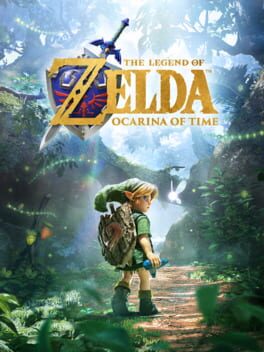
At a high‑profile Nintendo Direct streamed earlier this month, Shuntaro Furukawa, the company’s president, announced that both the Star Fox and Ocarina of Time remakes would debut on the Switch 2 as launch titles, boasting “dazzling facelifts” and “faithful yet refreshed” gameplay experiences. The Star Fox remake, rebuilt on a modern engine, promises ray‑traced lighting, expanded multiplayer modes, and a reworked soundtrack that marries the original compositions with orchestral arrangements. Meanwhile, the Ocarina of Time remake leverages the Switch 2’s upgraded CPU and GPU to deliver a 4K resolution at 60 fps, reimagined textures, and a suite of quality‑of‑life upgrades such as streamlined inventory management and optional accessibility features.
Furukawa emphasized that these projects are not isolated experiments but part of a “stable” that accommodates both remakes and original IPs. He highlighted upcoming titles like Fire Emblem: Fortune’s Weave, which expands the franchise’s tactical depth with a new “Weave” mechanic, and Switch Sports Resort, a sequel that broadens the casual sports portfolio with VR‑compatible mini‑games. The announcement also confirmed that Xenoblade Chronicles 3 and Animal Crossing: New Horizons will receive “next‑gen” ports, featuring faster load times and enhanced world‑building tools, ensuring that the Switch 2’s launch library is robust enough to compete with the opening day rosters of its rivals.
Analysis
The dual focus on remakes and fresh content positions Nintendo to capture two distinct market segments simultaneously. From a financial perspective, remakes historically enjoy higher profit margins due to lower development risk and established brand equity; Ocarina of Time’s original sold over 7 million units worldwide, and its modern iteration is poised to tap both legacy fans and a new generation of players. At the same time, the introduction of new IPs like Fortune’s Weave signals Nintendo’s intent to diversify its portfolio, mitigating the long‑term risk of over‑reliance on a handful of franchises. Competitively, Sony’s strategy leans heavily on blockbuster new IPs such as Horizon Forbidden West, while Microsoft doubles down on ecosystem services; Nintendo’s hybrid approach could carve out a niche that leverages its unique hardware identity while still delivering high‑profile, technically impressive titles.
Technical hurdles, however, should not be underestimated. Porting a title as beloved as Ocarina of Time to a higher fidelity platform demands meticulous preservation of gameplay feel, a challenge that has tripped up previous remasters across the industry. Moreover, the Switch 2’s hardware, while more powerful than its predecessor, still trails the raw horsepower of the PlayStation 6, forcing Nintendo to balance visual ambition with performance stability. The company’s decision to release multiple remakes at launch also raises questions about development bandwidth and potential cannibalisation of marketing resources, especially if any of the titles fail to meet the lofty expectations set by their predecessors.
XPLog Opinion
From XPLog’s standpoint, Nintendo’s announcement is a masterclass in portfolio stewardship: by anchoring the Switch 2 launch with universally recognised classics, the company secures an immediate sales surge and media buzz, while the simultaneous rollout of innovative new experiences signals a commitment to long‑term growth beyond nostalgia. This balanced strategy not only safeguards Nintendo’s core fanbase but also widens its appeal to late adopters and casual gamers who may be drawn in by the polish of a beloved title before exploring the depth of fresh offerings. In a market where hardware cycles are shortening and consumer attention is fragmented, Nintendo’s “stable” approach could prove to be the most resilient formula for sustained relevance.
Final Thoughts
As the Switch 2 launch window approaches, the industry will be watching closely to see whether Nintendo’s blend of reverent remakes and bold new IPs can translate into both immediate commercial success and lasting ecosystem health. With the Star Fox and Ocarina of Time remakes slated for a Q4 2024 release, followed by a steady drip of original titles through 2025, the next 12‑month horizon promises to be a decisive period for Nintendo’s strategic evolution—one that could redefine the balance between heritage and innovation in console gaming.