
Overview
For decades Nintendo has been synonymous with interactive entertainment, yet its flirtation with the silver screen has always felt tentative. Early experiments such as the 1993 Super Mario Bros. feature flopped spectacularly, reinforcing a cautionary narrative that video‑game adaptations were a risky gamble. In the years that followed, the company largely retreated to ancillary media—animated series, tie‑in comics, and occasional cameo appearances—while the broader entertainment ecosystem evolved around high‑budget franchises from Sony, Disney, and Warner Bros. The resurgence of nostalgia‑driven cinema in the 2010s, coupled with the streaming wars’ appetite for recognizable IP, finally presented Nintendo with a more viable pathway to translate its beloved characters into live‑action narratives.
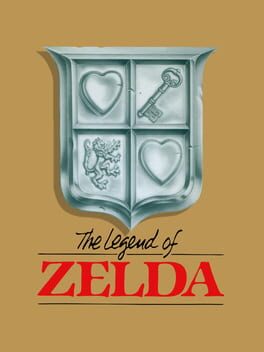
Now, with the impending release of a live‑action The Legend of Zelda film slated for 30 April 2027 and the ever‑looming prospect of a Super Mario feature, Nintendo appears to have crossed the Rubicon from cautious participant to committed cinematic player. This strategic pivot arrives at a moment when the global games market, valued at over $200 billion, is increasingly intertwined with film and television, as evidenced by the blockbuster success of titles like Arcane and the lucrative licensing deals struck by Activision Blizzard. Nintendo’s decision therefore signals not merely a diversification of revenue streams but an ambition to embed its IPs more deeply into mainstream pop culture, leveraging cross‑media storytelling to sustain relevance across generations of gamers and non‑gamers alike.
What Happened?
During a high‑profile press briefing earlier this month, Nintendo’s senior vice president of corporate communications confirmed that the company will continue to finance and produce movies beyond the upcoming Zelda project. The announcement detailed a multi‑film roadmap that will see both existing flagship franchises—Super Mario, Pokémon (via a strategic partnership), and Metroid—expanded into live‑action and animated formats. While the Zelda film is positioned as a flagship release, the studio emphasized that it will serve as a springboard for a broader slate, with development pipelines already established for a Mario adventure slated for early 2029 and a yet‑to‑be‑named Metroid thriller projected for the early 2030s.
Crucially, Nintendo disclosed that it has entered into a long‑term distribution agreement with a major streaming platform, ensuring global reach while retaining creative oversight through a newly formed Nintendo Studios division. The partnership is designed to balance the company’s historic emphasis on family‑friendly content with the cinematic gravitas demanded by contemporary audiences. Executives also highlighted a commitment to “authentic storytelling,” promising that future adaptations will involve original creators from the game development teams to preserve the essence of the source material, a lesson learned from past missteps in the industry.
Analysis
The move positions Nintendo at the nexus of two converging market forces: the exploding demand for franchise‑driven content on streaming services and the growing consumer appetite for immersive, narrative‑rich experiences that bridge gaming and film. By leveraging its unparalleled catalog of IP, Nintendo can command premium licensing fees, attract top‑tier talent, and generate ancillary revenue through merchandise, soundtracks, and theme‑park tie‑ins. However, the venture is not without risk; live‑action adaptations demand substantial budgets, and any deviation from fan expectations could provoke backlash, as seen with other high‑profile game‑to‑film attempts. Nintendo’s cautious approach—maintaining tight creative control and integrating development talent—may mitigate these hazards, but the financial stakes remain significant.
From a competitive standpoint, Nintendo’s entry intensifies the battle for audience share against entrenched players like Warner Bros., which has long capitalized on its DC and Harry Potter properties, and newer entrants such as Netflix, which is aggressively courting gaming IPs. Moreover, the timing aligns with the next console generation’s rollout, offering synergistic marketing opportunities: a Zelda film could drive hardware sales, while next‑gen consoles could host exclusive tie‑in content, creating a virtuous loop of cross‑promotion. Technologically, advances in virtual production and real‑time rendering—exemplified by the Unreal Engine’s adoption in recent blockbuster productions—could enable Nintendo to achieve a visual fidelity that respects the stylized aesthetics of its games without sacrificing cinematic realism.
XPLog Opinion
At XPLog UK we view Nintendo’s cinematic commitment as a calculated evolution rather than a reckless gamble; the company has finally learned to marry its legendary design philosophy with the demands of modern storytelling. By anchoring future films in authentic creative oversight and aligning releases with hardware cycles, Nintendo not only safeguards its brand integrity but also opens a lucrative, multi‑platform revenue corridor that could redefine how we experience beloved franchises for the next decade.
Final Thoughts
The upcoming Zelda release will serve as the litmus test for Nintendo’s filmic ambitions, and its reception will likely dictate the cadence of subsequent projects. Stakeholders should monitor box‑office performance, streaming viewership metrics, and fan sentiment in the months following the 30 April 2027 debut, as these data points will inform the viability of the broader slate slated for the late 2020s. If Nintendo can deliver compelling, high‑quality adaptations, it may well cement its status as a cross‑media powerhouse, reshaping the interplay between interactive entertainment and mainstream cinema for years to come.