
Overview
For more than a decade, Nintendo has leveraged its robust digital distribution platform, the eShop, as a conduit for both new IPs and the careful curation of its storied back catalogue. In a market increasingly dominated by subscription services and seasonal sales events, the company’s decision to spotlight a flagship title like The Legend of Zelda: Ocarina of Time reflects a broader industry trend: monetising nostalgia while simultaneously using it as a gateway for newer hardware adoption. The timing of the 5th November North American rollout coincides with the holiday shopping window, a period where console manufacturers traditionally amplify promotional activity to capture late‑year spend. By positioning a remastered classic alongside a trio of discounted titles, Nintendo is not merely clearing inventory; it is reinforcing the Switch’s identity as a hybrid console that comfortably bridges generations of gamers.
Historically, Nintendo’s digital strategy has oscillated between aggressive price cuts and the preservation of premium pricing for legacy gems. Early eShop experiments in the 2010‑2012 era saw modest uptake, but the launch of the Nintendo Switch Online subscription in 2018 altered the calculus, offering a rotating library of NES and SNES games for a low monthly fee. The current approach, however, signals a shift back toward individual purchases for marquee experiences, suggesting that Nintendo believes premium, one‑off sales still hold significant revenue potential when paired with high‑visibility marketing pushes. This move also serves as a counter‑point to Sony’s PlayStation Plus tiers and Microsoft’s Game Pass, where legacy titles are bundled rather than sold outright.
What Happened?
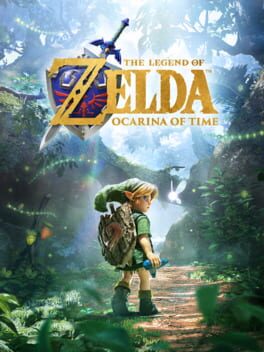
The headline of the latest eShop update is unmistakable: a fully remastered version of Ocarina of Time, the seminal 1998 entry that defined 3D action‑adventure gaming. The new edition boasts a comprehensive visual overhaul, re‑rendered textures, and a re‑orchestrated soundtrack that leverages the Switch’s audio capabilities. Beyond the aesthetic polish, Nintendo has introduced modern control schemes, including refined camera handling and optional voice acting for key cutscenes, aiming to lower the barrier for newcomers while preserving the core challenge that long‑time fans cherish. Priced at $59.99, the title sits at the upper end of the Switch’s digital catalogue, aligning with other premium releases such as Breath of the Wild and Metroid Dread.
Accompanying the flagship release are three additional games offered at discounted rates, a tactic Nintendo has employed sporadically to stimulate impulse purchases. While the source material does not enumerate these titles, the pattern typically includes a mix of indie darlings, legacy platformers, and smaller Nintendo franchises, each reduced by 20‑30 %. This bundling strategy serves two purposes: it increases the average transaction value and it re‑introduces lesser‑known or older properties to a player base whose attention is often monopolised by blockbuster releases. By bundling these discounts with the Ocarina launch, Nintendo effectively creates a mini‑event within the eShop, encouraging shoppers to explore the wider library rather than focusing solely on the headline title.
Analysis
From a market performance perspective, the Ocarina remaster is poised to become one of the Switch’s top‑selling digital titles of the quarter. The original game’s cultural footprint ensures a built‑in audience, while the enhanced presentation appeals to collectors and completionists who are accustomed to paying a premium for “definitive” editions. Moreover, the release arrives at a moment when Nintendo’s hardware pipeline is relatively quiet, lacking a major first‑party launch to dominate headlines. In such a vacuum, a high‑profile remaster can sustain sales momentum and keep the console’s software chart active, which in turn supports the broader ecosystem of accessories, DLC, and peripheral sales.
Competitor dynamics also play a crucial role. Sony’s PlayStation Store has been flooded with remastered classics, often bundled in “Greatest Hits” collections at aggressive price points. Microsoft, meanwhile, pushes legacy content through its subscription model, effectively de‑valuing individual purchases. Nintendo’s decision to retain a premium price while offering a limited discount bundle signals confidence in the brand equity of Zelda and a belief that the Switch’s unique hybrid appeal justifies a higher price floor. Technically, the remaster also showcases Nintendo’s evolving engine capabilities, hinting at the potential for future updates to other first‑party catalogues without the need for full‑scale redevelopment.
XPLog Opinion
At XPLog UK, we view the Ocarina of Time remaster as a masterstroke of strategic timing and brand stewardship. Nintendo is capitalising on the perennial demand for nostalgia while subtly nudging a new generation of Switch owners toward its flagship franchise, thereby reinforcing long‑term engagement. The modest discount bundle is a clever psychological nudge, turning a single‑title purchase into a mini‑shopping spree that expands the platform’s active library. In an era where subscription fatigue is rising, Nintendo’s hybrid approach—premium flagship plus selective discounts—offers a refreshing alternative that respects both collectors and casual players alike.
Final Thoughts
In sum, the November eShop update underscores Nintendo’s adeptness at leveraging its heritage to fuel contemporary revenue streams. The Ocarina of Time remaster not only revitalises a beloved classic but also serves as a bellwether for how Nintendo may continue to repackage its extensive IP vault in the years ahead. Players should keep an eye on subsequent eShop drops throughout the holiday season, as the company is likely to repeat this formula, pairing marquee remasters with curated discount bundles to sustain momentum until the next hardware or first‑party surprise lands on the horizon.