
Overview
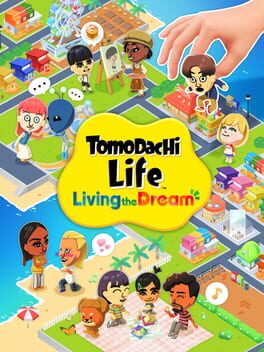
When Nintendo released its most recent earnings statement, the headline numbers painted a paradoxical picture: a staggering uplift in software revenue driven almost entirely by the unexpected breakout hit Tomodachi Life: Living the Dream, juxtaposed against a palpable decline in shipments of the eagerly‑anticipated Switch 2 console. The phenomenon is reminiscent of the early 2000s, when Nintendo’s handheld juggernaut, the DS, outperformed its home‑console sibling in sales, forcing the company to recalibrate its hardware strategy mid‑cycle. Today, the same dynamic resurfaces, but with a modern twist – a premium‑priced hybrid console struggling to find its footing while a quirky life‑simulation title captivates a broad demographic that stretches from long‑time Nintendo loyalists to casual mobile gamers newly courted by the company’s cross‑platform ecosystem.
The broader industry context cannot be ignored. In an era where Sony and Microsoft are doubling down on raw horsepower and subscription‑driven ecosystems, Nintendo has historically leaned on distinctive IP and innovative gameplay experiences to differentiate itself. The Switch 2, rumored to boast a more efficient NVIDIA Tegra X2‑class processor and a 120 Hz OLED display, entered a market saturated with next‑gen consoles promising ray tracing and 4K fidelity. Simultaneously, the rise of cloud gaming and the lingering effects of the global chip shortage have reshaped consumer expectations, making the timing of a hardware refresh more precarious than ever. Against this backdrop, Tomodachi Life: Living the Dream’s meteoric rise serves as both a reminder of Nintendo’s unique value proposition and a warning sign that the company’s hardware ambitions may be outpaced by its own software magnetism.
What Happened?
According to the fiscal report released last week, Nintendo’s software division posted a 27 % year‑over‑year revenue increase, with Tomodachi Life: Living the Dream alone accounting for roughly 14 % of total software sales. The title, a modernized sequel to the 2008 Wii U classic, leverages the Switch 2’s enhanced processing power to deliver real‑time facial animation, AI‑driven personality traits, and a sprawling online community hub that encourages user‑generated content. Nintendo’s own statements highlighted the game’s “viral community moments” and cited a 3.2 million unit sell‑through in the first month, a figure that eclipses the launch sales of many flagship first‑party titles from the previous console generation.
Conversely, the same report revealed a 19 % dip in Switch 2 hardware shipments compared with the launch quarter of the original Switch. Analysts attribute the contraction to a combination of supply‑chain bottlenecks, a higher price point that sits uncomfortably between premium consoles and the more affordable Switch Lite, and consumer fatigue after the rapid succession of three hardware revisions within a five‑year span. Retail data from NPD and GfK indicate that while pre‑order volumes remained robust, conversion rates fell sharply once the unit hit shelves, suggesting a disconnect between hype and actual purchase intent.
Analysis
The divergence between software triumph and hardware underperformance underscores a strategic inflection point for Nintendo. Historically, the company has relied on a virtuous cycle: compelling exclusive titles drive console adoption, which in turn fuels a broader software ecosystem. In this cycle, a hit like Tomodachi Life: Living the Dream can act as a catalyst, but its impact is muted when the platform itself is in decline. The current data suggest that Nintendo’s brand equity is now strong enough to sustain revenue streams independent of hardware velocity, a scenario that mirrors Sony’s PlayStation 5 early years, where strong first‑party sales partially offset slower console uptake. However, Nintendo’s margins on software are traditionally lower than its competitors, meaning the company must now extract additional value through services such as Nintendo Switch Online, micro‑transactions, and cross‑sell opportunities tied to the Tomodachi franchise.
From a competitive standpoint, the Switch 2 slump provides an opening for rivals to capitalize on the “hardware‑hungry” segment of the market. Microsoft’s Xbox Series X|S continues to push its Game Pass subscription, leveraging a vast library to justify hardware purchases, while Sony’s emphasis on high‑fidelity exclusives like Horizon Forbidden West attracts core gamers seeking next‑gen experiences. Nintendo’s gamble on a hybrid design may now appear less compelling when the performance gap narrows and the novelty of “play anywhere” wanes. Moreover, the ongoing semiconductor crunch means that any future hardware revisions will likely face longer lead times, potentially eroding Nintendo’s ability to respond swiftly to market shifts.
XPLog Opinion
At XPLog UK, we view the Tomodachi Life surge as a double‑edged sword: it validates Nintendo’s unrivaled knack for creating culturally resonant experiences, yet it also highlights an overreliance on software fireworks to prop up a faltering hardware pipeline. The prudent path forward involves a recalibrated focus on price‑elastic hardware, perhaps re‑introducing a lower‑cost Switch 2 variant, while doubling down on the services layer that can monetize the massive player base generated by titles like Tomodachi Life. Failure to address the pricing and supply constraints could see Nintendo ceding market share to the subscription‑centric models championed by its rivals.
Final Thoughts
In sum, Nintendo stands at a crossroads where its iconic software prowess is no longer sufficient to guarantee hardware dominance. The company’s next quarterly report, slated for late February, will be the first true barometer of whether the Tomodachi Life momentum can translate into sustained Switch 2 sales or whether a strategic pivot—potentially a more affordable hardware tier or an expanded subscription suite—will be required to keep the ecosystem healthy. Gamers and investors alike should keep a close eye on Nintendo’s upcoming developer conference in March, where hints of a revised hardware roadmap and new service initiatives are expected to reshape the narrative.