
Overview
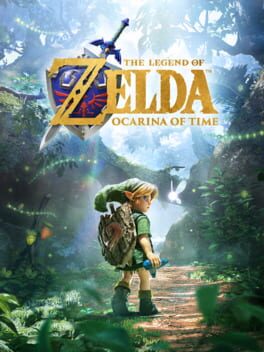
When Nintendo first unveiled The Legend of Zelda: Ocarina of Time on the Nintendo 64 in 1998, it didn’t merely set a new benchmark for 3D action‑adventure design—it reshaped the very expectations of what a console experience could deliver. The title’s pioneering use of lock‑on targeting, context‑sensitive puzzles, and a sprawling, time‑bending narrative turned it into a cultural touchstone, a reference point that still informs modern game design curricula and indie developers alike. Over the past two decades, the game has been resurrected on multiple platforms, from the 3DS’s handheld overhaul to the Wii U’s Virtual Console, each iteration coaxing a fresh wave of nostalgia while subtly tweaking mechanics to suit contemporary hardware.
Now, as Nintendo prepares the long‑awaited Switch 2, the company has announced a full‑scale remake of Ocarina of Time that promises to retain the soul of the original while injecting roughly ten percent new or altered puzzles and locations. This decision arrives at a moment when the industry is witnessing a surge in premium remasters and ‘classic‑plus’ releases, a trend fueled by both a maturing player base craving familiar experiences and a marketplace hungry for low‑risk, high‑return content. The announcement, therefore, is not just a nostalgic nod; it signals Nintendo’s strategic intent to leverage its most revered IPs to anchor the next generation of its flagship console.
What Happened?
During a recent Nintendo Direct streamed to a global audience, the publisher revealed that the Switch 2 version of Ocarina of Time will be built on a newly commissioned engine that supports ray‑traced lighting, higher texture fidelity, and a reimagined audio pipeline that captures the original’s iconic score with orchestral depth. Developers from Nintendo’s internal EPD division disclosed that while the core storyline and dungeon architecture remain intact, approximately one in ten puzzle encounters have been redesigned to challenge even veteran players who have memorized the original’s solutions. These alterations include new environmental interactions, subtle enemy behavior tweaks, and hidden chambers that reward exploration beyond the familiar route.
In addition to visual and gameplay refinements, the remake will feature an integrated walkthrough system accessible from the pause menu, effectively serving as an in‑game companion for those who wish to uncover every secret without resorting to external guides. This move acknowledges the enduring popularity of community‑driven resources while offering a curated experience that respects Nintendo’s trademark approach to player agency. The announcement also hinted at post‑launch support, with downloadable content slated to introduce time‑limited challenges and leaderboard‑driven speedrun incentives, further extending the title’s lifespan on the new hardware.
Analysis
From a market perspective, the Switch 2 Ocarina of Time remake operates on multiple strategic axes. First, it bolsters the console’s launch library with a universally recognized blockbuster, mitigating the typical early‑adopter hesitation that can plague new hardware cycles. Second, by embedding a modest but meaningful set of new puzzles, Nintendo sidesteps the criticism that remasters are merely cash grabs, instead positioning the title as a genuine ‘enhanced edition’ that justifies a premium price point. This approach aligns with the broader industry shift toward value‑added remasters, as seen with titles like Resident Evil 2 Remake and Final Fantasy VII Remake, which have demonstrated that consumers will pay for substantive upgrades.
Technically, the decision to rebuild the game on a next‑gen engine rather than simply upscaling textures reflects Nintendo’s commitment to long‑term platform relevance. The inclusion of ray tracing and higher frame‑rate targets not only future‑proofs the experience but also sets a visual baseline for other legacy franchises Nintendo may revisit. However, the undertaking is not without risk: the original’s design was intimately tied to the quirks of the N64 hardware, and translating its timing‑sensitive mechanics to a modern architecture could introduce unforeseen latency or difficulty spikes, potentially alienating purists. Balancing fidelity to the source with the expectations of a contemporary audience will be the litmus test for the remake’s critical reception.
XPLog Opinion
At XPLog UK, we view the Switch 2 Ocarina of Time remake as a masterstroke of brand stewardship—Nintendo is not merely re‑selling nostalgia, but actively enriching its flagship saga to keep the franchise relevant in an era where even legendary IPs must evolve or risk obsolescence. By weaving new challenges into the familiar tapestry, the company respects the intelligence of its core fanbase while inviting newcomers to experience the legend with a fresh lens. This measured innovation, coupled with strategic post‑launch content, positions the title as a cornerstone that could define the Switch 2’s identity and, by extension, Nintendo’s relevance in the next console generation.
Final Thoughts
Ultimately, the Ocarina of Time remake on Switch 2 stands as a barometer for how legacy content can be revitalized without sacrificing its essence. As the console’s release window narrows, players and analysts alike should watch for the rollout of the integrated walkthrough, the timing of the first DLC wave, and early sales figures, all of which will illuminate whether Nintendo’s blend of reverence and reinvention can set a new standard for the industry’s approach to classic game preservation.