
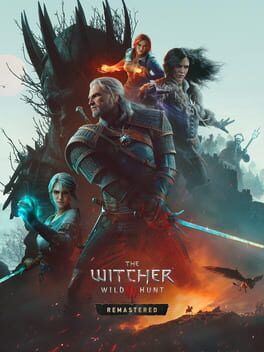
Overview
The release of The Witcher 3: Wild Hunt Remastered has arrived at a moment when the industry is undergoing a seismic shift toward inclusive design. While the original 2015 launch was celebrated for its sprawling narrative and unforgiving combat, it also attracted criticism from players who struggled with its relentless difficulty spikes and dense UI. Over the past few years, a wave of high‑profile titles—from Celeste to God of War—have demonstrated that robust accessibility options are no longer a niche add‑on but a market expectation, especially as consoles and PC platforms compete for a broader, more diverse audience. CD Projekt Red’s decision to embed a comprehensive suite of accessibility tools into a legacy title therefore reflects both a moral commitment and a calculated business move to keep the franchise relevant in a crowded RPG landscape.
Beyond the pure altruism of making Geralt’s world more approachable, the timing aligns with the resurgence of remastered releases as a low‑risk revenue engine. Publishers are mining their back‑catalogues, repackaging classics for next‑gen hardware, and using those launches to test new technologies—ray‑traced lighting, higher frame‑rates, and, increasingly, user‑centric quality‑of‑life features. In this context, the so‑called “Tired Parent Mode” is more than a tongue‑in‑cheek label; it is a strategic lever that allows the game to be enjoyed by households where time is scarce, by players with physical limitations, and by newcomers who might otherwise be intimidated by the original’s steep learning curve.
What Happened?
At the core of the remaster’s accessibility overhaul is a modular menu that lets players dial in granular adjustments: combat difficulty, enemy aggression, visual contrast, subtitle size, and even the speed at which Geralt’s sword swings. When paired with the already existing “Easy” difficulty, the configuration can transform the experience into a near‑cinematic walkthrough, where the focus shifts from mechanical mastery to narrative immersion. CD Projekt Red’s lead designer explained that the team consulted with disability advocacy groups and conducted extensive play‑testing sessions to ensure the options were not merely cosmetic but genuinely lowered the barrier to entry without diluting the game’s identity.
The announcement was accompanied by a brief developer video that highlighted the “Tired Parent” moniker—a nod to the growing demographic of gamers who juggle family responsibilities and limited play windows. By branding the mode in a relatable, almost self‑deprecating way, the studio signaled an awareness of the lived realities of its audience. The rollout also includes a “Text‑to‑Speech” feature for quest logs and a “Reduced Motion” toggle to mitigate motion‑sickness for sensitive players, expanding the accessibility toolkit beyond the usual difficulty sliders.
Analysis
The integration of such a deep accessibility suite into a high‑profile remaster sets a precedent that could ripple across the industry. Competitors are likely to view CD Projekt Red’s move as a benchmark, especially as investors scrutinize ESG (Environmental, Social, Governance) metrics that now incorporate social responsibility in gaming. From a market perspective, the added accessibility may unlock a segment of casual and disabled gamers who previously avoided complex RPGs, potentially boosting long‑tail sales on both PlayStation 5, Xbox Series X|S, and PC storefronts. Moreover, the data gathered from player preferences on these settings can inform future titles, allowing developers to iterate on accessibility from the ground up rather than retrofitting it after launch.
Technical hurdles were not trivial. Implementing real‑time difficulty scaling without breaking quest logic required a rewrite of several AI decision trees and a rebalancing of loot tables. The team also had to ensure that visual adjustments, such as high‑contrast mode, did not interfere with the game’s artistic direction—a delicate balance between preserving the series’ signature aesthetic and meeting accessibility standards. Successfully navigating these challenges demonstrates that legacy engines can be retrofitted for modern inclusivity, a lesson that may embolden studios with older IPs to invest in similar upgrades rather than abandoning them.
XPLog Opinion
From XPLog UK’s perspective, the “Tired Parent Mode” is a bold affirmation that accessibility is becoming a core pillar of game design rather than an afterthought. It shows that even a sprawling, combat‑heavy title like The Witcher 3 can be reshaped to serve a broader audience without sacrificing its narrative depth. This move not only future‑proofs the franchise but also pressures other AAA developers to embed similar flexibility from day one, lest they risk alienating a growing, socially conscious player base.
Final Thoughts
In sum, CD Projekt Red’s accessibility overhaul for The Witcher 3: Wild Hunt Remastered is a watershed moment that blends commercial savvy with genuine inclusivity. As the remaster rolls out across next‑gen consoles and PC platforms over the coming months, the industry will be watching closely to see whether the “Tired Parent Mode” translates into measurable sales uplift and, more importantly, a lasting shift toward universally designed experiences. Keep an eye on patch notes and community feedback through Q4 2024, when the first wave of usage data is expected to surface, offering concrete insight into how accessibility can reshape the economics of legacy titles.