
Overview
The Star Wars franchise has once again found itself at the centre of cultural debate, but beyond the noise of internet pole‑mic lies a quieter, more substantive story: the emergence of a fan‑driven space combat simulator that manages to capture the epic scope of the original trilogy while running on hardware that would have been dismissed as obsolete a decade ago. In an era where blockbuster titles demand multi‑gigabyte installations and RTX‑enabled GPUs, the fact that a fully‑featured, mission‑driven Star Wars dogfighter can operate on an i5‑1145G7 laptop with integrated graphics is a striking reminder of the power of community‑sourced development and the longevity of open‑source tooling.
To understand why this matters, one must trace the lineage back to Volition’s 1999 classic, *FreeSpace 2*, a title that defined the golden age of PC space sims with its kinetic dogfights, dynamic AI, and a robust mission editor that inspired countless total‑conversion projects. When the source code was eventually released under the GPL, it gave rise to *FreeSpace Open*, an open‑source engine that preserved the original’s physics while allowing modern enhancements. Over the past fifteen years, this engine has become a fertile ground for ambitious fan projects, and *Fate of the Galaxy* represents the most polished and ambitious of those efforts, marrying the beloved Star Wars aesthetic with a battle‑tested combat core.
What Happened?
Earlier this month the development team behind *Fate of the Galaxy* announced a public launch of their total‑conversion mod, positioning it as a free, unofficial Star Wars space combat experience that spans the entire original trilogy. The mod ships three distinct campaigns—Rebel, Imperial, and a hybrid “Scum” storyline—each populated with meticulously modelled ships ranging from the iconic X‑Wing and TIE Fighter to Boba Fett’s Firespray‑31 and even the rarely seen Naboo starfighter. Every vessel has been given authentic sound design, weapon balancing, and flight characteristics that echo both the cinematic source material and the hard‑core mechanics of *FreeSpace 2*.
Technically, the project leverages the Knossos launcher to bundle the open‑source *FreeSpace Open* engine, the community‑maintained asset pipeline, and a suite of custom scripts that handle mission branching and narrative triggers. Because the original commercial game is no longer a prerequisite, the installer is a single, modest download that unpacks into a self‑contained directory. Performance testing on a range of devices—from a 2018 ultrabook with an Intel integrated GPU to a 2022 desktop with a mid‑range Radeon—shows frame‑rates consistently above 60 fps at 1080p with high visual settings, confirming the developers’ claim that “even a rubbish laptop can fly the galaxy.” The release also includes a built‑in mod manager, enabling players to add community‑crafted skins, new ship variants, or even user‑generated missions without touching the core files.
Analysis
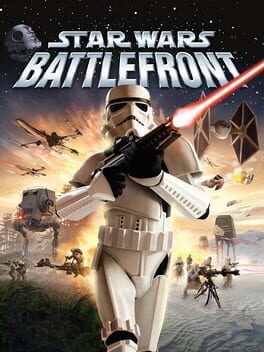
From a market perspective, *Fate of the Galaxy* occupies a niche that mainstream publishers have largely ignored since the cancellation of *Star Wars: Battlefront*’s space combat mode in 2016. While EA’s *Star Wars: Squadrons* offers a polished, console‑first dogfight experience, it remains a premium product with a subscription‑style multiplayer focus. By contrast, the free mod provides a full single‑player campaign, a broader ship roster, and the mod‑ability that keeps the community engaged long after launch. This dichotomy illustrates a growing segmentation within the Star Wars gaming ecosystem: high‑budget, polished releases for the mass market versus grassroots, open‑source projects that serve the hardcore simulation audience. The latter can sustain long‑term interest, act as a proving ground for new mechanics, and even influence future official titles by demonstrating latent demand for deeper tactical space combat.
Beyond the immediate Star Wars context, the success of *Fate of the Galaxy* underscores a broader industry trend toward open‑source preservation of legacy engines. As consoles become increasingly closed ecosystems, PC remains the bastion for archival and experimental titles, and projects like this highlight the commercial viability of supporting community‑driven extensions. Publishers may start to view such mods not as IP infringements but as valuable community outreach tools, potentially offering limited licensing or even co‑development opportunities. Moreover, the low hardware requirements challenge the prevailing narrative that next‑gen experiences must be tethered to expensive GPUs, suggesting a viable path for developers aiming to reach a wider, more cost‑conscious audience.
XPLog Opinion
At XPLog we see *Fate of the Galaxy* as a clarion call for the industry: when a dedicated volunteer team can deliver a Star Wars space opera that runs on a modest laptop, it proves that passion and clever engineering can outpace corporate budgets in certain verticals. Publishers should take note—not only to protect their IP but to nurture the ecosystems that keep it alive. By providing clear guidelines for fan‑made content and perhaps even offering lightweight SDKs for beloved legacy engines, companies can harness this grassroots energy, turning what would otherwise be a legal gray area into a symbiotic relationship that enriches both the brand and its most ardent fans.
Final Thoughts
In the months ahead, *Fate of the Galaxy* will likely evolve through community patches, VR experiments, and perhaps even a console port if the developers secure a suitable open‑source bridge. For players, the immediate takeaway is simple: a high‑quality, zero‑cost Star Wars dogfighting experience is now at their fingertips, regardless of hardware constraints. For the industry, the lesson is louder—invest in open tools, listen to the modding community, and recognise that the next big star‑fighter could emerge from a GitHub repository rather than a corporate boardroom. Keep an eye on the project’s GitHub roadmap for the next major update slated for early 2027, and watch how Disney and Lucasfilm respond to this grassroots resurgence of classic space combat.