
Overview
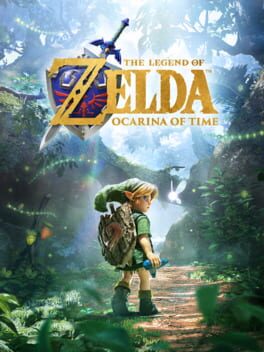
The gaming calendar this week reads like a festival of nostalgia and innovation, headlined by Nintendo’s long‑awaited release of The Legend of Zelda: Ocarina of Time for the freshly unveiled Switch 2. The original 1998 masterpiece, which helped define 3D action‑adventure design, has been re‑engineered to exploit the Switch 2’s upgraded GPU, higher bandwidth SSD, and adaptive haptics, promising a fidelity leap that rivals the original’s leap from 2D to 3D. Nintendo’s decision to resurrect Ocarina of Time at this juncture is no accident; it aligns with a broader industry trend of leveraging legacy IPs to showcase next‑gen hardware, a strategy seen in Sony’s PlayStation 5 remasters and Microsoft’s Xbox Series X enhanced editions. By positioning a cornerstone title at the launch, Nintendo is not merely banking on nostalgia but is also sending a clear message to developers and consumers that the Switch 2 is a serious contender for premium experiences without abandoning its hybrid ethos.
Enter Famitsu, Japan’s most venerable gaming publication, whose four‑critic scoring rubric has become a bellwether for both domestic and global perception. The outlet’s 9/9/9/10 aggregate, translating to a 37/40, places Ocarina of Time among the elite tier of launch titles that have historically propelled hardware adoption – think Resident Evil 2 Remake for the PS5 or Halo Infinite’s debut on Xbox Series X. In a market where launch windows are crowded with high‑budget spectacles, a near‑perfect score from Famitsu does more than endorse a game; it validates Nintendo’s hardware gamble and can sway pre‑order momentum in a region that still accounts for roughly 15 % of global console sales. Moreover, the score reverberates through the industry’s supply chain, influencing retailer stocking decisions, third‑party publisher confidence, and even the timing of DLC roadmaps for competing franchises.
What Happened?
Famitsu’s review panel dissected the Switch 2 iteration with the rigor typical of its legacy coverage, praising the meticulous art direction, the re‑balanced combat flow, and the seamless integration of the console’s new haptic feedback. While three critics awarded a solid nine, the fourth granted a perfect ten, citing the title’s ability to feel both reverently familiar and freshly exhilarating. The publication highlighted the revamped environmental lighting, which now reacts dynamically to the player’s position, and the expanded audio palette that leverages the Switch 2’s spatial sound capabilities to give each forest rustle and temple echo a tangible presence. Importantly, Famitsu noted that the game’s performance remained locked at a stable 60 fps, a technical achievement that underscores Nintendo’s mastery of optimization despite the hardware’s hybrid constraints.
Beyond the numbers, Nintendo’s development team, led by veteran producer Eiji Aonuma, offered a candid interview in the review’s supplemental notes. They explained that the remake was not a simple up‑scale but a ground‑up re‑architecture that allowed for new side‑quests, refined puzzle mechanics, and a re‑imagined soundtrack performed by a live orchestra. This approach mirrors the industry’s shift toward “remaster‑plus” experiences, where legacy titles are expanded with fresh content to justify a full‑price launch. Aonuma also hinted at future cross‑title integrations, suggesting that the Switch 2’s architecture could enable seamless transitions between Ocarina of Time and its sequel, Majora’s Mask, in a unified “Zelda Hub” – a tantalizing prospect for the franchise’s deeply invested fanbase.
Analysis
The Famitsu score functions as a market catalyst in several ways. First, it reinforces Nintendo’s positioning of the Switch 2 as a premium platform capable of delivering flagship experiences without abandoning its core hybrid identity. Competitors have leaned heavily on raw power; Nintendo, however, is betting on a curated library that blends nostalgia with next‑gen polish. This could shift consumer expectations, prompting other publishers to revisit their own classic catalogues for Switch 2 treatment, thereby expanding the ecosystem’s breadth. Second, the near‑perfect rating may accelerate the already brisk sell‑through of the console in Japan, a market where word‑of‑mouth and media endorsement carry disproportionate weight compared to Western territories.
From a long‑term perspective, the success of Ocarina of Time on Switch 2 may redefine Nintendo’s development pipeline. Historically, the company has alternated between original IP pushes and iterative updates; a strong performance here could tip the balance toward a more aggressive remaster strategy, especially as the studio navigates a talent crunch and the rising cost of AAA production. Moreover, the technical achievements showcased – stable 60 fps at 4K, adaptive haptics, and spatial audio – set a new baseline for future titles, pressuring third‑party studios to meet or exceed these standards if they wish to remain competitive on the platform.
XPLog Opinion
At XPLog UK we view Famitsu’s endorsement as a watershed moment that validates Nintendo’s gamble on a hybrid‑first, quality‑over‑quantity launch philosophy; the Ocarina of Time remake not only proves that the Switch 2 can host technically demanding experiences but also signals that Nintendo’s stewardship of its heritage properties can be both reverent and forward‑looking, a combination that will likely shape the console’s software roadmap for years to come.
Final Thoughts
In sum, the 37/40 from Famitsu does more than crown a beloved classic with a fresh coat of polish – it cements the Switch 2’s status as a serious contender in the next‑gen arena and sets a high bar for all subsequent releases. As the holiday season approaches, gamers and analysts alike should keep an eye on sales data emerging in early December, the forthcoming post‑launch patches promised by Nintendo, and the ripple effects on rival platforms’ own legacy revivals, all of which will determine whether this launch becomes a defining chapter in Nintendo’s storied history.