
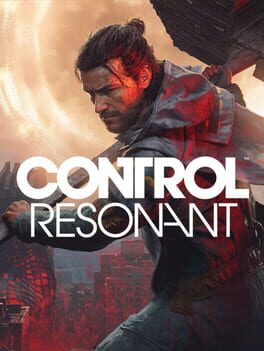
Overview
When Remedy Entertainment unveiled Control Resonant in early summer, the gaming world expected another solid entry from a studio renowned for its cerebral storytelling and inventive gameplay loops. Yet the announcement arrived at a moment when the industry is grappling with shifting consumer habits: the rise of live‑service ecosystems, the consolidation of console generations, and a renewed appetite for single‑player experiences that reward deep immersion. Remedy, having carved a niche with titles like Max Payne, Alan Wake, and the original Control, positioned Resonant as both a continuation of its signature surreal‑action aesthetic and a bold experiment in post‑launch content integration, promising episodic expansions that would keep the narrative engine humming long after the initial launch window.
Historically, Remedy’s commercial peaks have been modest compared to juggernauts such as Ubisoft or EA, but the studio has cultivated a fiercely loyal fanbase that values auteur‑driven design over mass‑market polish. In the context of 2024’s market, where AAA launches often rely on aggressive micro‑transaction models to sustain revenue streams, Remedy’s decision to double‑down on a premium, story‑first product represents a calculated risk. The success of Control Resonant, therefore, is not merely a sales figure; it is a barometer for the viability of narrative‑centric, high‑budget single‑player games in an ecosystem increasingly dominated by subscription services and cloud‑based distribution.
What Happened?
Within three weeks of its worldwide launch, Control Resonant crossed the one‑million‑copy threshold, a milestone that Remedy describes as its fastest‑selling title ever. The sales surge was fueled by a coordinated multi‑platform rollout—simultaneous releases on PlayStation 5, Xbox Series X|S, and PC—paired with a robust pre‑order campaign that leveraged limited‑edition physical bundles, exclusive in‑game cosmetics, and a partnership with major retailers for prominent shelf space. Early adopters praised the game’s refined combat system, which builds upon the telekinetic mechanics of its predecessor while introducing a dynamic resonance meter that rewards strategic environmental manipulation.
Beyond raw unit sales, Remedy reported a “massive boost in revenue,” citing not only initial purchases but also a surge in digital add‑ons and the early uptake of the planned post‑launch narrative DLC roadmap. Developer statements highlighted that the studio had allocated a larger-than-usual marketing budget, drawing on cross‑media collaborations with comic‑book artists and a series of live‑streamed gameplay showcases that emphasized the game’s unique blend of psychological horror and procedural world‑building. The company’s CFO emphasized that the accelerated cash flow will fund the next generation of Remedy projects, potentially accelerating the studio’s roadmap for a new IP slated for 2026.
Analysis
The commercial performance of Control Resonant reverberates across several industry fault lines. First, it validates the notion that premium, narrative‑driven experiences can still command headline sales in a market saturated with free‑to‑play and subscription‑first titles. This success may encourage other mid‑size studios to invest in ambitious single‑player campaigns, knowing that a well‑executed launch strategy can overcome the headwinds of reduced retail footfall and the dominance of streaming platforms. Second, Remedy’s rapid revenue uptick underscores the potency of a tightly integrated DLC pipeline; by promising a steady stream of story extensions, the studio effectively turned a traditional “complete‑once” product into a quasi‑service, blurring the line between classic AAA releases and live‑service models without compromising artistic integrity.
From a console ecosystem perspective, the title’s cross‑generation performance strengthens the case for next‑gen hardware as a viable launchpad for narrative titles that demand high fidelity and complex physics calculations. Both Sony and Microsoft have been courting developers to showcase the technical capabilities of their new consoles, and Remedy’s partnership demonstrates that a well‑optimized engine can deliver a seamless experience across both platforms, potentially easing the fragmentation that has plagued previous generation transitions. Moreover, the strong digital sales component hints at a continued shift away from physical media, prompting retailers to reconsider inventory strategies for premium releases.
XPLog Opinion
At XPLog UK we view Control Resonant’s meteoric rise as a watershed moment for the single‑player renaissance, proving that a studio with a clear artistic vision can still dominate headlines without resorting to the monetisation tactics that have alienated many core gamers. Remedy’s disciplined focus on narrative depth, coupled with a savvy, content‑driven post‑launch plan, sets a benchmark for how premium titles can generate sustainable revenue streams while respecting player agency. This achievement should embolden other developers to prioritize craftsmanship over churn, and it sends a clear signal to platform holders: the appetite for high‑quality, story‑first experiences remains robust, and supporting such titles will be essential for maintaining a healthy, diversified ecosystem.
Final Thoughts
Control Resonant’s record‑breaking launch not only redefines Remedy’s commercial trajectory but also reshapes expectations for the broader market, illustrating that narrative excellence can coexist with lucrative, service‑like longevity. As the studio prepares its next venture—rumoured to explore new mythologies while leveraging the financial cushion earned from Resonant—players and investors alike should keep an eye on upcoming developer showcases in Q1 2025 and the anticipated release window for Remedy’s next flagship, slated for late 2026. The industry will be watching to see whether this success sparks a wave of similar premium releases or remains an outlier in an era increasingly dominated by subscription and live‑service models.