
Overview
In an era where blockbuster releases dominate headlines, the indie sector continues to carve out a niche for experiential games that prioritize mood, message, and modest scope over sheer spectacle. Atuel arrives at this crossroads, a 25‑minute free title that asks players to inhabit a river coursing through a wildfire‑scarred valley, turning the familiar walking‑sim formula on its head by making the player the very element that both nourishes and is threatened by the flames. This design choice taps into a growing appetite among core gamers for titles that confront climate anxiety through interactive metaphor, a trend that can be traced back to the lyrical environmental narratives of games like Journey and Flower, and more recently to the procedural ecosystems of ABZÛ and Spiritfarer.
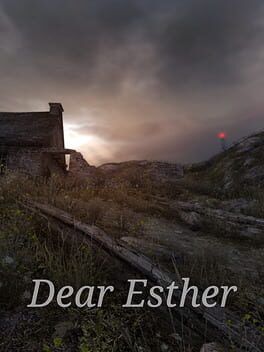
Atuel’s release as a completely free download also reflects a broader industry experiment with low‑barrier distribution models, where developers leverage zero‑price offerings to build community goodwill, collect valuable telemetry, and potentially seed future monetisation through expansions or merchandise. The timing is no accident: with major platforms such as Steam, the Epic Store, and console storefronts all emphasizing indie showcases, a free title can achieve a visibility spike comparable to paid releases, especially when paired with strong press coverage and social media virality. Historically, free experiences like Dear Esther and Proteus have demonstrated that a concise, art‑driven experience can punch well above its weight in cultural impact, and Atuel appears poised to continue that lineage.
What Happened?
The development team behind Atuel announced the game’s public launch earlier this week, emphasizing that the player will spend the bulk of the session gliding downstream, guiding water through a landscape ravaged by recent wildfires. Rather than a traditional first‑person trek, the gameplay revolves around controlling the river’s flow, reacting to obstacles such as charred debris, evaporating pools, and sudden gusts of heat that threaten to evaporate the very medium you embody. Visually, the title employs a minimalist palette of muted earth tones punctuated by the stark orange of flames, while an ambient soundtrack composed of low‑frequency drones and occasional crackling fire sounds reinforces the sense of vulnerability and power.
In a developer diary posted alongside the release, the creators explained that the 25‑minute runtime was an intentional design constraint, meant to mirror the fleeting nature of a river’s journey through a crisis zone and to ensure the experience could be consumed in a single sitting. The game is built on a lightweight Unity engine, allowing it to run on a broad spectrum of hardware—from high‑end PCs to the latest console generations and even mobile devices. No micro‑transactions or DLC are attached; the title is fully self‑contained, with a simple “Press Play” button on its storefront page, underscoring the team’s commitment to an unmediated artistic statement.
Analysis
From a market perspective, Atuel’s free distribution model could serve as a catalyst for a modest resurgence of short‑form environmental simulations, a sub‑genre that has historically struggled to find commercial footing despite critical acclaim. By removing price friction, the developers invite a larger, more diverse audience to engage with climate‑centric storytelling, potentially expanding the demographic that associates gaming with activism. Moreover, the title’s modest production budget—typical for a small indie studio—means that any substantial download count translates directly into brand equity, which can be leveraged for future projects, partnership opportunities, or grant funding from cultural bodies that support eco‑focused media.
Technically, simulating fluid dynamics in real time on limited hardware is a non‑trivial challenge, yet Atuel’s stylised approach sidesteps the need for hyper‑realistic physics while still delivering a compelling sense of flow and resistance. This balance could inspire other developers to experiment with abstraction over fidelity, especially on platforms like the Nintendo Switch where performance headroom is at a premium. In the console ecosystem, a free title that runs seamlessly across PlayStation, Xbox, and Switch could encourage platform holders to promote similar experiences in their indie spotlight sections, reinforcing the notion that high‑impact storytelling does not require a premium price tag.
XPLog Opinion
At XPLog UK, we view Atuel as a bold reminder that the most resonant gaming experiences often arise from constraints—be they temporal, financial, or mechanical. While the game’s brevity may leave some craving deeper systems, its singular focus on embodying water amidst devastation delivers an emotional punch that many longer titles dilute with extraneous content. We commend the developers for trusting a free‑to‑play model to convey a message of ecological fragility, and we anticipate that its success will encourage other studios to explore similarly concise, purpose‑driven experiences without fearing commercial obscurity.
Final Thoughts
In sum, Atuel stands as a succinct yet potent experiment in merging environmental advocacy with interactive design, and its free availability ensures that the conversation it sparks can reach the widest possible audience. Players should keep an eye on the developer’s channels for potential seasonal updates—such as alternate weather cycles or expanded fire‑affected regions—that could deepen replayability. As the industry continues to grapple with how best to reflect real‑world crises within virtual spaces, Atuel may well become a benchmark for future titles that aim to make a splash without demanding a fortune.