
Overview
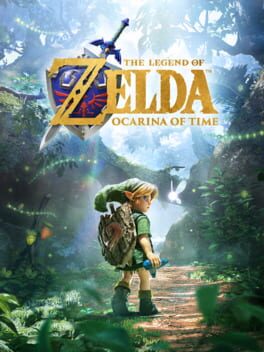
When The Legend of Zelda: Ocarina of Time first launched on the Nintendo 64 in 1998, it did more than redefine 3D adventure—it cemented a cultural touchstone whose melodies, puzzles, and characters still reverberate through modern gaming discourse. Over two decades later, Nintendo’s forthcoming Switch 2 version promises a visual overhaul, refined mechanics, and, perhaps most intriguingly for purists, a voice cast that deliberately mirrors the original soundscape. In an era where remasters frequently replace legacy audio with star‑studded talent, the decision to honor the auditory identity of a classic signals a rare respect for nostalgic fidelity, a factor that could influence how other publishers approach legacy titles on next‑gen hardware.
The announcement arrived as part of Nintendo’s ongoing "Ask the Developer" series, a transparent window into the studio’s creative pipeline that has become a valuable resource for analysts tracking the company’s iterative development philosophy. By spotlighting the casting process—complete with blind auditions and a surprising return of a veteran voice actor—the series underscores Nintendo’s broader strategy of marrying cutting‑edge technology with a reverence for its own mythos, a balance that has historically powered the company’s sustained market dominance across console cycles.
What Happened?
During the latest developer Q&A, Series Producer Eiji Aonuma and Game Director HokWai Ng revealed that the team conducted a series of blind auditions to locate vocal talent capable of reproducing the nuanced timbres that players associate with characters such as Princess Zelda, Ganondorf, and the enigmatic Sheik. The process deliberately stripped away visual references, forcing the casting panel to judge purely on vocal compatibility. The outcome? A returning voice actor from the N64 original—identified only by internal credits—was re‑engaged to reprise their role, ensuring an aural continuity that many fans will recognize instantly.
According to Aonuma, the rationale behind preserving these iconic voices was rooted in an acute awareness of “established perceptions.” The team feared that fresh talent, however technically proficient, might disrupt the subconscious link players have formed between character and sound over the past 25 years. By blending the familiar with the newly recorded lines—thanks to modern audio processing and higher fidelity capture—the Switch 2 version aims to deliver an experience that feels both nostalgically authentic and technically superior.
Analysis
The decision to retain a legacy voice actor carries measurable market implications. In a crowded remaster landscape where titles like "Final Fantasy VII Remake" and "Resident Evil 2" leveraged star power to attract broader audiences, Nintendo’s approach bets on deepening loyalty among its core fanbase rather than chasing new demographics. This strategy dovetails with the company’s broader ecosystem play: by offering a uniquely authentic rendition of a beloved classic, Nintendo differentiates the Switch 2’s library, potentially boosting hardware attach rates and reinforcing the console’s reputation as the definitive home for legacy Nintendo experiences.
From a technical standpoint, the blind audition methodology reflects a maturation of Nintendo’s talent acquisition pipeline. Historically, the company relied on in‑house voice teams or long‑standing external contractors, but the increasing sophistication of voice‑modelling AI and high‑resolution audio capture now demands a more rigorous selection process. By isolating vocal performance from visual cues, Nintendo mitigates bias and ensures that the chosen actor can meet the heightened expectations of modern audio fidelity, a move that may set a new industry benchmark for future remasters and original IPs alike.
XPLog Opinion
At XPLog UK, we view Nintendo’s reverent casting choice as a masterstroke of brand stewardship. In an age where the loudest marketing often eclipses substance, Nintendo is quietly reminding the industry that authenticity can be a competitive advantage. By honoring the original vocal DNA of Ocarina of Time, Nintendo not only safeguards the emotional resonance of a generational masterpiece but also signals to developers that player memory is a valuable asset—one that can be leveraged without resorting to gimmickry or superficial star power.
Final Thoughts
As the Switch 2 launch window approaches, the re‑engagement of a classic voice actor serves as a bellwether for how Nintendo will balance innovation with preservation across its upcoming slate. Players should keep an eye on further developer updates, especially those detailing how the enhanced audio pipeline integrates with the console’s upgraded hardware, and anticipate that the next wave of Nintendo remasters may follow this same reverent formula, marrying cutting‑edge tech with the timeless echoes of its storied past.