
Overview
The Xbox ecosystem awoke this morning to a flood of eight new titles, a release cadence that underscores Microsoft’s aggressive push to keep its storefront vibrant and its install base engaged. Among the slate, two standouts—Godzilla: Destroy All Monsters Melee Remastered and ZERO PARADES: Director's Cut—represent opposite ends of the spectrum: a nostalgic revival of a beloved early‑2000s arcade‑style fighter and the next ambitious narrative experiment from the studio that redefined dialogue‑driven RPGs with Disco Elysium. Their simultaneous debut is not merely a calendar entry; it signals a strategic layering of legacy IP revitalisation and high‑concept indie development that Microsoft has been fine‑tuning since the Xbox Series X|S launch.
In a market where PlayStation leans heavily on blockbuster exclusives and Nintendo doubles down on family‑friendly first‑party gems, Xbox has cultivated a reputation for breadth—offering a spectrum from retro revivals to cutting‑edge auteur titles. This approach dovetails with the broader industry trend of leveraging established franchises to attract lapsed fans while courting the increasingly discerning core gamer who craves depth, choice, and narrative sophistication. The eight‑game drop, therefore, is a micro‑cosm of Microsoft’s dual‑track strategy: monetize nostalgia, expand the Xbox Game Pass library, and cement relationships with studios that push the boundaries of interactive storytelling.
What Happened?
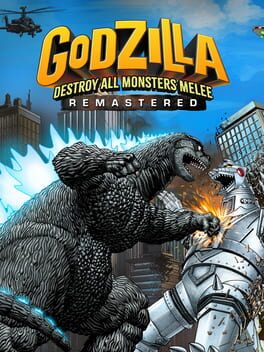
Godzilla: Destroy All Monsters Melee, originally released on the Xbox in 2002, returns as a fully remastered package that upgrades textures, refines frame‑rates to a steady 60fps, and introduces modern controller support while preserving the chaotic, arena‑brawler essence that let players pit the King of Monsters against each other in frantic, city‑smashing duels. The remaster also bundles previously region‑locked DLC, adds an online matchmaking lobby, and integrates achievement tracking—features that were conspicuously absent from the original launch. In developer statements, the team highlighted a desire to honor the game’s legacy while making it accessible to a new generation accustomed to seamless online experiences.
ZERO PARADES: Director's Cut, meanwhile, is ZA/UM’s long‑awaited continuation of the philosophical espionage RPG lineage that began with Disco Elysium. The Director's Cut expands the base narrative with additional branching quests, refined dialogue trees, and a rebalanced skill system that deepens the player’s ability to manipulate political intrigue in a dystopian setting. ZA/UM’s creative lead emphasized that the title is built on an upgraded Unity engine, allowing for richer environmental detail and more responsive AI, while also promising post‑launch support that could see community‑driven content and further narrative extensions. The announcement positions the game as a flagship title for Xbox Game Pass, reinforcing the platform’s commitment to premium indie experiences.
Analysis
The remaster of Godzilla: Destroy All Monsters Melee arrives at a time when the retro‑revival market is reaching maturity; titles like Crash Bandicoot N. Sane Trilogy and Spyro Reignited have demonstrated that polished nostalgia can drive both sales and Game Pass subscriptions. For Xbox, the move serves a dual purpose: it bolsters the console’s library with a recognizable brand that appeals to both older fans and younger players discovering the franchise for the first time, and it fills a genre niche—fast‑paced, multiplayer brawlers—that has been relatively under‑served on the platform since the heyday of the original Xbox Live era.
ZERO PARADES, on the other hand, represents a calculated risk that aligns with Microsoft’s broader ambition to become the home of “games as art.” By backing a studio that thrives on literary depth and unconventional mechanics, Xbox differentiates itself from competitors that prioritize spectacle over substance. The technical decision to migrate to an updated Unity stack suggests an awareness of performance parity across the Series X|S and even the Xbox One, ensuring a consistent experience for the vast majority of the user base. Should the title succeed in retaining the critical acclaim of its predecessor while expanding its audience, it could cement ZA/UM as a cornerstone of the Xbox Game Pass premium indie roster, influencing future acquisition and partnership strategies.
XPLog Opinion
From XPLog’s perspective, today’s dual launch epitomises the most compelling narrative of the current console generation: the convergence of nostalgia‑driven revenue streams with avant‑garde storytelling. While the Godzilla remaster will likely generate a modest but reliable uptick in engagement metrics, ZERO PARADES has the potential to reshape player expectations for narrative agency on consoles, especially if its post‑launch roadmap delivers on the promise of community‑sourced expansions. Microsoft’s willingness to allocate prime shelf space and Game Pass visibility to such divergent titles signals confidence that the Xbox brand can comfortably house both the familiar roar of a monster franchise and the quiet, cerebral whisper of a political espionage RPG.
Final Thoughts
In sum, the eight‑title release wave, anchored by Godzilla’s roaring return and ZA/UM’s daring new espionage saga, underscores Xbox’s multifaceted growth strategy—leveraging legacy IP to sustain its core audience while championing innovative indie experiences that push the medium forward. Players should keep an eye on the forthcoming patches for both games, the rollout of seasonal events tied to the Godzilla title, and the scheduled Q1 2027 roadmap reveal from ZA/UM, which promises to expand the narrative universe of ZERO PARADES even further. The coming months will reveal whether this blend of old and new can translate into lasting market momentum for Microsoft’s ever‑expanding ecosystem.