
Overview
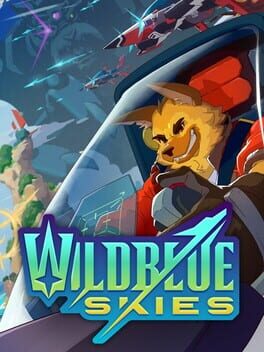
When Chuhai Labs announced Wild Blue Skies for the Nintendo Switch, the indie title arrived at a crossroads of nostalgia and renewal that few developers could have anticipated. The game’s aesthetic—a bright, low‑poly sky populated by a quartet of charismatic pilots—evokes the golden era of 1990s aerial shooters, yet it does so without the weight of a licensed franchise. In an industry where established IPs are being resurrected with ever‑greater fidelity, the timing of Wild Blue Skies is striking: Nintendo’s own Star Fox franchise is slated for a high‑budget, next‑gen remake in 2026, a project that promises to re‑engineer the beloved N64 classic with modern graphics, refined controls, and a narrative overhaul.
This convergence of a nostalgic indie offering and a flagship Nintendo revival forces a broader examination of the current console landscape. The Switch, now in its fourth year, has become a haven for small studios seeking a low‑cost entry point and a massive, dedicated install base. Meanwhile, the upcoming Switch‑2 hardware leak has already sparked speculation about performance upgrades, which could further tilt the balance toward high‑definition, blockbuster titles. Wild Blue Skies, therefore, is not just another space‑shooter; it is a litmus test for how indie developers can navigate a market saturated with both retro reverence and cutting‑edge expectations.
What Happened?
Chuhai Labs revealed that Wild Blue Skies will feature a roster of four pilots, each with distinct personalities and ship customisations, tasked with thwarting an ex‑engineer turned tyrant bent on world domination. The gameplay loop mirrors the classic dogfighting and mission‑based structure that defined Star Fox 64, but the studio has introduced a modular upgrade system and procedurally generated side missions to extend replayability. According to the developer’s press release, the title was in pre‑production before any public hint of Nintendo’s Star Fox remake, suggesting that the design philosophy was rooted in delivering a “license‑free homage” rather than piggy‑backing on Nintendo’s marketing.
Technical details disclosed during the showcase indicate that Wild Blue Skies runs on a custom Unity engine build optimised for the Switch’s ARM CPU and GPU, targeting a steady 30 fps at 720p resolution. The team emphasized that the art direction deliberately leans into a stylised, pastel palette to differentiate itself from the more realistic aesthetic of the upcoming Star Fox remake. Moreover, the developers promised post‑launch support, including seasonal events and community‑driven ship skins, positioning the game as a long‑term service rather than a one‑off indie flash.
Analysis
From a market standpoint, Wild Blue Skies occupies a precarious niche. On one hand, its design taps into the enduring appetite for arcade‑style shooters, a genre that has seen a modest resurgence thanks to titles like *R-Type Final 2* and *Furi*. On the other hand, the proximity of a high‑budget Star Fox remake threatens to eclipse any indie effort that appears derivative. Historically, Nintendo has been protective of its core franchises, yet it has also allowed indie titles to flourish alongside its marquee games—consider the success of *Celeste* and *Hollow Knight* on the Switch. The key differentiator for Wild Blue Skies will be its ability to cultivate a distinct identity through community engagement and iterative content, rather than relying solely on the nostalgia factor.
Technical constraints also play a crucial role. The Switch’s hardware limitations have forced many indie developers to adopt clever optimisation strategies, and Chuhai Labs’ decision to target 720p at 30 fps reflects a pragmatic balance between visual fidelity and performance stability. Should the rumored Switch‑2 arrive with a significant boost in processing power, we may see a wave of ports and upgrades that could either resurrect Wild Blue Skies with enhanced graphics or render its current iteration obsolete in the eyes of performance‑focused gamers. This dynamic underscores the broader tension between platform longevity and the rapid pace of hardware evolution.
XPLog Opinion
At XPLog UK, we view Wild Blue Skies as a bold, if cautious, statement from the indie sector: it proves that developers can still carve out meaningful space in a market dominated by legacy franchises and next‑gen hardware hype. While the game’s resemblance to Star Fox 64 is undeniable, the studio’s commitment to post‑launch content and community‑driven customisation suggests a long‑term vision that transcends mere homage. In an era where players increasingly demand both nostalgic thrills and fresh experiences, Wild Blue Skies could become a reference point for how indie studios strategically position themselves alongside heavyweight releases.
Final Thoughts
Ultimately, Wild Blue Skies arrives at a pivotal moment for the Switch ecosystem, poised between the nostalgic revival of a beloved Nintendo franchise and the relentless march of new hardware. Its success will hinge on Chuhai Labs’ ability to nurture a dedicated player base, deliver consistent updates, and perhaps most importantly, differentiate itself enough to stand apart from the looming Star Fox remake. Keep an eye on the developer’s roadmap over the next twelve months, especially any announcements regarding Switch‑2 optimisation, as these will be critical indicators of the title’s staying power in a rapidly shifting console landscape.