
Overview
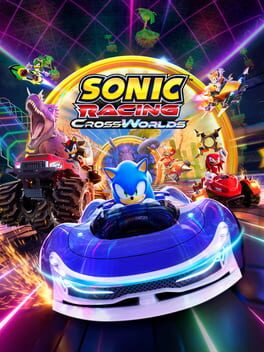
When SEGA first resurrected the Sonic brand for competitive racing with Sonic & All‑Stars Racing in 2010, the franchise entered a niche corner of the kart‑gaming market dominated by Nintendo’s Mario Kart juggernaut. Over the past decade, Sonic Racing: CrossWorlds has evolved from a modest digital‑only title into a cross‑platform live‑service experience, leveraging the company’s broader push toward recurring revenue and community‑driven content. The announcement of “Year Two” – a comprehensive 2.0.0 update slated for 3 November 2026 – arrives at a moment when the industry is witnessing a resurgence of post‑launch support models, from Fortnite’s seasonal passes to Respawn’s Apex Legends updates, and SEGA is keen to prove that its blue‑blurred hedgehog can compete on that front.
Beyond the immediate hype, the timing of this patch aligns with SEGA’s strategic realignment under its newly appointed Global Gaming Head, who has pledged to double the company’s live‑service revenue by 2028. The patch is not merely a bundle of balance tweaks; it represents a concerted effort to cement Sonic Racing’s place in the emerging “esports‑lite” ecosystem, where casual accessibility meets competitive depth. By layering free and paid character updates, SEGA signals a willingness to monetize premium cosmetics while preserving a level playing field, a balance that has proved critical for titles like Rocket League and Call of Duty: Warzone.
What Happened?
On 12 October 2026, Sonic Global Community Director Aaron Webber delivered a detailed preview of the Year Two rollout, confirming that version 2.0.0 will introduce a suite of new additions, ranging from an expanded roster of both free and premium characters to a reworked physics engine aimed at tightening drift mechanics. The update also promises a refreshed track rotation, with three brand‑new circuits that draw inspiration from iconic Sonic locales such as Angel Island and the newly imagined “Neon City” – a nod to the franchise’s forays into cyber‑punk aesthetics in recent spin‑offs. Webber emphasized that the patch will address long‑standing community concerns, notably the disparity in boost management and the latency issues that have plagued cross‑play sessions on older hardware.
In addition to the gameplay overhaul, SEGA is rolling out a robust post‑launch content pipeline: weekly challenges, seasonal leaderboards, and a “Champion’s Pass” that bundles exclusive skins, vehicle skins, and a limited‑edition Sonic‑themed kart. The free updates will see the return of fan‑favorite characters like Tails and Knuckles, while the paid tier introduces newcomers such as Blaze the Cat and a crossover cameo from the upcoming Sonic Frontier series. Webber’s briefing also hinted at a deeper integration with the Sonic Global Community platform, where player‑generated track designs will be vetted and potentially added to the official rotation, echoing the community‑driven model popularized by TrackMania and Forza Horizon.
Analysis
The 2.0.0 patch positions Sonic Racing at a crossroads of market expectations and technical ambition. By overhauling core mechanics and expanding the content cadence, SEGA is directly challenging the entrenched dominance of Mario Kart 9, which continues to dominate console sales charts. However, SEGA’s gamble hinges on its ability to sustain a vibrant online meta; the addition of a refined physics system may attract competitive players, but it also risks alienating the casual base if the learning curve steepens too sharply. Moreover, the decision to intertwine free and paid character updates reflects a broader industry trend toward hybrid monetisation, yet it must be executed with transparency to avoid the backlash that has plagued games like Apex Legends during controversial loot‑box rollouts.
From a platform perspective, the patch’s emphasis on cross‑play stability is a strategic move to maximise the title’s reach across Nintendo Switch, PlayStation 5, Xbox Series X|S, and PC. Historically, SEGA’s cross‑platform ambitions have been hampered by fragmented server architectures, but recent investments in cloud‑based matchmaking services suggest a more unified backend. If successful, Sonic Racing could become a flagship example of how legacy publishers can retrofit older IPs for the modern, interconnected gaming landscape, potentially influencing rivals such as Bandai Namco to revisit their own kart‑style offerings.
XPLog Opinion
At XPLog UK we view the Year Two 2.0.0 rollout as SEGA’s most decisive statement yet: the Sonic franchise is no longer content to exist as a nostalgic side‑project, but is aiming to carve out a sustainable slice of the live‑service racing pie. The blend of substantive gameplay refinement, a clear content roadmap, and a community‑first track‑submission system demonstrates a maturity that could finally shift the perception of Sonic Racing from a novelty to a serious competitor in the esports‑adjacent arena. Should the patch deliver on its promises, we expect to see a measurable uptick in concurrent players, higher engagement on the Sonic Global Community hub, and a ripple effect that encourages other mid‑tier publishers to invest similarly in iterative, community‑driven updates.
Final Thoughts
In sum, the Year Two 2.0.0 patch is more than a routine update; it is a litmus test for SEGA’s ability to modernise a legacy IP within a fiercely competitive live‑service market. With the November 3 release on the horizon, the next few weeks will be crucial as the community digests the promised changes and the broader industry watches to see whether Sonic Racing can finally accelerate from the shadows of its kart‑racing peers into a leading position on the global stage.