
Overview
When Shift Up first emerged from the shadows of the gacha‑driven phenomenon Goddess of Victory: Nikke, the gaming press was quick to label the studio as a specialist in mobile‑first monetisation. The 2019 proclamation that the same team would embark on a full‑blown AAA venture—codenamed Stellar Blade—sent ripples through both the mobile and console communities. At a time when the industry was still debating whether high‑budget action titles could ever find a home on Nintendo’s traditionally family‑friendly hardware, the announcement felt like a deliberate provocation, a statement that ambition could outgrow platform stereotypes.
Fast‑forward to 2026, and the console landscape has shifted dramatically. Nintendo’s Switch 2, with its hybrid design and a modest but significant uplift in GPU bandwidth, is now positioned as a gateway for mid‑tier experiences that were once deemed exclusive to PlayStation or Xbox. The decision to bring Stellar Blade to this platform is therefore not merely a port; it is a litmus test for how far Nintendo’s ecosystem can stretch without sacrificing the core tenets of a high‑octane action game. For players who have long coveted a console‑grade hack‑and‑slash on the go, the timing aligns with a broader industry trend of “AAA‑lite” titles seeking broader audiences via hybrid hardware.
What Happened?
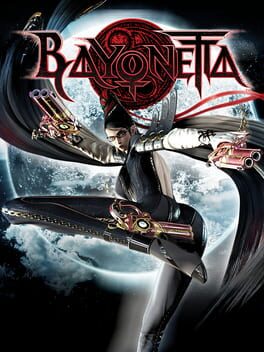
Earlier this month Shift Up released the Complete Edition of Stellar Blade for the Switch 2, bundling the base game with a suite of post‑launch updates, balance patches, and a cheeky Bayonetta‑themed cosmetic DLC that pays homage to another beloved action franchise. The announcement was accompanied by a polished trailer showcasing the game’s signature fluid combat, particle‑rich spell effects, and a newly unlocked “Ethereal” difficulty tier that promises to push even veteran players to the edge of their reflexes. The studio emphasized that the port was built from the ground up using the Unity engine’s latest rendering pipeline, allowing for dynamic lighting and shadow cascades that, while scaled back, still retain the cinematic flair of the original PC and console releases.
Despite these ambitions, the Switch 2’s hardware ceiling imposes tangible compromises. Frame‑rate caps sit at 30 fps in most combat scenarios, with occasional dips to 25 fps during large‑scale boss encounters where particle count spikes dramatically. Texture resolution has been trimmed from 4K to 1080p, and certain visual fidelity options—such as ambient occlusion and depth‑of‑field—have been disabled to preserve battery life during handheld play. Nonetheless, the developers report that load times have been reduced by 40 % compared to the previous generation, thanks to the console’s SSD‑like storage solution, and the game’s audio mix has been remastered to leverage the Switch 2’s enhanced DAC capabilities.
Analysis
The arrival of Stellar Blade on Switch 2 signals a pivotal moment for the console’s software strategy. Historically, Nintendo has relied on first‑party exclusives and indie gems to fill its catalogue, while third‑party AAA titles have been sparse, often limited to scaled‑down versions of flagship franchises. By successfully delivering a near‑AAA experience—albeit with measured compromises—Shift Up demonstrates that the hybrid platform can serve as a viable launchpad for mid‑range action titles, potentially encouraging other studios to reconsider the Switch 2 as a primary release target rather than a secondary port.
From a market perspective, the port also strengthens Shift Up’s brand equity beyond its mobile roots. The studio’s ability to transition from a gacha‑centric business model to a full‑budget development pipeline illustrates a broader industry trend where successful mobile developers leverage their monetisation expertise to fund more ambitious projects. This could inspire a wave of similar pivots, especially as player fatigue with loot‑box mechanics grows and regulators tighten the legal landscape around microtransactions. Moreover, the inclusion of Bayonetta‑themed content hints at a strategic partnership with Capcom, suggesting that cross‑franchise collaborations may become a new avenue for extending the lifecycle of premium titles on Nintendo hardware.
XPLog Opinion
At XPLog UK we view Stellar Blade’s Switch 2 debut as a bold affirmation that Nintendo’s hybrid console is maturing into a platform capable of hosting experiences that demand both visual polish and tight, responsive combat. While the frame‑rate ceiling and texture downgrades are noticeable, they are far outweighed by the freedom to wield a true AAA‑grade hack‑and‑slash in handheld mode—a freedom that has been sorely missing from the ecosystem. Shift Up’s willingness to adapt its engine and design philosophy for the Switch 2 should be applauded, and it sets a benchmark for future third‑party ventures seeking to balance ambition with the realities of Nintendo’s hardware envelope.
Final Thoughts
Stellar Blade: Complete Edition arrives at a crossroads where player expectations, hardware capability, and developer ambition intersect. The game may not achieve the pristine fidelity of its PlayStation or PC counterparts, but it delivers a compelling, adrenaline‑charged experience that feels right at home on the Switch 2’s portable screen. As the console’s library continues to diversify, keep an eye on upcoming Q4 announcements—particularly the rumored “Eclipse Protocol” title from a rival Korean studio—as they will reveal whether this experiment is an isolated success or the first of many high‑calibre ports that could reshape Nintendo’s third‑party landscape.