
Overview
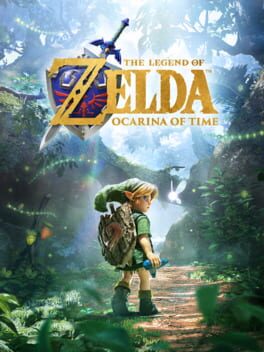
As the autumnal mist lifts from the digital moors of the gaming calendar, Nintendo finds itself perched on the brink of a watershed moment. The long‑awaited launch of the Switch 2 hardware platform, first hinted at in early 2025 and finally confirmed with a full specification sheet in March 2026, has set the stage for a cascade of flagship releases that could redefine the console’s relevance in a market now dominated by high‑fidelity, cloud‑first experiences. The most conspicuous of these is the announced remake of The Legend of Zelda: Ocarina of Time, slated for a November 5, 2026 debut, a date that feels deliberately symbolic – a modern homage to the original’s 1998 launch while signalling Nintendo’s intent to anchor the Switch 2’s early lifecycle with a title that remains a cultural touchstone for two generations of gamers.
Beyond the marquee Zelda entry, the broader November‑December window is being peppered with a mixture of first‑party upgrades, third‑party collaborations, and a suite of accessories designed to exploit the Switch 2’s upgraded GPU, faster SSD, and enhanced haptic feedback. Industry analysts have noted that Nintendo’s strategy mirrors the “late‑year splash” model employed by Sony and Microsoft during the PlayStation 5 and Xbox Series X cycles, yet it is uniquely flavored by Nintendo’s penchant for family‑friendly, portable‑first experiences. This confluence of hardware capability and content density is poised to challenge the conventional wisdom that the Switch brand is merely a “mid‑tier” platform, potentially catapulting it into the premium segment without abandoning its core identity.
What Happened?
The official announcement, delivered via a polished livestream hosted from Nintendo’s Kyoto headquarters, confirmed that Ocarina of Time will arrive on the Switch 2 as a “complete remake” rather than a simple port. Lead producer Eiji Aonuma emphasized that the development team has rebuilt every environment from the ground up, leveraging the new console’s ray‑tracing capabilities and 4K output while preserving the original’s iconic art direction. Aonuma also hinted at “expanded narrative moments” and “integrated quality‑of‑life features” such as a dynamic difficulty system and seamless online co‑op, suggesting a careful balance between nostalgia and modern design sensibilities.
Accompanying the Zelda reveal, Nintendo disclosed a slate of additional releases slated for the same two‑month period. Confirmed titles include a refreshed “Super Mario Bros. Wonder” expansion, a new “Metroid Prime” sequel that will harness the Switch 2’s SSD for near‑instantaneous world streaming, and a yet‑unnamed indie showcase that promises to highlight the console’s portable multiplayer strengths. On the accessories front, Nintendo introduced an upgraded Pro Controller with adaptive triggers, a detachable “Joy‑Con Pro” dock that transforms the handheld into a mini‑PC, and a line of themed Joy‑Con sets tied to the upcoming Zelda launch – a clear nod to the collector‑driven revenue streams that have become a staple of the industry.
Analysis
From a market‑share perspective, the timing of these releases is nothing short of strategic. Historically, Nintendo’s sales spikes have correlated with major first‑party launches – the original Switch’s 2017 surge, the “Breath of the Wild” wave in 2018, and the “Mario Kart 8 Deluxe” resurgence in 2020. By clustering a high‑profile remake with a diversified portfolio of new IP and hardware peripherals, Nintendo is engineering multiple purchase triggers that can sustain momentum well beyond the typical holiday rush. This approach also mitigates the risk of over‑reliance on a single blockbuster, a lesson learned during the lukewarm reception of the original Switch’s late‑2022 “Pokémon Legends: Arceus” rollout, which suffered from supply‑chain constraints and mixed critical feedback.
Technically, the Switch 2’s architecture presents both opportunities and challenges for developers. The hybrid nature of the console – capable of docked 4K performance and handheld 1080p – demands a dual‑optimisation pipeline that many studios have yet to master. Nintendo’s in‑house engine upgrades, coupled with a more open SDK, aim to lower the barrier for third‑party studios to exploit the SSD’s reduced load times, a factor that could finally close the gap with Sony’s “fast‑load” reputation. However, early reports of thermal throttling under sustained high‑resolution rendering hint at a potential bottleneck that could influence the visual fidelity of ambitious titles like the upcoming “Metroid Prime” sequel. The industry will be watching closely to see whether Nintendo can deliver the promised visual leap without compromising the battery life that remains a cornerstone of its brand promise.
XPLog Opinion
At XPLog UK, we view Nintendo’s November‑December slate as a decisive gambit to re‑assert the Switch 2 as a first‑class contender in the next console generation, rather than a peripheral player riding on nostalgia. The decision to rebuild Ocarina of Time from the ground up signals a commitment to quality that transcends mere cash‑in tactics, while the concurrent rollout of new hardware accessories demonstrates an awareness that modern gamers expect a holistic ecosystem. If Nintendo can deliver on the technical promises without sacrificing the portability and price‑point that defined the original Switch, the platform could very well rewrite the rules of hybrid console success and force competitors to rethink their own hybrid strategies.
Final Thoughts
In sum, the convergence of a landmark Zelda remake, a robust lineup of fresh titles, and a suite of next‑gen accessories positions the Switch 2 for a potentially historic end to 2026. Players should mark their calendars for November 5, but also keep an eye on the subsequent December releases and the anticipated “Nintendo Direct” in early 2027, which will likely reveal the next wave of software that could cement the Switch 2’s legacy. Whether the hardware’s technical aspirations translate into lasting market dominance remains to be seen, but the groundwork laid this month suggests Nintendo is more than ready to write the next chapter of its console saga.