
Overview
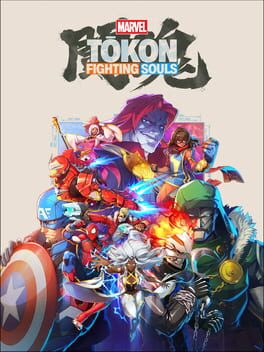
When Sony announced the next wave of content for Marvel Tokon: Fighting Souls, the industry took note not merely because the franchise has become a cornerstone of the PlayStation fighting‑game lineup, but because the timing aligns with a broader resurgence of character‑driven, narrative‑heavy brawlers that blend comic‑book lore with competitive depth. Since its debut two years ago, Marvel Tokon has leveraged Sony’s long‑standing partnership with Marvel Studios to deliver a roster that reads like a living anthology of the Marvel Universe, each fighter meticulously crafted to reflect both canonical powers and a distinct fighting‑style. The series’ steady cadence of post‑launch expansions—each accompanied by a polished cinematic trailer and a deep‑dive guide—has cultivated a community that expects more than a simple roster addition; they anticipate a new meta, fresh mechanics, and a narrative hook that justifies the investment of time and money.
Enter Phoenix Cyclops, a hybrid incarnation that fuses the classic optic blast of Scott Summers with the volatile, reality‑bending energy of the Dark Phoenix. This duality is not a gimmick but a calculated design decision that taps into the growing demand for characters who can shift play‑styles mid‑match, a trend popularised by titles such as Mortal Kombat 11’s “Kombat Pack” and Tekken 7’s “Rage” system. By granting players the ability to assemble Solar Shards during combat and trigger a transformation into a Dark Phoenix state, Sony is positioning the fighter as a bridge between narrative spectacle and high‑level technical execution, a move that could redefine how future Marvel‑licensed fighters are conceptualised across the console ecosystem.
What Happened?
In a meticulously produced video released on Sony’s official channel on 25 October, the company unveiled a comprehensive character guide that dissects every facet of Phoenix Cyclops’s move set. The guide walks viewers through a baseline combo chain, a suite of aerial attacks, and a defensive toolkit that includes a reflective shield—a nod to Cyclops’s iconic visor. Most notably, the video demonstrates the “Solar Shard” mechanic: a collect‑and‑activate system where successful hits generate shards that, when pooled, unlock the transformation into Dark Phoenix. This metamorphosis not only alters the visual palette—shifting from a cool blue hue to a fiery crimson—but also expands the fighter’s hitbox, introduces a new set of area‑of‑effect attacks, and temporarily modifies frame data to grant faster recovery on certain moves.
Developer statements embedded in the guide’s description reveal that the design team consulted directly with Marvel’s narrative department to ensure the Dark Phoenix transformation respects the character’s mythos while remaining balanced for competitive play. Lead combat designer Maya Hoshino explained that the Solar Shard system was conceived as a “risk‑reward” layer, encouraging aggressive play without overwhelming newcomers. She also hinted at future updates that may allow players to customise shard thresholds, a feature that could evolve into a broader “meta‑customisation” framework for the entire roster, echoing the post‑launch content pipelines seen in games like Dragon Ball FighterZ.
Analysis
The introduction of Phoenix Cyclops arrives at a pivotal moment for Sony’s fighting‑game portfolio. While the PlayStation brand has traditionally leaned on legacy franchises such as Tekken and SoulCalibur, the Marvel Tokon series represents a strategic diversification that taps into the lucrative cross‑media synergy of Marvel’s cinematic universe. By embedding a high‑profile character with dual‑state capabilities, Sony not only expands its competitive meta but also strengthens its bargaining position in licensing negotiations, signalling to Marvel that the partnership can yield innovative gameplay experiences beyond mere skin‑deep adaptations. In the broader market, this move challenges the dominance of established competitors like Capcom’s Street Fighter VI, which has recently introduced its own “V‑Shift” mechanic, and suggests a trend toward more fluid, transformation‑centric fighters.
From a technical perspective, balancing a character that can fundamentally alter its move set mid‑match poses significant challenges for patch cycles and tournament organisers. The Solar Shard accumulation rate must be fine‑tuned to avoid runaway snowball effects, especially in high‑skill brackets where shard farming could become a dominant strategy. Moreover, the visual fidelity required to render the Dark Phoenix’s fiery transformation without compromising frame rates on the PlayStation 5’s hardware demands careful optimisation. If Sony can navigate these hurdles, Phoenix Cyclops could become a flagship case study for dynamic‑state fighters, potentially influencing future titles across both first‑party and third‑party studios seeking to blend narrative depth with competitive integrity.
XPLog Opinion
At XPLog UK we view the Phoenix Cyclops rollout as a bold, if risky, evolution of Sony’s fighting‑game doctrine; the character’s dual‑state design injects fresh strategic layers that could rejuvenate the tournament scene, yet the success of this gamble hinges on Sony’s willingness to iterate swiftly based on community feedback—an approach that will determine whether Marvel Tokon cements its place as a mainstay of the esports calendar or remains a niche curiosity.
Final Thoughts
With the official launch slated for 2 November, the coming weeks will be a litmus test for how well Phoenix Cyclops integrates into the existing meta and whether Sony’s hybrid narrative‑mechanic model resonates with both casual fans and competitive veterans; keep an eye on patch notes in early December and the upcoming EVO qualifiers, where the fighter’s true impact on the ecosystem will finally be measured.