
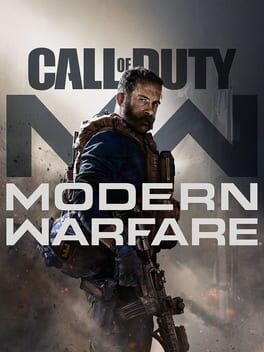
Overview
When Activision announced that Call of Duty: Modern Warfare 4 would finally make its way to Nintendo's next‑generation hybrid console, the reverberations were felt across the entire industry. The series has traditionally been a showcase for raw horsepower, with each new entry demanding ever‑greater GPU and CPU bandwidth, and the last time a mainline CoD appeared on a Nintendo platform was the ill‑fated Wii U port of Black Ops II in 2013. That historical footnote has become a benchmark for what is possible on a handheld‑first architecture, and the Switch 2—promised to bridge the gap between portable and home‑console performance—has been positioned as the ultimate test case for the franchise's scalability.
Beyond pure nostalgia, the announcement sits at a crossroads of three market forces: Nintendo's aggressive push to broaden its software library with high‑profile third‑party titles, Activision's ongoing quest to capture the lucrative mobile‑and‑handheld segment, and the broader industry trend of cross‑generational releases that aim to maximize a game's revenue lifecycle. In an era where subscription services like Xbox Game Pass and PlayStation Plus dominate the conversation, a flagship shooter landing on a hybrid device signals that Nintendo still commands a distinct, valuable audience that cannot be ignored. The performance metrics revealed by Digital Foundry therefore carry weight far beyond frame‑rate numbers; they are a litmus test for the viability of premium AAA experiences on future portable hardware.
What Happened?
Digital Foundry’s deep‑dive into Modern Warfare 4 on Switch 2 uncovered a tiered performance profile that reflects both the hardware's flexible nature and the developers' willingness to compromise where necessary. In campaign mode, the title runs at a steady 30 frames per second, a modest dip compared to the 60 fps baseline on PlayStation 5 and Xbox Series X, but one that preserves visual fidelity through dynamic resolution scaling and judicious texture streaming. The competitive multiplayer component, however, enjoys a full 60 fps cadence, a crucial factor for esports‑oriented players who demand razor‑sharp responsiveness. Meanwhile, the DMZ extraction mode—an open‑world, high‑intensity sandbox—leverages the Switch 2’s optional 120 Hz output to deliver a sweet spot of roughly 40 fps, balancing the need for fluidity with the console’s thermal envelope.
Activision’s engineering team reportedly employed a hybrid rendering pipeline that offloads certain post‑process effects to the dedicated NPU, a move that mirrors techniques first seen in the PlayStation 5’s ray‑tracing acceleration but adapted for the Switch 2’s custom ARM architecture. The developers also introduced a dynamic fidelity slider that automatically adjusts draw distance and particle density based on real‑time temperature readings, a safeguard against the device throttling during marathon play sessions. These technical concessions, while noticeable to the most discerning PC veterans, are largely invisible to the average Switch 2 owner, who will experience the series’ signature gunplay, cinematic set‑pieces, and seasonal content updates without the jarring frame‑rate drops that plagued earlier handheld ports.
Analysis
The decision to ship Modern Warfare 4 on Switch 2 at these performance targets is a calculated gamble that could reshape the console’s third‑party ecosystem. Historically, Nintendo’s handheld lineage has been dominated by first‑party franchises and indie titles, with AAA shooters relegated to a niche audience. By delivering a version that respects competitive standards—60 fps in multiplayer—the platform now positions itself as a legitimate arena for live‑service shooters, potentially attracting developers who have previously dismissed the Switch as a purely casual device. This could catalyze a virtuous cycle: increased AAA presence drives hardware sales, which in turn incentivizes more high‑budget studios to invest in optimized ports.
From a market dynamics perspective, the launch also forces Sony and Microsoft to confront a new variable in their console wars. While both ecosystems continue to leverage exclusive studios and subscription bundles, the emergence of a premium shooter on a portable format threatens to erode the perceived value gap that has traditionally justified higher price points for the PlayStation 5 Pro and Xbox Series X. If Nintendo can demonstrate that the Switch 2 can sustain a steady stream of content updates and seasonal monetisation comparable to its console rivals, it may compel the other giants to reconsider their own handheld strategies, perhaps accelerating the development of a true Xbox handheld or prompting Sony to revisit the PlayStation VR2’s portability ambitions.
XPLog Opinion
At XPLog UK we view the Modern Warfare 4 Switch 2 launch as a watershed moment that validates Nintendo’s long‑term vision of a “play‑anywhere” powerhouse; the title’s respectable frame‑rates prove that the hybrid can host the kind of high‑intensity, network‑driven experiences that once seemed exclusive to the traditional console arena, and this will undoubtedly raise player expectations for future releases, compelling both first‑party and third‑party studios to aim higher in their optimisation ambitions.
Final Thoughts
In sum, Digital Foundry’s verdict confirms that Modern Warfare 4 on Switch 2 delivers a surprisingly faithful CoD experience, trading a modest campaign frame‑rate dip for robust multiplayer fluidity and a clever use of the console’s 120 Hz capability. The broader implication is clear: Nintendo’s hybrid device is no longer a peripheral platform for casual titles but a credible contender in the premium shooter market. As the summer update cycle rolls out new maps, weapons, and seasonal events, the industry will be watching closely to see whether this experiment translates into sustained sales momentum and a deeper pipeline of AAA ports, a development that could reshape the competitive landscape for years to come.