
Overview
When Pearl Abyss unveiled Crimson Desert in early 2026, the title arrived as a bold attempt to fuse the scale of a next‑gen open‑world adventure with the persistence of a live‑service MMO. The game’s launch was nothing short of a commercial thunderclap, moving over six million copies in the first ninety days and prompting the studio to reward every employee with a $3,400 bonus—a rare gesture that underscored both the profitability of the project and the confidence the publisher placed in its long‑term roadmap. Yet, beneath the headline numbers lay a familiar set of launch‑day growing pains: server instability, balance issues, and a UI that many veterans described as “clunky,” prompting a wave of post‑launch patches that have, over the past months, steadily reshaped the experience.
Beyond the raw sales figures, Crimson Desert entered a fiercely competitive landscape where titles such as Elden Ring: Dawn of the Rift and Horizon Forbidden West 2 were vying for the same high‑spending core audience. The console ecosystem, in particular, has been undergoing a renaissance of cross‑generation support, with Sony and Microsoft both courting developers who can deliver deep, repeatable content across their platforms. In this climate, a surprise demo that not only showcases five hours of gameplay but also allows players to carry over their save data represents a strategic play to convert curious console owners into committed subscribers, while reinforcing Pearl Abyss’s commitment to a unified, platform‑agnostic future.
What Happened?
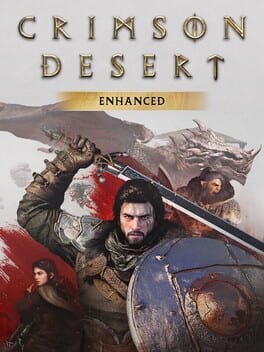
On Tuesday, Pearl Abyss released an unexpected demo of the Crimson Desert Enhanced Edition for both PlayStation 5 and Xbox Series X|S, granting gamers a full five‑hour window to explore the game’s revamped combat system, expanded narrative arcs, and the newly introduced “Caravan” multiplayer mechanic. The demo is not a stripped‑down teaser; it mirrors the live‑service environment, complete with dynamic weather, day‑night cycles, and the same progression economy that powers the full version. Crucially, the demo incorporates a save‑data carry‑over feature, meaning any progress made during the trial can be seamlessly transferred to a purchased copy, eliminating the frustration of replaying introductory content.
Accompanying the launch, the studio’s lead director, Hye‑Jin Lee, issued a statement emphasizing that the demo is a “gateway” for players who have been hesitant due to the game’s initial technical hiccups. Lee highlighted that the demo showcases the “most polished segment of the world,” featuring the newly overhauled AI for wildlife, a rebalanced weapon durability system, and a suite of quality‑of‑life updates that have been in development since the first patch cycle. The announcement also hinted at upcoming seasonal content drops slated for Q4 2026, positioning the demo as a prelude to a broader content calendar that aims to keep the player base engaged well beyond the typical twelve‑month live‑service lifespan.
Analysis
The timing of the demo aligns with a critical inflection point for Pearl Abyss: the company must convert its early adopters into a sustainable, recurring revenue stream while fending off encroaching competitors that are rapidly iterating on live‑service models. By offering a full‑featured, cross‑platform demo with save‑data continuity, the publisher reduces the barrier to entry and leverages the “try before you buy” psychology that has proven effective in the mobile space but remains underutilized on consoles. Early data from similar initiatives—such as the Assassin’s Creed Valhalla “Viking Quest” trial—suggests conversion rates can climb as high as 30% when the trial experience mirrors the full product, a metric that could translate into an additional million units sold for Crimson Desert if the demo resonates.
From a technical perspective, delivering a seamless save‑transfer across two distinct console ecosystems is non‑trivial. It requires robust cloud‑sync infrastructure, strict adherence to each platform’s certification standards, and a unified account system that can reconcile player identities without compromising security. Pearl Abyss’s decision to push this capability now signals confidence in their backend architecture, which has been bolstered by the recent acquisition of a cloud‑services firm specializing in cross‑platform data orchestration. Successful execution not only mitigates friction for new players but also sets a precedent for future live‑service titles that aim to be truly platform‑agnostic, potentially reshaping how publishers approach console releases moving forward.
XPLog Opinion
From XPLog’s standpoint, the Crimson Desert Enhanced Edition demo is a masterstroke of player‑centric marketing that acknowledges the community’s early frustrations while delivering tangible value. It respects the time‑investment of prospective players by allowing them to retain progress, a move that could foster goodwill and long‑term loyalty—a commodity as scarce as it is valuable in today’s saturated market. We recommend that core gamers give the demo a thorough run, not merely as a taste test but as a litmus test for Pearl Abyss’s evolving live‑service philosophy; if the experience lives up to the promises made, the title may well become the benchmark for next‑gen console‑to‑cloud integration.
Final Thoughts
In sum, the surprise demo for Crimson Desert Enhanced Edition does more than showcase five hours of polished gameplay; it acts as a strategic bridge between a successful launch and a sustainable, cross‑platform future. Players should keep an eye on the upcoming Q4 seasonal content roadmap, while industry watchers will be watching the conversion metrics closely. If Pearl Abyss can turn the demo’s momentum into lasting engagement, the Enhanced Edition could redefine how live‑service RPGs approach console audiences, setting a new standard for the industry in the years to come.