
Overview
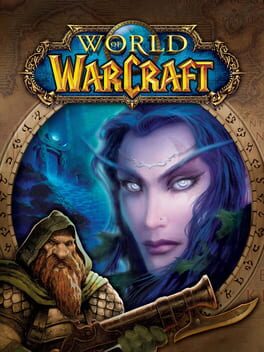
The modding ecosystem surrounding Larian Studios’ Baldur’s Gate 3 has become a crucible for ambitious fan‑driven expansions, a trend that mirrors the open‑source ethos that has long powered the PC gaming world. Since its launch, BG3’s robust toolset and generous permission policy have attracted creators who not only patch bugs but also rewrite entire chapters of the narrative, adding new continents, factions, and even whole act structures. In parallel, Blizzard’s World of Warcraft remains a cultural monolith, its lore spanning over two decades and a player base that still numbers in the tens of millions. The convergence of these two powerhouses, therefore, is not merely a novelty; it is a litmus test for how far community‑crafted cross‑universe storytelling can travel when both the underlying engines and the fanbases are mature enough to support it.
Historically, official crossovers—think “Heroes of the Storm” or the “Warcraft‑Dungeons & Dragons” tabletop collaborations—have been tightly curated, ensuring brand consistency and narrative cohesion. The “Forsaken” mod, however, sidesteps corporate gatekeeping, allowing a single modder to transplant the tragic arc of undead former slaves from the Warcraft mythos directly into the D&D‑styled mechanics of Baldur’s Gate 3. This bold move arrives at a moment when the industry is witnessing a resurgence of nostalgia‑driven content, from remasters to “classic‑style” expansions, and when players increasingly demand deeper, more personalized experiences that blur the lines between official DLC and community‑generated content.
What Happened?
Earlier this week, the opening act of the “Forsaken” campaign was made publicly available via the Nexus Mods platform, offering players a self‑contained adventure that begins with a grim liberation from a Lich King’s necromantic grip. The narrative thrust follows a band of undead former slaves—echoes of the Forsaken faction from Warcraft—who, newly freed, must rally to reclaim a shattered kingdom that once served as a strategic foothold in Azeroth’s eastern frontiers. The mod’s creator, known in the community as “ArcaneCartographer,” previously earned acclaim for extending BG3’s second act with a meticulously crafted region that added over ten hours of gameplay before the main story’s climax.
Technically, the mod leverages Larian’s “Divinity Engine 4” scripting layer to import custom assets, voice‑overs, and quest logic that mimic Warcraft’s aesthetic while remaining faithful to D&D’s rule set. The modder has painstakingly recreated iconic Warcraft motifs—such as the towering citadel of Lordaeron and the haunting chorales of the Banshee Queen—using BG3’s high‑fidelity character models and environmental shaders. In developer statements posted on the mod’s page, the author emphasizes a respect for both intellectual properties, noting that the adventure is designed as a “tribute rather than a takeover,” and that all lore references are framed within the context of a fan‑fictional “what‑if” scenario that does not claim canonical status in either universe.
Analysis
From a market perspective, the “Forsaken” mod exemplifies a growing segment of the industry where user‑generated content functions as a de‑facto extension of a game’s lifecycle, effectively prolonging player engagement without direct publisher investment. Should the mod achieve viral traction—as early download metrics suggest—it could encourage other studios to further open their pipelines, perhaps even formalizing pathways for fan‑crafted crossovers that respect IP boundaries while tapping into the creative capital of their most dedicated communities. Moreover, the mod’s hybridization of two distinct rule systems may inspire technical innovations, prompting middleware developers to create more adaptable translation layers that can reconcile tabletop mechanics with video‑game engines on the fly.
Competitor dynamics also come into play. While Bethesda’s “Creation Kit” and CD Projekt Red’s “REDengine” have long supported modding, neither has witnessed a project that so directly intertwines two heavyweight franchises. If Blizzard observes a measurable uptick in WoW player sentiment—particularly among the “hardcore” demographic that values lore depth—the company might consider sanctioned collaborations or limited‑time events that echo the mod’s spirit. Conversely, the risk of IP dilution remains a concern; any misstep could embolden calls for stricter enforcement, potentially stifling the very creativity that fuels long‑term ecosystem health.
XPLog Opinion
At XPLog UK we view the “Forsaken” mod as a watershed moment that underscores the potency of community‑driven storytelling in an era where publishers increasingly outsource narrative experimentation to their most passionate fans. This project not only showcases the technical dexterity required to mesh D&D‑style role‑play with Warcraft’s dark fantasy, but it also signals a cultural shift: players no longer content with passive consumption, they demand agency to re‑write beloved mythos. Should Larian and Blizzard recognize and nurture this appetite—perhaps by offering official endorsement channels or revenue‑share schemes—we could see a new wave of legally sanctioned, fan‑originated cross‑universe experiences that redefine what constitutes “canon” in the modern gaming landscape.
Final Thoughts
In sum, the “Forsaken” opening act is more than a clever mash‑up; it is a proof of concept for a future where modders act as bridge‑builders between storied IPs, injecting fresh life into aging franchises while delivering unprecedented value to players. As the community digests the first act, all eyes will be on the upcoming chapters, the mod’s download trajectory, and any official response from Larian or Blizzard. Keep watch for the next release slated for early December, and for potential statements from the studios that could either cement this collaboration as a template for the industry or relegate it to a singular, albeit impressive, footnote in gaming history.