
Overview
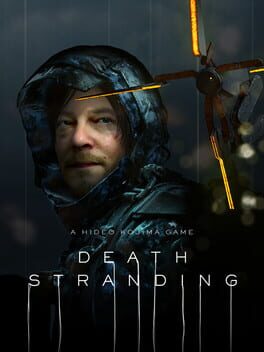
When Hideo Kojima first unveiled Death Stranding in 2019, the gaming world braced for a title that would fuse cinematic storytelling with a gameplay loop built around connection, isolation, and the haunting allure of a post‑apocalyptic America. The game’s polarising design choices, its striking visual language, and its audacious narrative ambition earned it a place not just on the bestseller charts but also in academic discussions about video games as art. Over the past four years the franchise has expanded with the 2023 sequel, Death Stranding: Director’s Cut, refining its core mechanics while deepening its mythos, and now the universe is poised to cross the final frontier: a dedicated anime series on Disney+.
This move arrives at a moment when the streaming wars have intensified, with platforms scrambling for exclusive, high‑profile IPs that can attract niche yet fiercely loyal fanbases. Disney+, traditionally known for family‑friendly fare, has been courting more mature, genre‑bending content to broaden its demographic reach, while Kojima Productions has demonstrated a willingness to experiment beyond the console sphere, having previously partnered with Netflix for a short‑form documentary about the making of the original game. The announcement of Death Stranding Isolations therefore sits at the confluence of two industry currents: the growing appetite for transmedia storytelling and the strategic push by streaming services to secure flagship titles that can act as subscriber magnets.
What Happened?
In a tightly controlled livestream earlier today, Kojima Productions and Disney+ unveiled the first teaser for Death Stranding Isolations, a six‑minute animated vignette that offers a glimpse into a world set immediately after Sam Porter Bridges completes the monumental task of linking the Chiral Network across the continent. The trailer, underscored by a haunting, synth‑driven score, opens with the cryptic line “My mom became a crater,” a phrase that quickly became a meme among fans for its surreal blend of personal loss and planetary catastrophe. Visually, the animation leans into a stylised, semi‑realistic aesthetic that mirrors the game’s own art direction while exploiting the fluidity of anime to convey the series’ more introspective moments.
Accompanying the visual debut, executives from both companies confirmed that the series will launch in 2027, running for a planned ten‑episode arc. Production is being handled by Studio 4°C, the acclaimed Japanese studio behind works such as Tekkonkinkreet and the recent Blade Runner: Black Lotus, suggesting a commitment to high‑budget, cinematic quality. Kojima himself described the project as “an expansion of the Strand’s mythology, designed to explore the emotional fallout of connectivity in a world still reeling from the BT storm.” Disney+ representatives emphasized that the series will be positioned as a “premium original” aimed at both existing fans and newcomers drawn to the franchise’s unique blend of science‑fiction and existential drama.
Analysis
The timing of this announcement cannot be divorced from the broader market dynamics at play. As of 2026, anime‑flavoured content accounts for over 30% of Disney+’s original programming budget in key territories, a strategic pivot that mirrors Netflix’s success with titles like Castlevania and Arcane. By securing a property that already commands a dedicated global fanbase, Disney+ stands to capture a slice of the lucrative “gamer‑to‑streamer” conversion funnel, potentially boosting subscriber numbers in regions where PlayStation hardware penetration remains high, such as North America, Europe, and parts of Asia. Moreover, the series could act as a soft launchpad for future cross‑platform initiatives, including potential DLC tie‑ins or exclusive in‑game events that reward viewers with in‑game cosmetics, a model successfully employed by titles like Fortnite and Genshin Impact.
From a development perspective, the partnership also signals Kojima Productions’ evolution from a console‑first studio into a transmedia powerhouse. Historically, Kojima’s collaborations have been limited to promotional tie‑ins; this is his first full‑scale narrative venture outside the interactive medium. The technical challenge lies in translating the game’s intricate environmental storytelling—where every abandoned structure whispers a backstory—into a linear, episodic format without sacrificing depth. If executed well, the series could set a benchmark for how complex game worlds are adapted for screen, paving the way for similar projects from studios like CD Projekt Red or FromSoftware, which have long flirted with the idea of cinematic extensions.
XPLog Opinion
At XPLog UK we view Death Stranding Isolations as a bold, albeit risky, maneuver that could redefine how narrative‑driven games extend their lifespans beyond the console. The franchise’s core appeal—its meditation on connection in an increasingly fragmented world—translates naturally to the binge‑watch format, where viewers can linger on the emotional beats that the game only hints at. However, the series must guard against diluting the mystique that made the original titles a cultural touchstone; over‑explanation could strip away the enigmatic allure that fuels community speculation. Our verdict: if Kojima and Studio 4°C preserve the delicate balance between revelation and ambiguity, the anime could become a flagship case study in cross‑medium storytelling, cementing the franchise’s relevance for a new generation of gamers and anime enthusiasts alike.
Final Thoughts
In sum, the debut of Death Stranding Isolations marks a watershed moment for both the franchise and the broader entertainment ecosystem, illustrating how premium gaming IPs can be leveraged to enrich streaming catalogues while offering fans deeper immersion into beloved worlds. As the 2027 release window approaches, industry watchers will be keenly monitoring production milestones, potential merchandising roll‑outs, and the interplay between the series’ narrative arcs and upcoming game updates. For now, the teaser’s cryptic promise—“My mom became a crater”—serves as a reminder that Kojima’s universe continues to thrive on paradox, and that paradox will likely shape the next chapter of interactive entertainment.