
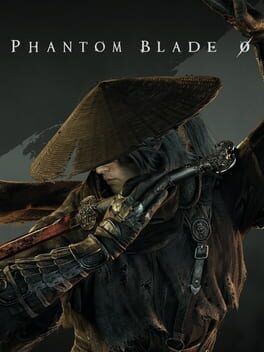
Overview
When a studio attempts to fuse the kinetic poetry of wuxia cinema with the raw horsepower of modern ray‑traced hardware, the industry takes notice. Phantom Blade Zero arrives at a moment when the premium action‑adventure segment is saturated with titles promising cinematic combat, yet few have dared to embed the fluid, gravity‑defying choreography that defines classic Chinese martial‑arts epics. The announcement of its release coincides with a broader push by console manufacturers to showcase the visual fidelity of their latest hardware, especially the PlayStation 5 and Xbox Series X|S, whose dedicated ray‑tracing cores have become a marketing linchpin. In this climate, a game that advertises “next‑gen ray‑traced wuxia” is not merely a new entry; it is a litmus test for how far developers can stretch real‑time rendering pipelines while preserving the tight, responsive feel that core gamers demand.
Equally significant is the sheer scale of the launch footprint: a 145 GB install that balloons to roughly 300 GB during the initial download and extraction process. Such massive data footprints have become a hallmark of the era’s ultra‑high‑resolution assets, texture streaming, and layered audio design, but they also raise practical concerns about bandwidth, storage management, and the long‑standing debate over day‑one patches. Historically, titles like Cyberpunk 2077 and Elden Ring have demonstrated that releasing a game before it is fully polished can erode consumer trust, yet the industry has normalized post‑launch hot‑fixes as a standard operating procedure. Phantom Blade Zero’s developers have chosen to lean into this model, promising a day‑one patch that refines ray‑tracing performance and squashes early bugs, a decision that reflects both confidence in their engine and an acknowledgement of the logistical realities of shipping a 300 GB behemoth.
What Happened?
On launch day, Phantom Blade Zero hit digital storefronts with a base installation size that initially appears modest—145 GB—but quickly expands as compressed assets are decompressed and additional runtime libraries are installed, ultimately consuming close to 300 GB of disk space. The day‑one patch, rolled out simultaneously with the launch, targets several high‑impact areas: it optimizes the game’s ray‑tracing pipeline to reduce frame‑time spikes on both AMD and Nvidia architectures, introduces a dynamic resolution scaler that adapts to fluctuating GPU loads, and refines the lighting model to better preserve the silhouette‑driven aesthetic that is central to wuxian combat. Moreover, the patch addresses a suite of stability issues reported by early access testers, ranging from texture pop‑in during fast‑paced swordplay to occasional controller input lag in multiplayer duels.
Developer statements released alongside the patch note emphasize a philosophy of “iterative perfection.” Lead technical director Lin Wei explained that the team deliberately withheld certain shader optimizations until the final build, allowing them to gather telemetry from the live launch and fine‑tune performance across a fragmented console hardware landscape. The patch also adds a modest suite of quality‑of‑life features, such as customizable ray‑tracing presets, expanded controller remapping options, and a revamped UI that clarifies network latency indicators—features that, while not headline‑grabbing, signal a commitment to the hardcore audience that values precision and transparency. The company has pledged a roadmap of further updates, promising deeper AI improvements and additional narrative DLC, positioning the launch as the first chapter of an evolving live‑service experience rather than a static, finished product.
Analysis
From a market perspective, Phantom Blade Zero’s launch strategy underscores a shifting equilibrium between consumer expectation and technical ambition. The willingness to ship a title that still requires a substantive day‑one patch suggests that publishers are increasingly comfortable leveraging the “post‑launch polish” model, a practice that mitigates the risk of delayed releases while still delivering a visually ambitious experience. Competitors in the action‑adventure space—particularly those vying for the same console demographic—must now reckon with a benchmark that blends large‑scale asset pipelines with aggressive ray‑tracing targets. However, the patch’s focus on performance stabilization also hints at the underlying challenges of scaling real‑time ray tracing to the level of fidelity demanded by a wuxia aesthetic, where light, shadow, and particle effects are integral to conveying the mythic atmosphere. If the developers can sustain a steady cadence of updates without fragmenting the player base, they may set a new standard for how premium, narrative‑driven games approach the balance between launch spectacle and long‑term service.
XPLog Opinion
At XPLog UK we view Phantom Blade Zero’s day‑one patch not as a concession but as a strategic declaration: the era of “finished on disc” is over, and the future belongs to titles that treat launch as a live‑tuning event. The game’s audacious visual goals, combined with a transparent patching roadmap, position it as a potential flagship for next‑gen wuxia, provided the developers keep the momentum and avoid the pitfalls that plagued earlier high‑profile releases. For core gamers hungry for both spectacle and substance, the real test will be whether the post‑launch support can preserve the tight, responsive combat that the genre demands, while continuing to push the envelope of what ray tracing can achieve in fast‑paced action.
Final Thoughts
In sum, Phantom Blade Zero’s debut, bolstered by a comprehensive day‑one patch, marks a pivotal moment for high‑budget, culturally specific action games on modern consoles. Its success will hinge on the studio’s ability to translate the initial technical refinements into a sustained, community‑driven evolution, a trajectory we will be tracking closely through the upcoming quarterly updates and the promised DLC drops slated for early next year.