
Overview
When the world learned of Sir Patrick Stewart’s passing at the age of 86, the headlines were dominated by reflections on his indelible imprint on television, film, and theatre. Yet, for a generation of core gamers who first encountered his resonant voice in the early 2000s, the loss reverberates through a different, equally potent medium: interactive entertainment. Stewart’s career spanned the golden age of blockbuster cinema and the renaissance of narrative‑driven video games, a period when studios began to recognise that a celebrated actor could lend gravitas to digital avatars, thereby bridging the gap between Hollywood spectacle and the immersive ambitions of the gaming industry.
Stewart’s involvement in video games coincided with a pivotal shift in the market. The mid‑2000s saw publishers invest heavily in high‑budget, story‑centric titles that sought to attract both traditional gamers and the expanding demographic of movie‑goers craving familiar faces in new contexts. By lending his voice to characters like Emperor Uriel Septim VII in "The Elder Scrolls IV: Oblivion" and reprising his iconic roles of Jean‑Luc Picard and Charles Xavier across multiple licensed titles, Stewart helped to legitimize the practice of cross‑media casting. This trend, now commonplace, laid groundwork for today’s blockbuster collaborations where A‑list talent is a selling point as much as gameplay mechanics.
What Happened?
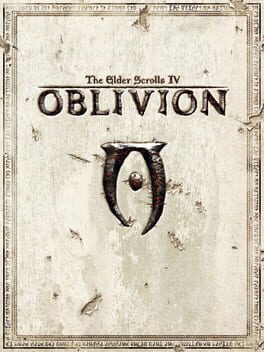
The Hollywood Reporter confirmed that Sir Patrick Stewart succumbed after a brief and poignant battle with Alzheimer’s disease and Lewy body dementia, a loss felt deeply across the entertainment spectrum. While his death marks the end of a luminous on‑screen career, it also prompts a retrospective on his contributions to the interactive sphere. Stewart’s first foray into gaming arrived with "Oblivion" in 2006, where his portrayal of the benevolent emperor set a new standard for voice acting, combining theatrical gravitas with the nuanced delivery required for branching dialogue trees. This performance was followed by a role in "Castlevania: Lords of Shadow" as Zobek, further showcasing his versatility beyond the confines of his most famous sci‑fi personas.
Beyond original characters, Stewart’s voice became synonymous with the digital incarnations of Jean‑Luc Picard and Charles Xavier, appearing in roughly ten Star Trek titles and five X‑Men games respectively. Each iteration required him to adapt his iconic delivery to the interactive demands of player choice, a task that underscored his professionalism and willingness to explore new storytelling frontiers. The actor’s commitment to these projects, often recorded under tight production schedules, demonstrated a pioneering spirit that encouraged other veteran actors to view games as a legitimate artistic avenue, ultimately enriching the medium’s narrative depth.
Analysis
From a market perspective, Stewart’s involvement in high‑profile franchises contributed to a measurable uplift in sales for licensed games that historically suffered from “shovelware” reputations. Titles featuring his voice consistently outperformed comparable releases lacking star power, suggesting that his name alone acted as a quality signal for consumers wary of sub‑par adaptations. This phenomenon dovetailed with the rise of “celebrity‑driven” games in the late 2000s, a strategy that publishers like Ubisoft and Activision leveraged to differentiate premium products in an increasingly crowded marketplace. Moreover, Stewart’s seamless integration into complex narrative structures helped to set a benchmark for performance capture, influencing subsequent advancements in facial animation and emotional fidelity that are now industry standards.
Looking forward, the void left by Stewart’s death may accelerate the industry’s shift toward synthetic voice recreation and AI‑enhanced performances, a controversial yet technically inevitable development. While the ethical debate surrounding posthumous digital likenesses rages, the commercial incentive is clear: preserving the brand equity of beloved characters like Picard and Xavier could sustain franchise longevity for years to come. Studios will need to balance fan expectations for authenticity with the legal and moral complexities of using a deceased actor’s vocal imprint, a challenge that will shape licensing negotiations and talent contracts across the next decade.
XPLog Opinion
At XPLog UK, we view Sir Patrick Stewart’s passing not merely as the loss of a cultural icon, but as a watershed moment that underscores the symbiotic evolution of cinema and gaming. His willingness to embrace interactive media at a time when many peers dismissed it as a gimmick paved the way for the sophisticated narrative experiences we celebrate today. Stewart proved that a seasoned actor could enhance a game’s emotional resonance without compromising the player’s agency, a lesson that modern developers should heed as they craft ever more immersive worlds. In honoring his legacy, we advocate for a future where talent is treated as an integral component of game design, with fair compensation and respectful stewardship of their contributions long after they leave the stage.
Final Thoughts
Sir Patrick Stewart’s departure closes a chapter that bridged the golden age of televised sci‑fi with the burgeoning narrative ambitions of video games. As studios continue to mine his iconic characters for new adventures, the industry must navigate the delicate balance between reverence and innovation, ensuring that his voice—whether recorded or digitally recreated—remains a beacon of quality and artistic integrity. Keep an eye on upcoming releases slated for early 2027 that promise to resurrect Picard and Xavier in fresh contexts; they will serve as the first true test of how the gaming world honors a legend while charting its own future.