
Overview
When Taito, the legendary Japanese arcade powerhouse, announced the fifth instalment of its Milestones series for the Nintendo Switch, the news reverberated far beyond the niche of retro enthusiasts. The collection arrives at a moment when Nintendo is aggressively courting both nostalgic veterans and a new generation of indie‑savvy players, leveraging the Switch’s hybrid nature to become the de‑facto platform for curated retro releases. Taito’s partnership with Hamster Corporation—a company that has built a reputation for painstakingly preserving arcade classics—signals a strategic alignment that could deepen the Switch’s library of historically significant titles while offering a revenue stream that bypasses the costly development cycles of new IPs.
Historically, Taito’s catalog has been a cornerstone of the arcade golden age, delivering genre‑defining experiences such as "Space Invaders" (1978), which arguably birthed the shoot‑‘em‑up archetype, and "Sagaia" (1990), the three‑screen expansion of the beloved "Darius" series that pushed hardware limits of its era. By curating ten games spanning 1978‑1990, the Milestones 5 collection not only celebrates three decades of gaming evolution but also provides a lens through which modern developers can study design philosophies that have informed contemporary titles. In a market where digital storefronts are saturated with high‑budget releases, a well‑executed retro anthology can command attention, especially when priced at a modest 5,720 yen and offered in a physical package that taps into collector culture.
What Happened?
The announcement, made jointly by Taito and Hamster Corp., confirmed that Taito Milestones 5 will launch exclusively in Japan on 28 January 2027, with physical reservations opening immediately. The compilation will feature ten carefully selected titles, each remastered to run smoothly on the Switch’s ARM architecture while preserving the original arcade aesthetics. Notably, the set includes the iconic "Space Invaders"—a cultural touchstone that has been ported countless times but will receive a fresh, high‑resolution treatment—and the three‑screen "Sagaia," which will be presented using a split‑screen emulation that mimics the original multi‑monitor experience, a technical feat rarely attempted on modern consoles.
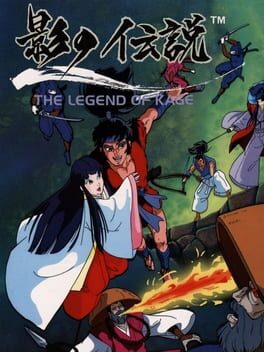
Beyond the headline titles, the collection delves into lesser‑known gems such as "The Legend of Kage" and "Elevator Action II," offering a comprehensive survey of Taito’s genre‑spanning output. Hamster’s involvement guarantees that each game will feature optional save states, rewind functionality, and customizable control schemes, addressing long‑standing criticisms of retro ports. The physical edition will be packaged in a premium box, complete with a retro‑styled booklet, reproductions of original arcade flyers, and a QR code linking to a curated online museum of Taito’s arcade history, thereby bridging the gap between collector’s item and educational resource.
Analysis
From a market perspective, Taito Milestones 5 arrives at a crossroads where Nintendo’s Switch hardware is entering its twilight years, yet its install base remains robust, surpassing 125 million units worldwide. The timing allows Nintendo to sustain console relevance through curated content, a strategy reminiscent of the Switch’s successful "Nintendo Switch Online" retro library. By delivering a high‑quality, physically‑distributed anthology, Taito and Hamster are tapping into the growing demand for tangible media among collectors—a trend amplified by the recent resurgence of limited‑run physical releases from indie developers. Moreover, the inclusion of a three‑screen title like "Sagaia" showcases technical ingenuity that could set a new benchmark for emulation fidelity on the Switch, potentially prompting other publishers to revisit ambitious multi‑monitor experiences previously deemed impractical on handheld hardware.
Competitively, the Milestones series positions Taito against other retro curators such as Capcom’s "Arcade Stadium" and Sega’s "Sega Ages" line. While Capcom has focused on marquee franchises like "Street Fighter," Taito’s broader catalogue offers a more eclectic mix, appealing to niche audiences that crave obscure titles. This differentiation could translate into a modest but steady revenue stream, reinforcing Taito’s brand relevance without the risk associated with new IP development. Additionally, the partnership may serve as a template for future collaborations between legacy Japanese developers and third‑party preservation specialists, fostering an ecosystem where classic games are not merely archived but actively monetized in a modern console context.
XPLog Opinion
At XPLog, we view Taito Milestones 5 as a strategic masterstroke that leverages nostalgia while addressing the appetite for high‑quality, tangible retro experiences—a niche that has been under‑served on the Switch. The decision to include a technically demanding title like "Sagaia" demonstrates a commitment to authenticity that transcends typical emulation shortcuts, and it signals to the broader industry that there is still room for innovation within the retro space. For core gamers, this collection offers more than a trip down memory lane; it provides a concrete case study in how classic design principles can inform modern game development, making it a must‑have for anyone serious about understanding the lineage of today’s genres.
Final Thoughts
In sum, Taito Milestones 5 stands as a compelling blend of preservation, commerce, and cultural homage, arriving at a moment when Nintendo’s platform is ripe for curated content that can extend its lifespan. With reservations already open and a physical edition that promises collector‑grade quality, the release is poised to become a benchmark for future retro compilations. Keep an eye on the post‑launch reception in early 2027, as sales data and community feedback will likely influence how other legacy publishers approach the Switch’s still‑vibrant market.