
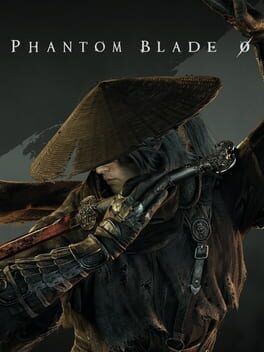
Overview
When Phantom Blade Zero launched, it arrived at a moment when the global market was hungry for authentic, culturally rich action experiences that could stand shoulder‑to‑shoulder with the Western‑dominated titles dominating the bestseller charts. The game’s sprawling Wuxia setting, meticulously rendered landscapes, and combat system that blends fluid martial arts with RPG progression positioned it as a flagship for a new wave of Asian‑inspired blockbusters seeking mainstream acceptance. This momentum was amplified by the broader industry shift toward live‑service models that reward deep, repeatable content, making the promise of a “perfect ending” not merely a narrative flourish but a strategic hook to keep players engaged long after the main story concludes.
Behind the curtain, the development studio—still relatively young but already known for ambitious action projects—leveraged a decade‑long evolution of motion‑capture technology and procedural world‑building pipelines that were first honed on smaller indie titles. By the time Phantom Blade Zero entered full production, the team had refined a pipeline that allowed for massive side‑quest ecosystems, hidden bosses, and collectible systems without sacrificing frame‑rate stability on both current‑gen consoles and high‑end PCs. This technical pedigree, combined with a publishing partnership that prioritized global distribution across physical and digital channels, set the stage for the game to become a litmus test for how culturally specific narratives can be packaged for a worldwide audience.
What Happened?
In a recent developer livestream, the creators detailed the precise conditions required to unlock the game’s singular “perfect ending,” a conclusion that resolves lingering plot threads and grants the player a unique epilogue cutscene. The criteria revolve around completing a suite of optional content: acquiring the twin artifacts known as the Crystal Puppet Eye (Yin) and (Yang), conquering the notoriously hidden Mountain of Imprisonment region, and defeating a secret boss lurking within Crimson Manor’s late‑game corridors. These tasks are deliberately dispersed throughout the map, encouraging players to explore peripheral zones that would otherwise be bypassed in a speed‑run scenario.
The announcement also clarified that the timing of these actions is flexible; the game will only enforce a “last chance” checkpoint near the climax, after which any unmet conditions will lock the player out of the perfect ending. This design choice reflects a broader industry trend of providing players agency while still embedding clear milestones that reward thorough exploration. Moreover, the developers promised post‑launch patches to fine‑tune the difficulty of the hidden encounters, ensuring that the path to the ending remains challenging yet attainable for both seasoned veterans and newer entrants to the genre.
Analysis
From a market perspective, the inclusion of a single, narrative‑driven perfect ending is a savvy move that aligns with the rising demand for “completionist” content. Titles such as The Witcher 3 and Elden Ring have demonstrated that players are willing to invest dozens of additional hours to uncover every secret, and they often share those experiences across streaming platforms, generating organic buzz that extends a game’s sales tail. Phantom Blade Zero’s layered side content, anchored by the perfect ending, positions it to capture a similar post‑launch longevity, potentially translating into higher engagement metrics and stronger aftermarket sales for DLC or cosmetic bundles.
Competitively, the game also stakes a claim against other action‑RPGs that have flirted with Wuxia aesthetics, such as Ghost of Tsushima and Sifu. While those titles offered polished combat, they fell short in delivering a truly expansive quest web that rewards deep narrative investigation. By marrying a robust side‑quest architecture with a culturally resonant storyline, Phantom Blade Zero not only differentiates itself but also sets a benchmark for future developers aiming to fuse traditional Chinese mythos with modern gameplay loops. The technical hurdle of maintaining performance across densely populated environments—especially on older hardware—will be a key factor in how well the game scales globally, and the studio’s upcoming patches will be closely watched as a barometer for their commitment to quality of life.
XPLog Opinion
At XPLog UK, we view the perfect ending mechanic as a decisive statement: the era of “finish‑the‑game‑and‑move‑on” is waning, and developers who embed meaningful, story‑rich endpoints will reap the loyalty of a core audience that values depth over flash. Phantom Blade Zero’s approach demonstrates that even a relatively niche genre can command mainstream attention when it offers a clear, rewarding payoff for the hours players invest. This signals to publishers that allocating resources to comprehensive side content isn’t a luxury—it’s a necessity for sustaining relevance in an increasingly crowded marketplace.
Final Thoughts
As the community begins to map out the exact sequence of tasks required for Phantom Blade Zero’s perfect ending, the broader industry will be watching to see whether this model of narrative closure can be replicated across other culturally specific franchises. Keep an eye on the studio’s upcoming patch schedule later this quarter and the anticipated post‑launch DLC roadmap, which promise to deepen the lore and perhaps introduce alternate endings, further cementing the title’s place as a cornerstone of modern Wuxia gaming.