
Overview
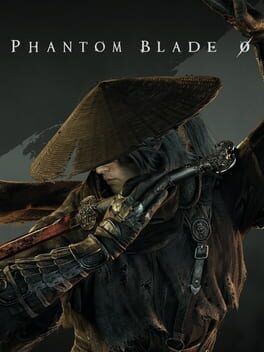
When the first teaser for Phantom Blade Zero dropped at the 2023 Tokyo Game Show, the indie studio behind the title—Silver Edge Studios—immediately set the tone with a stark, monochrome trailer that promised a “hardcore, unforgiving experience” for fans of punishing action. The announcement arrived at a moment when the market was saturated with titles that either leaned into accessibility or doubled down on the “soulslike” formula popularised by FromSoftware. In that climate, a small studio daring to proclaim a “hardcore” focus was both a bold marketing gambit and a litmus test for the appetite of the core gamer demographic, which has, over the past five years, shown a growing willingness to embrace difficulty as a badge of honor.
Beyond the hype, the difficulty conversation surrounding Phantom Blade Zero taps into a deeper industry narrative: the oscillation between inclusive design and the resurgence of “hard‑core” experiences as a differentiator in a crowded digital shelvescape. The last decade has seen a proliferation of difficulty modifiers, from “Easy Mode” toggles to “New Game+” loops, each reflecting a publisher’s attempt to broaden reach without alienating the veteran crowd. Phantom Blade Zero’s developers have explicitly eschewed such compromises, positioning the game as a pure test of reflex, pattern recognition, and stamina—an approach that resonates with the resurgence of titles like Sekiro and Elden Ring, yet risks repeating the notorious “boss‑grind” fatigue that plagued earlier Soulsborne releases.
What Happened?
In a detailed developer diary released last week, lead designer Maya Tanaka explained that the team built the combat system around a “high‑risk, high‑reward” philosophy, where each missed parry or poorly timed dodge can cascade into a lethal combo chain. The game’s core loop revolves around a stamina‑driven swordplay mechanic, intertwined with a limited “focus” resource that governs special attacks. Tanaka emphasized that the difficulty curve was intentionally steep: early enemies teach fundamental timing, while mid‑game encounters introduce layered patterns that demand memorisation and split‑second decision‑making.
Players who have already cleared the main campaign report that the most unforgiving moments arise during the “Shattered Sanctum” sequence, where three distinct boss archetypes must be defeated in succession without the safety net of a checkpoint. Each boss employs a unique rhythm—one relies on telegraphed, wide‑arc sweeps; another on rapid, unpredictable thrusts; the final combines environmental hazards with relentless aggression. The result, according to early community feedback, is a series of “grind‑or‑die” scenarios that can extend a single encounter into multi‑hour marathons, echoing the notorious difficulty spikes of classic 2D action titles from the early 2000s.
Analysis
From a market perspective, Phantom Blade Zero occupies a niche that has historically proven both lucrative and volatile. Titles that champion difficulty often cultivate fervent, vocal communities that drive organic promotion through streams, speedruns, and meme culture. However, the same rigidity can limit mainstream adoption, as retail performance tends to correlate with broader accessibility. Silver Edge’s gamble may pay off if the game secures a foothold on platforms that reward high engagement metrics—such as Xbox Game Pass’s “hardcore” curation or PlayStation’s “Play at Home” spotlight—where player retention can offset lower initial sales volumes.
Technically, the developers have embraced a deliberately unforgiving hit‑registration system that demands frame‑perfect inputs, a design choice that could strain less powerful hardware, particularly on older consoles. This raises questions about the title’s performance across the current generation’s hardware spectrum, especially given the upcoming release window coinciding with the launch of the next‑gen consoles’ price drops. Should performance issues arise, patches may be necessary to balance visual fidelity with the precise timing required for the game’s combat, a challenge that could affect the title’s reputation among the meticulous core audience.
XPLog Opinion
At XPLog UK we view Phantom Blade Zero as a daring statement piece: it refuses to dilute its vision for the sake of mass appeal, positioning itself as a litmus test for the resilience of the modern hardcore segment. While the risk of alienating casual players is evident, the potential reward—a fiercely loyal fanbase that champions the game long after launch—could cement Silver Edge Studios as a cult‑favorite developer capable of shaping future difficulty‑driven design philosophies.
Final Thoughts
In the end, Phantom Blade Zero’s uncompromising difficulty is both its greatest selling point and its most precarious liability. As the release date approaches, the industry will watch closely to see whether the title can harness the current wave of difficulty‑driven enthusiasm without succumbing to the pitfalls of inaccessibility. Keep an eye on the upcoming live‑stream showcase scheduled for 12 November, where Silver Edge promises to reveal performance benchmarks across all major platforms.