
Overview
When Netflix unveiled the sequel to the wildly successful anime‑driven adaptation of CD Projekt Red’s dystopian universe, the gaming world held its breath. The original Cyberpunk: Edgerunners arrived at a time when the industry was still grappling with the aftershocks of the original game’s tumultuous launch, and it managed to capture both critical acclaim and a surge of renewed interest in Night City’s neon‑lit streets. That first season proved to be a cultural touchstone, converting anime fans, cyber‑punk enthusiasts, and even skeptical gamers into a unified community that celebrated its brutal narrative closure and striking visual design.
Now, almost three years later, the sequel arrives not merely as a continuation of a story but as a litmus test for how transmedia properties can sustain momentum in an oversaturated streaming market. The announcement comes amid a broader industry trend where studios are leveraging beloved IPs to bridge gaps between interactive and passive entertainment, a strategy that has seen mixed results—from the triumph of The Witcher series to the lukewarm reception of other game‑to‑screen adaptations. Understanding the stakes of Edgerunners 2 therefore requires a look at the evolution of Netflix’s original content pipeline, the shifting expectations of core gamers, and the financial calculus behind extending a franchise that was originally designed as a finite narrative experience.
What Happened?
Netflix confirmed that the second season will consist of ten episodes, each retaining the high‑budget animation style that distinguished the first run. The production team, led by Studio Trigger’s veteran animators and overseen by CD Projekt’s narrative director, has pledged to expand the lore by exploring lesser‑known districts of Night City, introducing new factions, and deepening the socio‑political commentary that made the original series feel like a gritty, lived‑in world. Early promotional material hints at a darker tone, with the protagonists confronting the corporate machinations that have only intensified since the events of the game’s 2077 timeline.
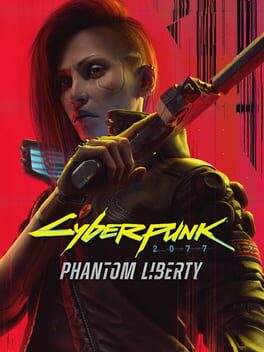
In a press release, the show’s showrunner emphasized that while the first season concluded “with a brutally definitive ending,” the sequel is not a retread but a “strategic expansion” designed to answer lingering fan questions and to set the stage for potential cross‑media tie‑ins, including a rumored DLC pack for the upcoming Cyberpunk 2077: Phantom Liberty expansion. The announcement also noted that the series will debut globally on the same day, a move intended to synchronize fan discussions across time zones and to capitalize on the platform’s algorithmic promotion of binge‑watch events.
Analysis
From a market perspective, the decision to green‑light a second season reflects Netflix’s confidence in the franchise’s ability to drive subscriber growth in competitive regions such as Japan, South Korea, and Europe, where anime consumption remains a key driver of platform loyalty. Moreover, the partnership with CD Projekt Red offers a rare synergy: the game’s ongoing live‑service model can feed narrative seeds into the show, while the series can act as a soft‑launch platform for future in‑game content, effectively turning the two mediums into a feedback loop that could boost microtransaction revenue and sustain the game’s post‑launch lifespan.
However, the technical and creative challenges are non‑trivial. The original series benefited from a self‑contained story arc that allowed its writers to craft a cathartic conclusion without the pressure of future installments. Extending the narrative risks diluting the emotional impact that made the first season a cultural moment, especially if the sequel leans too heavily on fan service rather than organic storytelling. Additionally, the production timeline overlaps with CD Projekt’s own development cycles, meaning any misalignment could result in narrative inconsistencies that would be scrutinized by the franchise’s most vocal community members.
XPLog Opinion
At XPLog we see Edgerunners 2 as a double‑edged sword: it is an opportunity to cement Night City’s place in the broader pop‑culture pantheon, but it also threatens to overextend an IP that was, by design, a singular, high‑impact statement. If the creators can leverage the sequel to deepen world‑building while delivering fresh, character‑driven drama, they will not only vindicate Netflix’s gamble but also set a new benchmark for how video‑game universes can evolve across media without losing their core identity. Conversely, a misstep could reinforce the narrative that game‑based adaptations are best kept as one‑off experiments rather than ongoing series.
Final Thoughts
Ultimately, the arrival of Cyberpunk: Edgerunners 2 will be judged not just on its animation quality or plot twists, but on how effectively it bridges the gap between passive viewers and active gamers, feeding both ecosystems with renewed interest and monetisation pathways. With a launch slated for early 2027, the next few months will be critical as Netflix and CD Projekt fine‑tune cross‑promotional strategies, and as the broader industry watches to see whether this sequel can transform a beloved one‑off into a sustainable franchise pillar.