
Overview
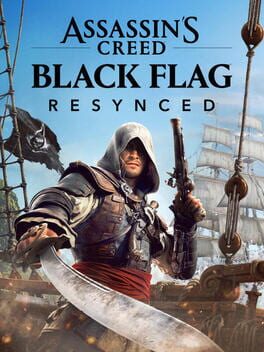
Ubisoft’s ambitious revival of the 2013 pirate‑themed classic, Assassin's Creed Black Flag Resynced, has been navigating the increasingly crowded seas of live‑service gaming since its relaunch in early 2023. The title, rebuilt on the modern AnvilNext 2.0 engine, promised not only graphical fidelity upgrades but also a sustained content pipeline designed to keep veteran swashbucklers and newcomers alike engaged for years to come. In a market where titles such as Diablo IV and Elden Ring have demonstrated that post‑launch support can become a revenue engine, Ubisoft positioned Resynced as a test case for extending the lifespan of a legacy IP without the need for a full sequel.
Yet the broader industry context has shifted dramatically over the past twelve months. Player fatigue with perpetual micro‑transaction‑driven updates, coupled with a resurgence of single‑player experiences that eschew aggressive monetisation, has forced many publishers to recalibrate their roadmaps. Ubisoft, still recovering from the mixed reception of its 2022 live‑service experiments, has been quietly pruning its portfolio, redirecting resources toward higher‑margin projects like the upcoming Avatar and Star Wars titles. The final substantial patch for Black Flag Resynced arrives against this backdrop, signalling a strategic retreat rather than a triumphant continuation.
What Happened?
On the day of the announcement, Ubisoft rolled out a sizeable patch that introduces a New Game Plus mode, allowing players to restart their pirate campaign with retained gear, skill trees, and unlocked abilities—a feature long‑requested by the community but never realised in the original launch. In addition, the update includes a nostalgic “Throwback” mode that mirrors the experience of the 2013 release, complete with the original UI, soundtrack cues, and even the classic difficulty scaling. These additions are bundled with a suite of quality‑of‑life improvements: refined UI navigation, bug fixes for ship‑combat physics, and performance optimisations targeting both current‑gen consoles and PC configurations.
Ubisoft’s communications team framed the patch as a “culmination of player‑driven feedback,” citing extensive surveys and forum analytics. The studio also hinted that future work on Resynced will be limited to minor stability patches, effectively placing the title into a maintenance‑only phase. Community reaction has been mixed; long‑time fans applaud the New Game Plus for extending replay value, while critics argue that the move underscores a lack of ambition, especially as competitors are unveiling expansive DLC roadmaps for comparable legacy revivals.
Analysis
The timing of this final update is emblematic of a broader recalibration within Ubisoft’s live‑service portfolio. By delivering a substantial content drop now and then scaling back to incremental fixes, the publisher mitigates the risk of over‑extending a title whose player base has plateaued. From a market performance perspective, Resynced’s monthly active users have hovered around the low‑mid five‑figure range, a respectable figure for a re‑release but insufficient to justify the ongoing development costs associated with regular DLC pipelines. Moreover, the inclusion of New Game Plus taps into a proven monetisation strategy: extending the “play‑to‑completion” loop without introducing new narrative chapters, thereby preserving the existing content investment while encouraging additional micro‑transactions through cosmetic bundles.
Technically, the patch also serves as a de‑facto stress test for Ubisoft’s cross‑platform update infrastructure. Implementing a full game‑state carryover in a title that was originally built without such a system required substantial backend work, suggesting that Ubisoft is polishing its tools for future legacy projects. However, the decision to halt major content after this release may also reflect internal resource constraints, as the studio reallocates talent toward higher‑visibility launches slated for 2027. For console ecosystems, the move has modest implications: PlayStation and Xbox users gain a refreshed experience that could boost short‑term engagement metrics, but the absence of long‑term DLC reduces the incentive for platform‑exclusive promotions.
XPLog Opinion
From XPLog’s standpoint, Ubisoft’s final push with Black Flag Resynced is a pragmatic, if uninspired, acknowledgement that the live‑service model is not a one‑size‑fits‑all solution for legacy franchises. The New Game Plus and Throwback modes are clever, community‑centric gestures that reward loyalty, yet they also highlight a missed opportunity to re‑imagine the pirate era with fresh narrative arcs or multiplayer innovations. In a climate where players increasingly demand meaningful post‑launch evolution rather than cosmetic polish, Ubisoft’s retreat may preserve its reputation for listening but risks cementing a perception of caution over creativity.
Final Thoughts
In sum, the last major update for Assassin's Creed Black Flag Resynced acts as both a celebratory nod to its dedicated fanbase and a strategic signpost for Ubisoft’s shifting development philosophy. While the New Game Plus mode promises endless voyages for the most ardent captains, the broader industry will watch closely to see whether Ubisoft can translate these lessons into more ambitious, forward‑looking projects. Keep an eye on Ubisoft’s fiscal reports later this year and the upcoming showcase in early 2027, where the next chapter of the studio’s live‑service experimentation is expected to be unveiled.