
Overview
When independent studio Stray Forge unleashed Virtue and a Sledgehammer earlier this year, it entered a market saturated with polished shooters yet yearning for a fresh emotional cadence. The title arrived at a crossroads where narrative‑driven experiences such as Death Stranding and the resurgence of cinematic indie games were reshaping player expectations, while the broader industry continued to chase high‑octane, loot‑centric formulas. Stray Forge’s pedigree—rooted in experimental AI research and a background in procedural storytelling—positioned the game as a potential bridge between kinetic destruction and introspective drama, a hybrid that had long been discussed in developer circles but rarely realized in a commercial product.
Beyond its kinetic premise, Virtue and a Sledgehammer taps into a cultural fascination with the ethics of autonomous warfare, a theme that has seeped into mainstream media from television dramas to blockbuster films. The game’s antagonists—robotic enforcers with eerily human‑like visages—serve as a mirror for the industry’s own grappling with machine‑learning driven NPCs that can adapt, learn, and, increasingly, elicit genuine empathy or revulsion from players. This alignment of narrative ambition with cutting‑edge AI implementation makes the title a litmus test for how far developers can push emotional resonance without sacrificing the visceral satisfaction that core gamers demand.
What Happened?
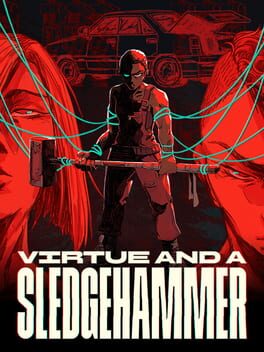
Virtue and a Sledgehammer places the player in the battered boots of a lone vigilante armed with a deceptively simple tool: a massive, physics‑engine‑driven sledgehammer. The core loop revolves around demolishing heavily fortified structures, each demolition punctuated by emergent AI behavior that forces the player to weigh brute force against tactical restraint. The game’s level design is deliberately modular, allowing walls to crumble in real time while enemy drones recalibrate their patterns, creating a dynamic cat‑and‑mouse rhythm that feels both chaotic and meticulously choreographed. Narrative beats are woven into these set‑pieces, with each shattered façade revealing fragmented memories that gradually construct a haunting backstory about a society that outsourced morality to silicon.
Stray Forge’s lead designer, Maya Kwon, highlighted in a post‑launch interview that the project began as an internal research prototype exploring “destructive empathy”—the idea that players could feel remorse for the collateral damage they cause, even when wielding a weapon as blunt as a sledgehammer. The game launched on PlayStation 5, Xbox Series X|S, and PC simultaneously, leveraging the latest GPU‑accelerated ray tracing to render reflective metal surfaces and realistic debris physics. Early critical response praised the title’s audacious blend of visceral gameplay and philosophical weight, while analysts predict a modest but durable sales curve bolstered by its strong word‑of‑mouth momentum within niche streaming communities.
Analysis
The commercial outlook for Virtue and a Sledgehammer hinges on its ability to carve a distinct identity amidst heavyweight franchises that dominate the console ecosystems. By eschewing traditional multiplayer modes in favor of a single‑player, story‑centric experience, Stray Forge sidesteps the crowded battle‑royale arena but also forfeits the recurring revenue streams those titles generate. However, the game’s sophisticated AI framework—built on a proprietary behavior tree system that allows enemies to “learn” from player tactics—could become a licensing asset, opening a B‑to‑B revenue channel that offsets the narrower consumer base. Moreover, the title’s emphasis on environmental destruction aligns with a rising consumer appetite for sandbox freedom, a trend evidenced by the sustained success of titles like Red Faction: Guerrilla and the emergent “damage‑first” mods in open‑world games.
From a technical perspective, the game’s reliance on real‑time physics pushes current console hardware to its limits, prompting discussions about the viability of such ambitious destruction systems on next‑gen platforms. Stray Forge’s partnership with middleware provider Havok for their new “Destructo” module showcases a potential industry shift toward more accessible, high‑fidelity destruction pipelines, which could democratize similar experiences for mid‑tier studios. Competitors may respond by integrating lighter, procedurally generated demolition mechanics into their own pipelines, thereby raising the baseline expectation for interactive environments across the board.
XPLog Opinion
At XPLog, we view Virtue and a Sledgehammer as a bold statement that narrative depth and mechanical brutality are not mutually exclusive; the game proves that a well‑crafted AI opponent can turn a simple act of demolition into a morally charged experience, a lesson that should reverberate through the design philosophies of both indie and AAA houses alike.
Final Thoughts
As the industry continues to wrestle with the balance between spectacle and substance, Virtue and a Sledgehammer stands as a compelling case study in how a focused, artistically driven project can influence broader design trends. Keep an eye on Stray Forge’s upcoming DLC roadmap slated for early 2027, and watch how their AI licensing model evolves—both could reshape the economic calculus for narrative‑heavy, physics‑intensive games in the years ahead.