
Overview
Tomorrow, 28 October 2026, Nintendo will roll out its much‑anticipated Indie World showcase, a concise 15‑minute broadcast slated for 14:00 GMT. While the runtime may seem modest, the event sits at the intersection of several pivotal industry currents: the maturing of the indie ecosystem on Nintendo hardware, the company’s ongoing effort to diversify its software portfolio beyond flagship franchises, and the broader competitive pressure from rival platforms that have been courting independent developers with aggressive revenue‑share models.
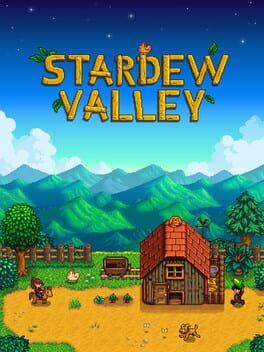
Since the launch of the Switch in 2017, Nintendo has cultivated a reputation for welcoming indie creators, turning the console into a fertile ground for titles such as "Hollow Knight," "Celeste," and "Stardew Valley." Those successes helped reshape the perception of Nintendo as not merely a purveyor of first‑party mascots but as an open stage for experimental, low‑budget experiences. As the console approaches the twilight of its lifecycle and speculation mounts around a next‑generation successor, this showcase functions as both a reassurance to the indie community and a signal to investors that Nintendo intends to sustain, if not deepen, its commitment to the segment.
What Happened?
The announcement, delivered via Nintendo Today! earlier this week, confirmed a tightly‑produced livestream that will feature roughly fifteen minutes of fresh indie content. While the exact lineup remains under wraps, the phrasing used by Nintendo’s communications team—"a celebration of the bold, the quirky, and the groundbreaking"—suggests a curated mix of announced releases, surprise reveals, and perhaps early demos of projects slated for the upcoming fiscal year. Historically, Nintendo’s indie showcases have acted as launchpads for games that later achieved critical acclaim and commercial viability, so the limited window may be packed with high‑impact announcements.
In addition to the game reveals, the broadcast is expected to include statements from key indie partners and possibly a brief address from Nintendo’s head of software development. Such remarks often provide insight into the strategic priorities guiding the company’s support structures, ranging from enhanced development kits to revised certification processes aimed at reducing time‑to‑market for smaller studios. The timing—mid‑week, early afternoon GMT—also hints at a desire to capture a global audience, balancing North American, European, and Asian viewership peaks.
Analysis
The Indie World showcase is a calculated maneuver within Nintendo’s broader portfolio diversification strategy. By foregrounding indie titles, Nintendo mitigates the risk inherent in relying heavily on cyclical flagship releases, such as new entries in the Mario or Zelda franchises, which, while lucrative, can be subject to market fatigue if spaced too closely. Moreover, the indie sector offers a low‑cost, high‑flexibility pipeline that can adapt quickly to emerging trends—be it procedural generation, live‑service models, or cross‑platform play—areas where Nintendo has traditionally lagged behind competitors like Sony and Microsoft.
From a competitive standpoint, the announcement also serves as a subtle counter‑argument to the aggressive revenue‑share incentives championed by platforms such as Epic Games Store and Steam. Nintendo’s historically favorable terms for indie developers, combined with the console’s massive install base of over 120 million units, continue to make it an attractive destination. However, the shrinking window of the Switch’s relevance means Nintendo must prove that its ecosystem can sustain indie growth even as hardware capabilities evolve, a challenge that will be closely watched by analysts monitoring the company’s long‑term revenue diversification.
XPLog Opinion
At XPLog UK, we view the Indie World showcase as a decisive affirmation that Nintendo recognises the indie sector as a cornerstone of its future relevance. While the brevity of the broadcast may frustrate fans craving deeper dives, the strategic emphasis on indie innovation signals a shift toward a more resilient, content‑rich ecosystem that can weather the inevitable transition to next‑gen hardware without sacrificing the creative vitality that has become synonymous with Nintendo’s brand.
Final Thoughts
In sum, tomorrow’s Indie World showcase is more than a fleeting news bulletin; it is a litmus test for Nintendo’s ability to balance legacy franchise dominance with a thriving independent development community. Observers should keep an eye on the announced titles, the language used by Nintendo executives, and any hints of upcoming tooling upgrades—all of which will shape the console’s trajectory as it approaches its next evolutionary phase.