
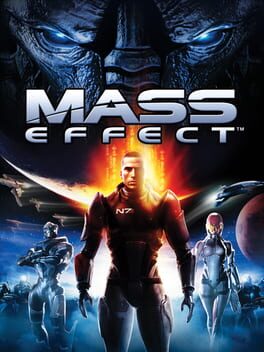
Overview
Since its debut in 2007, BioWare’s Mass Effect franchise has become a cultural touchstone for narrative‑driven role‑playing games, melding deep character arcs with a sprawling galaxy‑spanning mythology. The series’ evolution—from the critically lauded original trilogy to the polarising yet commercially successful Mass Effect: Andromeda—has been intertwined with the broader consolidation of the industry, most notably Electronic Arts’ 2007 acquisition of BioWare. Over the past decade, EA’s stewardship has oscillated between generous funding for blockbuster releases and cost‑cutting measures that have left long‑time fans wary, especially after the lukewarm reception to Andromeda’s launch and the subsequent silence surrounding a next‑generation sequel.
In recent years, the franchise’s community has demonstrated a remarkable capacity for organized activism, from petition drives to charity streams, all aimed at convincing the publisher to green‑light a true sequel that honors the series’ legacy. The latest manifestation—a billboard plastered across Times Square—marks the most visible, high‑budget fan effort to date, and it arrives at a moment when the industry is grappling with the rising power of player‑led campaigns, the shifting economics of live‑service models, and the looming release window of the 2025 Game Awards, where many hope a formal announcement will finally materialize.
What Happened?
On a crisp Tuesday evening, the iconic neon canopy of Times Square was momentarily dominated by a massive, custom‑crafted advertisement proclaiming “SAVE MASS EFFECT.” The billboard, funded entirely through a crowdsourced Kickstarter that surpassed its £1.2 million target within weeks, featured a stylized image of Commander Shepard standing against a backdrop of the Milky Way, accompanied by a QR code linking to a petition hosted on Change.org. The campaign’s organizers—an alliance of fan‑run Discord communities, former BioWare staff, and independent game journalists—released a statement emphasizing that the ad is both a love letter to the series and a strategic push to force EA’s hand before the year‑end awards season.
Beyond the Times Square stunt, the movement has outlined a roadmap of additional high‑visibility placements slated for major gaming events throughout the remainder of the calendar year, including digital billboards in Los Angeles, London’s Piccadilly Circus, and a series of pop‑up installations at conventions such as PAX West and Gamescom. While EA has not issued an official comment, insiders suggest that internal discussions about the franchise’s future are “on the table,” and the heightened media coverage may accelerate decision‑making processes that have historically been shrouded in corporate opacity.
Analysis
The billboard campaign underscores a pivotal shift in the balance of power between publishers and their most vocal constituencies. Historically, EA’s portfolio decisions have been driven by quarterly earnings forecasts and the performance of its live‑service titles, which generate predictable micro‑transaction revenue streams. However, the Mass Effect franchise represents a high‑risk, high‑reward property that can command premium pricing, extensive DLC ecosystems, and cross‑media tie‑ins. By leveraging a public, globally visible demonstration of demand, fans are effectively quantifying latent market interest in a way that traditional focus groups cannot, potentially nudging EA’s risk calculus toward a new, narrative‑driven flagship.
From a competitive standpoint, the campaign arrives at a juncture where rival platforms—most notably Sony’s PlayStation and Microsoft’s Xbox—are courting exclusive, story‑rich experiences to differentiate their subscription services. A revived Mass Effect could serve as a marquee title for EA’s own subscription offering, EA Play, or become a strategic exclusive to bolster console ecosystems. Moreover, the visibility of the fan‑driven ad may inspire similar movements for other dormant IPs, prompting publishers to reassess the value of dormant libraries in an era where community sentiment can be amplified instantly via social media and out‑of‑home advertising.
XPLog Opinion
At XPLog UK we view the Times Square billboard not merely as a publicity stunt but as a litmus test for the future of player agency in franchise stewardship; if EA chooses to heed this outcry, it will signal a rare acknowledgment that passionate fan bases can shape development pipelines, potentially ushering in a new paradigm where community‑validated roadmaps become a standard component of corporate strategy.
Final Thoughts
Whether the “Save Mass Effect” billboard will translate into a concrete development commitment remains to be seen, but the campaign has already forced the conversation into the mainstream media and boardrooms alike. As the 2025 Game Awards approach, all eyes will be on EA’s executive suite for any hint of a sequel or at least a transparent roadmap. In the meantime, the sustained fan momentum—bolstered by further ad placements and grassroots events—will continue to serve as a barometer for how much clout a dedicated community can wield over a legacy franchise in the modern gaming economy.