
Overview
The latest wave of fan activism surrounding the Mass Effect franchise has taken an unexpected turn: a Change.org petition demanding that Electronic Arts preserve the series has amassed over 220,000 signatures while conspicuously omitting any mention of BioWare, the studio historically synonymous with the franchise. This omission is not a mere oversight; it reflects a broader industry reality where corporate restructuring and fiscal pressures have forced publishers to reconsider the custodianship of beloved IPs. Since EA’s announcement last week that it would shutter BioWare as part of a sweeping cost‑cutting initiative, the community has been left to grapple with the unsettling prospect that the creative engine behind the series could be extinguished, even as the brand itself remains a lucrative asset.
In the context of a post‑pandemic market where live‑service models dominate and development budgets have ballooned into the hundreds of millions, the Mass Effect saga sits at a crossroads. The franchise’s legacy—spanning three critically acclaimed titles, a sprawling transmedia presence, and a fiercely loyal fanbase—has made it a valuable anchor for EA’s broader portfolio. Yet the company’s recent balance‑sheet disclosures reveal historic debt levels that have compelled executives to prune legacy studios, echoing a pattern seen at other megapublishers who have off‑loaded or closed internal teams in favor of external partnerships. The petition’s silence on BioWare thus underscores a shifting paradigm: fans are now pleading not for a specific studio, but for the continuation of a narrative universe, even if that means handing the reins to a different developer.
What Happened?
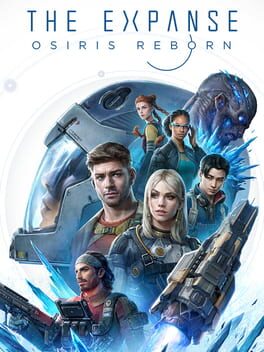
The petition, titled simply “Save Mass Effect,” calls on EA to ensure the continuation of the series, citing vague “recent revelations” that have cast a shadow over its future. While the wording is deliberately diplomatic, the subtext is unmistakable: EA’s decision to close BioWare—announced just four days prior—has sent shockwaves through the community, prompting a collective outcry that has now translated into a sizable online petition. The document does not name any studio by name, but it does suggest that “another studio” could be tasked with delivering the next installment, an invitation that has already been echoed by Owlcat Games, the creators of The Expanse: Osiris Reborn, who themselves have a track record of crafting narrative‑driven RPGs with a Mass Effect flavor.
Beyond the petition’s surface appeal, the movement has gained traction on social platforms, with Owlcat sharing the link and generating further discussion about the feasibility of an external studio inheriting the mantle. Industry insiders note that such a hand‑off would not be unprecedented; Ubisoft’s acquisition of the Tom Clancy brand and Microsoft’s stewardship of Bethesda titles illustrate how IPs can survive studio closures when the parent company deems the franchise strategically important. However, the logistical challenges—transferring proprietary technology, preserving lore continuity, and meeting fan expectations—are formidable, and any prospective partner would need to negotiate a delicate balance between creative autonomy and corporate oversight.
Analysis
The petition’s momentum highlights a critical inflection point for EA’s portfolio management. By decoupling the Mass Effect brand from BioWare, the publisher could theoretically reduce overhead while still capitalizing on the franchise’s established market. Yet this approach carries significant risk: the brand’s identity is inextricably linked to BioWare’s narrative design philosophy, character‑driven storytelling, and the iconic Dialogue Wheel. A misaligned successor could erode player trust, leading to diminished sales and a potential backlash that would reverberate across EA’s broader ecosystem, especially as the company seeks to rebuild confidence after a series of high‑profile missteps.
From a competitive standpoint, the situation opens a window for mid‑tier studios to step into the spotlight. Owlcat’s involvement, for instance, could signal a new era where specialized narrative studios are entrusted with legacy franchises, a model that could reshape development pipelines industry‑wide. This would also pressure rival publishers to reconsider their own stewardship strategies, potentially accelerating the trend of outsourcing flagship IPs to external partners with proven expertise in specific genres. The long‑term market impact will hinge on how EA negotiates licensing terms, protects the franchise’s creative DNA, and communicates its roadmap to an increasingly vocal fanbase.
XPLog Opinion
At XPLog UK we view the petition as a litmus test for the evolving relationship between publishers and their communities; the sheer scale of support demonstrates that fans will no longer accept a passive “brand‑only” approach. EA must either resurrect BioWare in a leaner form or partner with a studio that can authentically continue the Mass Effect legacy—anything less will be perceived as a betrayal, jeopardising not only this franchise but also the publisher’s credibility across its entire catalogue.
Final Thoughts
As the petition climbs toward the half‑million mark, the next few months will be decisive. EA’s forthcoming earnings call, slated for early next year, is likely to contain the first concrete hints about the franchise’s fate, while potential suitors such as Owlcat will be scrambling to present viable development proposals. For players, the message is clear: the future of Mass Effect will be written not only in boardrooms but also in the collective voice of its fans, and the industry will be watching closely to see whether that voice can truly shape the destiny of a beloved universe.