
Overview
After a protracted silence that stretched over half a year, SEGA’s RGG Studio is finally pulling back the veil on Virtua Fighter Crossroads, the long‑awaited revival of the franchise that helped define three‑dimensional competitive fighting in the mid‑1990s. The original Virtua Fighter, released in 1993, was a technical marvel that proved polygonal models could deliver precise, frame‑perfect combat, and it laid the groundwork for modern esports titles such as Tekken and Street Fighter V. Today, the series stands at a crossroads—both literally and figuratively—as the developer seeks to re‑engineer the classic formula for the PlayStation 5’s hardware, leveraging its SSD speed, ray‑tracing capabilities, and haptic feedback to deliver a sensory experience that could redefine the genre’s expectations on current‑gen consoles.
SEGA’s announcement arrives at a moment when the fighting game market is experiencing a renaissance driven by cross‑platform play, robust online tournament ecosystems, and a surge of indie titles pushing creative boundaries. Meanwhile, Sony’s own fighting‑game portfolio has been bolstered by titles like Gran Turismo 7 and the upcoming Return to Monkey Island, making the PS5 a fertile ground for high‑profile releases. By teasing an update on 29 October, SEGA signals not only a possible release date but also a strategic push to capture the attention of a player base that has grown accustomed to regular content drops and live‑service models. The timing suggests a calculated move to ride the wave of renewed interest in competitive esports, especially as major tournaments such as EVO prepare their 2027 line‑up.
What Happened?
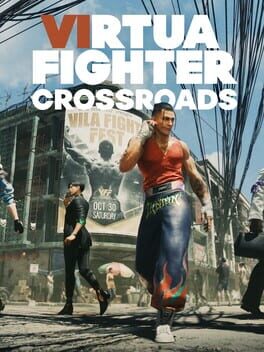
In a concise yet tantalising post on its official channels, SEGA confirmed that a detailed update on Virtua Fighter Crossroads will be streamed on 29 October, promising “new information” that could include the long‑sought release window. The teaser, a glossy 15‑second montage, juxtaposes the iconic blue‑and‑white arcade cabinet silhouette with a hyper‑realistic render of a fighter performing a signature move, all set against the pulsating neon of a modern cityscape. While the clip stops short of revealing concrete dates, the visual fidelity hints at a next‑gen graphical overhaul that will likely exploit the PS5’s ray‑tracing to illuminate characters and arenas with unprecedented realism.
Accompanying the teaser, a brief developer statement from RGG Studio’s creative director emphasized that Crossroads is “built from the ground up for the new hardware, with a focus on preserving the franchise’s core mechanics while expanding the depth of its combat system.” This phrasing echoes SEGA’s historic commitment to mechanical purity—a hallmark of the original Virtua Fighter series—while also acknowledging the market’s demand for richer customization, expanded rosters, and robust online matchmaking. The studio also hinted at a “global beta” later in the year, a clear nod to the community‑driven testing pipelines that have become standard practice among fighting‑game publishers seeking to fine‑tune balance before a full launch.
Analysis
The decision to anchor Virtua Fighter Crossroads on the PS5 exclusively—at least for its initial launch—carries significant strategic weight. Sony’s console enjoys a market share advantage in regions where competitive gaming infrastructure is most mature, such as North America, Europe, and parts of Asia. By aligning the title with the PlayStation ecosystem, SEGA can tap into Sony’s robust online services, PlayStation Network’s matchmaking algorithms, and the upcoming PlayStation 5 Pro’s increased GPU throughput, potentially delivering frame‑rates that meet the 60‑fps benchmark demanded by high‑level competitors. Moreover, the exclusivity may act as a lever in SEGA’s negotiations for marketing spend and storefront placement, ensuring the title receives premium visibility on the PlayStation Store—a crucial factor in an increasingly crowded digital marketplace.
From a competitive standpoint, Virtua Fighter Crossroads could re‑energize a niche but passionate community that has felt sidelined by the dominance of titles like Street Fighter 6 and Tekken 8. If SEGA successfully integrates modern features—such as cross‑play, robust netcode, and a live‑service roadmap—while retaining the series’ hallmark emphasis on spacing and timing, it could carve out a unique space that appeals both to legacy fans and to a new generation of esports athletes. The broader implication for the fighting‑game genre is a potential shift toward diversification, where legacy franchises are no longer forced to conform to the visual and mechanical trends set by their more commercially successful peers, but can instead thrive by offering distinct, mechanically pure experiences.
XPLog Opinion
At XPLog UK we view SEGA’s renewed gamble on Virtua Fighter as a bold affirmation that classic, mechanics‑first fighting games still have a viable commercial future. The company’s willingness to invest heavily in a next‑gen rebuild—rather than simply porting the existing engine—signals confidence that the franchise’s DNA can resonate in an era dominated by flashy, combo‑centric titles. Should the 29 October reveal deliver a concrete launch window and a transparent post‑launch support plan, we expect Virtua Fighter Crossroads to become a rallying point for the community, potentially spawning a new wave of grassroots tournaments that could, in turn, pressure rival publishers to revisit the fundamentals of fighting‑game design.
Final Thoughts
In sum, SEGA’s upcoming announcement on 29 October could mark the moment Virtua Fighter steps out of the shadows of its own legacy and reasserts itself as a cornerstone of the modern fighting‑game arena. With the PlayStation 5’s technical muscle now at its disposal, the franchise stands poised to deliver a product that honors its historic roots while embracing the expectations of today’s competitive players. Keep an eye on SEGA’s official channels and major gaming events through Q4 2026 for the definitive release date, beta sign‑up windows, and the first look at how Crossroads intends to shape the next chapter of 3D fighting.