
Overview
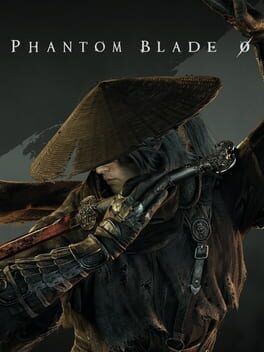
When the last great wave of martial‑arts cinema receded in the early 2000s, the video‑game world inherited a vacuum of kinetic, stylised combat that could make players feel like they were starring in a Bruce Lee or Jet Li blockbuster. Over the past decade, developers have flirted with the idea—whether through the fluid swordplay of Devil May Cry, the rhythmic beat‑em‑up of Strider, or the more recent, albeit uneven, attempts like Absolver. Against this backdrop, Phantom Blade Zero arrives not merely as another action title, but as a deliberate homage that strives to resurrect the choreography and drama of classic kung fu set‑pieces while leveraging modern hardware to deliver a visceral, almost tactile experience.
In an era where live‑service shooters dominate the top of the charts and indie narratives lean heavily on atmospheric storytelling, a game that foregrounds pure, unadulterated combat choreography is both a nostalgic risk and a market differentiator. Players on PlayStation, Xbox, and PC have expressed a growing appetite for experiences that reward skillful timing over grinding, a sentiment echoed in recent sales spikes for titles like Ghost of Tsushima and the resurgence of rhythm‑action hybrids. Phantom Blade Zero’s promise, therefore, is not just to entertain but to re‑anchor a segment of the audience that yearns for the kinetic poetry of martial‑arts cinema, a segment that mainstream publishers have largely overlooked.
What Happened?
The announcement came during the annual GameCon livestream, where developer studio Red Lotus Studios—formerly known for the modestly successful Shadows of the Silk Road—unveiled a cinematic trailer that instantly reminded viewers of classic Shaw Brothers set‑pieces. The footage showcased a lone swordsman navigating a mist‑laden valley, executing a flawless parry that transitions into a slow‑motion somersault, followed by a cascade of kills that blend swordplay, martial kicks, and environmental interaction. In a post‑release interview, lead designer Mei Lin explained that the team spent three years refining a proprietary “Dynamic Flow” engine, designed to calculate player intent in real time and translate it into fluid, cinematic animations without pre‑baked cutscenes.
Beyond the visual showcase, Red Lotus disclosed that Phantom Blade Zero will launch across PlayStation 5, Xbox Series X|S, and PC on 12 November 2026, with a limited physical collector’s edition featuring a replica katana and a behind‑the‑scenes art book. Marketing partners include a cross‑platform partnership with Twitch to stream live combat challenges, and a collaboration with martial‑arts master choreographer Yuen Woo-ping for a series of tutorial videos that teach players the real‑world techniques inspiring the in‑game moves. The publisher, Nova Interactive, projects first‑month sales in the low‑seven‑figure range, banking on the title’s unique positioning and the growing appetite for skill‑centric experiences.
Analysis
From a market perspective, Phantom Blade Zero occupies a niche that has historically been underserved by AAA studios, which tend to allocate resources toward expansive open worlds or competitive multiplayer ecosystems. By concentrating on a tightly scoped, combat‑first experience, Red Lotus can allocate a larger portion of its development budget to animation fidelity, motion‑capture technology, and responsive AI that adapts to player aggression. This focus aligns with the broader industry shift toward “games as performance,” where the act of playing becomes a spectator sport, a trend amplified by platforms like Twitch and YouTube Gaming. The Dynamic Flow engine, if it delivers on its promise of seamless transition between player input and cinematic output, could set a new technical benchmark, pressuring rivals to invest in similar systems or risk appearing dated.
However, the title’s success hinges on more than technical wizardry; it must also navigate the competitive landscape of action titles that now incorporate deep progression systems and multiplayer modes. Nova Interactive’s decision to keep the core experience single‑player with optional co‑op challenges could be a double‑edged sword: it preserves the purity of the combat narrative but may limit replayability for a market accustomed to ongoing content drops. Should the game achieve critical acclaim, we can anticipate a ripple effect—mid‑tier studios might revive or reinvent their own martial‑arts projects, while larger publishers could explore hybrid models that blend narrative single‑player focus with live service elements, echoing the evolution seen in titles like Devil May Cry 5: Special Edition.
XPLog Opinion
At XPLog UK, we view Phantom Blade Zero as a bold statement that challenges the prevailing notion that blockbuster success requires sprawling worlds or relentless multiplayer loops; instead, it proves that meticulously crafted combat choreography can command both critical and commercial attention, provided the execution is as polished as the studio claims. Red Lotus’s gamble on a pure‑action, cinematic experience may well redefine a sub‑genre, encouraging publishers to invest in high‑quality, skill‑centric titles that reward mastery over micro‑transactions.
Final Thoughts
In sum, Phantom Blade Zero stands poised to become a cultural touchstone for the next generation of action games, merging the timeless allure of kung fu cinema with cutting‑edge interactive technology. As the release date approaches, the industry will be watching closely to see whether the game’s ambitious combat system can translate into sustained player engagement and whether it will spark a renaissance of martial‑arts‑driven titles across the console ecosystem. Keep an eye on the November launch, the post‑release community challenges, and the potential for a sequel that could further expand the franchise’s cinematic ambitions.