
Overview
In an era where the indie scene has become a crucible for experimental design, the emergence of Abelina marks a noteworthy convergence of high‑budget artistic pedigree and low‑budget development agility. The title is the brainchild of a former animator from Riot Games' League of Legends, a studio that has long been a training ground for talent accustomed to crafting visually rich, narrative‑driven experiences at massive scale. By stepping out of the corporate behemoth and into the intimate realm of independent publishing, the creator brings a level of polish and cinematic sensibility that is still rare among self‑funded projects, echoing the trajectory of other ex‑AAA artists who have founded studios that prioritize auteur‑driven storytelling over mass‑market formulas.
Equally compelling is the involvement of the composer behind Zach Cregger's recent Resident Evil homage, whose score is expected to intertwine haunting ambience with melodic motifs that echo classic platformer soundscapes. This collaboration hints at a broader trend where indie titles are leveraging cross‑disciplinary talent pools to craft experiences that feel both nostalgic and avant‑garde. The game’s premise—a man navigating a liminal garden after death, tending flora and carving masks while wrestling with existential dread—taps into a cultural fascination with afterlife mythos, positioning Abelina as a potential touchstone for players seeking narrative depth beyond the usual loot‑and‑shoot loops that dominate mainstream releases.
What Happened?
During a surprise livestream on Thursday, the development team unveiled Abelina, confirming a multi‑platform launch slated for early 2027 on PlayStation 5, Xbox Series X|S, Nintendo Switch, and PC via Steam and Epic. The announcement trailer showcased hand‑drawn environments that shift from lush, overgrown gardens to stark, monochrome corridors, all rendered with a fluid 2.5‑D aesthetic that blurs the line between 2D sprite work and 3D depth cues. The gameplay loop revolves around precise platforming challenges, environmental puzzles that require the protagonist to cultivate and prune plants, and a mask‑crafting mechanic that unlocks new abilities, effectively marrying gardening simulation with classic action‑platformer rhythm.
In a candid interview following the reveal, the lead designer emphasized that Abelina is less about delivering a conventional “win‑the‑level” experience and more about encouraging players to contemplate the nature of existence through interactive metaphor. He noted that the decision to forgo a traditional health bar in favor of a “thought meter” was a deliberate design choice meant to simulate the protagonist’s mental struggle with his new reality. Moreover, the team disclosed that they are partnering with a boutique publisher known for nurturing narrative‑centric indie titles, a move that should afford them both creative freedom and a modest marketing push without the constraints of a major label.
Analysis
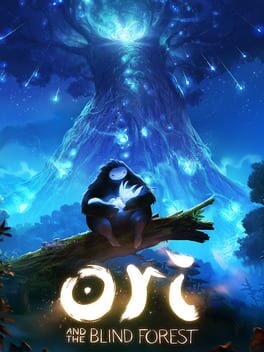
From a market perspective, Abelina arrives at a moment when platformers are experiencing a renaissance, fueled by the success of titles like Ori and the Blind Forest, Hollow Knight, and the ever‑popular Celeste. However, the genre is also becoming increasingly crowded, and differentiation hinges on either a novel mechanic or a resonant thematic hook. Abelina's blend of horticultural gameplay and afterlife allegory offers a fresh narrative veneer that could attract players disillusioned by formulaic offerings, while its visual fidelity positions it to compete for shelf space on console storefronts that favor eye‑catching art direction. The involvement of industry veterans may also sway platform holders to feature the game prominently during upcoming showcase events, potentially translating into higher visibility and stronger launch sales.
Technically, the project's ambition to deliver seamless transitions between lush, particle‑heavy garden scenes and stark, low‑poly liminal spaces poses a non‑trivial performance challenge, especially on the Switch's limited hardware. The developers have indicated they are employing a hybrid rendering pipeline that dynamically scales shader complexity based on scene context, a technique that, if executed well, could set a new benchmark for visual fidelity on hybrid consoles. Additionally, the mask‑crafting system introduces a modular ability framework that could be expanded post‑launch via downloadable content, providing a roadmap for sustained player engagement and revenue streams beyond the base title.
XPLog Opinion
At XPLog UK we view Abelina as a litmus test for how far indie creators can push the envelope when they bring AAA‑level craftsmanship to a modest budget. The game’s audacious thematic premise and its marriage of platforming precision with contemplative storytelling could redefine expectations for what an indie platformer can achieve, forcing larger studios to reconsider the depth of narrative integration in their own releases. If Abelina delivers on its promises, it will not only carve out a niche for itself but also reinforce the argument that artistic risk‑taking remains the most potent catalyst for market differentiation in a landscape increasingly dominated by franchise fatigue.
Final Thoughts
Abelina stands poised to become a cultural touchstone that bridges the gap between artistic experimentation and mainstream accessibility, offering players a hauntingly beautiful meditation on mortality wrapped in the familiar trappings of platforming gameplay. With its slated 2027 release, the industry will be watching closely to see whether its unique blend of narrative depth, visual artistry, and mechanical innovation can cut through the noise and inspire a new wave of indie titles that prioritize meaning as much as mastery. Keep an eye on the upcoming PlayStation State of Play and Xbox Games Showcase for the next wave of gameplay reveals and potential release date confirmations.