
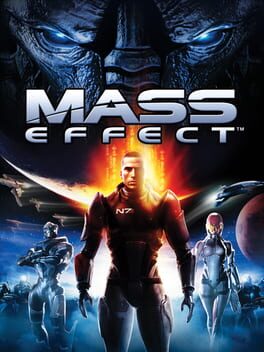
Overview
The recent wave of speculation surrounding a purportedly cancelled sequel, tentatively titled "Mass Effect Universe," has ignited a firestorm across both fan forums and industry analyst circles. The intrigue stems not merely from the tantalising name, but from the involvement of a self‑identified former BioWare community council member who claims to have consulted on the project and now offers a rare glimpse into what could have been the next evolutionary step for one of gaming’s most storied franchises. To appreciate the magnitude of this revelation, one must first recall the tumultuous journey of the Mass Effect series: from the groundbreaking narrative ambition of the original 2007 trilogy, through the polarising reception of 2017’s Mass Effect: Andromeda, and the subsequent period of introspection that saw BioWare recalibrate its creative compass under new leadership.
Within the broader context of today’s RPG market, where narrative depth competes with live‑service models and cross‑platform ecosystems, a title that promised to expand the universe beyond the Milky Way would have represented a bold strategic pivot. The announcement arrives at a time when EA, the parent company of BioWare, is aggressively pursuing a diversified portfolio that includes both high‑budget blockbuster experiences and smaller, narrative‑driven titles. Moreover, the gaming community’s appetite for expansive sci‑fi sagas has only intensified, as evidenced by the commercial success of titles like Starfield and the resurgence of space‑opera storytelling in both AAA and indie spheres. Thus, the alleged details of Mass Effect Universe are not just a footnote; they are a potential indicator of where BioWare might have been aiming to position itself amid these shifting market dynamics.
What Happened?
According to the content creator’s account, the project—codenamed internally as "MEU"—was slated to launch on both current‑generation consoles and PC, leveraging the Frostbite engine’s latest iteration to deliver unprecedented planetary scale and real‑time environmental storytelling. The creator alleges that the visual direction pushed the franchise’s aesthetic into a more photorealistic, yet stylised, representation of distant star systems, with procedurally generated starfields and dynamic weather systems that would react to player choices in unprecedented ways. In addition to the technical ambitions, the narrative premise reportedly centered on a coalition of alien civilizations uniting against a galaxy‑spanning threat, a thematic shift that would have moved the series’ focus from a single protagonist’s journey to a multi‑heroic, ensemble cast structure.
From a development standpoint, the leaked information suggests that the project reached a late‑pre‑production phase before being abruptly shelved. The creator cites internal memos indicating that budgetary constraints, combined with the lingering shadow of Andromeda’s mixed reception, prompted senior management to reassess the risk profile of a massive, untested expansion of the IP. Additionally, the statements hint at a strategic realignment toward a more service‑oriented approach, as evidenced by parallel efforts to integrate live‑event frameworks and cross‑title progression systems that could keep players engaged beyond a traditional launch window. The cancellation, therefore, appears to be less about creative failure and more about a calculated pivot in response to evolving corporate priorities and market pressures.
Analysis
From a market performance perspective, the decision to halt Mass Effect Universe can be interpreted as a defensive maneuver designed to protect the franchise’s long‑term equity. BioWare’s brand equity, while still formidable, suffered a measurable dip after Andromeda’s launch, with Metacritic scores and player sentiment reflecting a cautious audience. By pulling back a project of such scale, EA likely aimed to prevent a repeat of the financial shortfall that could have further eroded consumer trust. Moreover, the competitive landscape—dominated now by Bethesda’s Starfield, which occupies a similar narrative space—means that any misstep could cede a substantial share of the sci‑fi RPG market to rivals. The cancellation also underscores the growing influence of data‑driven decision making within large publishers, where projected ROI models can override creative aspirations, especially when the development costs of next‑gen engines and expansive open worlds continue to climb.
Technical hurdles cannot be ignored either. The Frostbite engine, while powerful, has historically presented challenges for RPG developers, particularly in handling complex dialogue trees and branching narratives at scale. BioWare’s own post‑mortem analyses from previous projects have highlighted the friction between engine limitations and the studio’s storytelling ambitions. The proposed procedural planetary generation for Mass Effect Universe would have required a significant overhaul of existing pipelines, potentially leading to prolonged development cycles and quality assurance bottlenecks. In an industry where time‑to‑market is increasingly critical, especially with the rapid cadence of console generation turnovers, the risk of delayed delivery may have tipped the scales toward cancellation.
XPLog Opinion
At XPLog UK we view the scrapping of Mass Effect Universe as a bittersweet yet pragmatic moment; while the loss of an ambitious, galaxy‑spanning saga is a disappointment for the franchise’s most ardent fans, the move reflects a mature acknowledgment of the current economic climate and the necessity for BioWare to rebuild its narrative credibility before attempting such a grandiose leap. The lesson here is clear: even storied IPs must align their creative vision with realistic production capacities and market appetite, lest they risk diluting the very legacy that makes them iconic.
Final Thoughts
In the end, the saga of Mass Effect Universe serves as both a cautionary tale and a beacon of what could still be possible for BioWare once it consolidates its strengths and re‑establishes player trust. Observers should keep an eye on upcoming EA earnings calls, internal staffing shifts within BioWare, and any future announcements that hint at a renewed focus on narrative depth—perhaps in a more measured, episodic format. Until then, the whispers of a cancelled cosmos will remain a compelling footnote in the evolving story of one of gaming’s most ambitious universes.