
Overview
The third quarter of 2026 has delivered a puzzling data point for anyone tracking the health of Microsoft’s console arm: two titles bearing the Xbox banner sit among the year’s projected best‑sellers, yet neither ever materialised on the Series X|S hardware. Circana’s sales snapshot, released in early October, listed Forza Horizon 6 as the seventh‑largest seller and Call of Duty: Black Ops 2 (a refreshed edition) as the sixth‑largest across all platforms. This anomaly arrives at a moment when the Series X|S, now three generations old, is wrestling with diminishing launch‑window relevance, while Microsoft’s broader ecosystem leans ever heavier on cloud‑first delivery and subscription‑driven revenue streams. The figures, therefore, are less a celebration of a console‑centric hit and more a barometer of how Microsoft is redefining success in an increasingly platform‑agnostic market.
Industry analysts have long noted the erosion of pure‑hardware sales in favour of services such as Xbox Game Pass, a trend accelerated by the pandemic‑era surge in cloud adoption and the relentless push from Sony’s PlayStation 6 and Nintendo’s forthcoming Switch‑successor. In this climate, a game that thrives on Xbox’s subscription layer, even if it never lands on the physical console, can still generate headline‑level revenue. The Forza Horizon franchise, once a showcase of the Series X|S’s graphical muscle, now finds its most ambitious iteration built on a PC‑first pipeline that exploits ray‑traced rendering and AI‑driven world generation—features that the aging silicon of the Series X|S cannot fully exploit. Meanwhile, Activision’s Black Ops 2 remaster, bundled exclusively with Game Pass Ultimate and streamed via xCloud, illustrates Microsoft’s willingness to sacrifice traditional launch strategies in favour of ecosystem lock‑in.
What Happened?
According to the Circana report, Forza Horizon 6 claimed the seventh spot on the projected best‑selling list for the United States through September 2026, while the Black Ops 2 remaster secured the sixth position across all platforms. The surprising twist is that both titles were conspicuously absent from the Series X|S catalogue at the time of reporting. Forza Horizon 6 launched as a PC‑centric experience, distributed through the Microsoft Store and Xbox Game Pass for PC, with a delayed, cloud‑only presence on Xbox consoles via xCloud. Its development team, Turn 10 Studios, openly cited the desire to harness the full power of DirectX 12 Ultimate and Nvidia’s RTX‑based pipelines—capabilities that exceed the Series X|S’s GPU envelope—hence the decision to prioritise PC and cloud delivery.
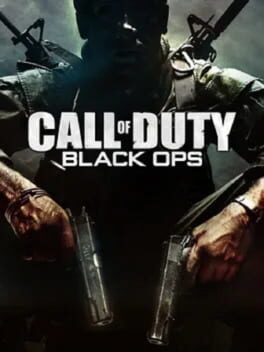
Black Ops 2, originally a 2012 release, resurfaced as a next‑generation remaster that eschewed a traditional disc or digital download for Xbox consoles. Instead, Microsoft positioned the title as a flagship exclusive for Game Pass Ultimate, streaming it through its Azure‑backed infrastructure. In a developer briefing, senior producer James “J‑B” Bennett explained that the move was “a strategic experiment to see how far we can push premium, legacy IPs through the subscription model without fragmenting the install base.” By sidestepping the Series X|S hardware entirely, Microsoft avoided the need for a costly optimisation pass while still capitalising on the franchise’s enduring brand equity.
Analysis
The immediate market implication is a double‑edged sword. On one hand, the high sales velocity of both titles validates the potency of Microsoft’s subscription‑first approach, suggesting that revenue can be decoupled from traditional hardware sales. This bolsters Xbox’s position against Sony, whose PlayStation 6 strategy still leans heavily on physical and disc‑based releases. On the other hand, the omission of marquee titles from the Series X|S catalogue risks alienating the console’s core install base, a demographic that has historically driven peripheral sales, accessories, and long‑term brand loyalty. If the trend continues, we may see a gradual erosion of the “console‑exclusive” cachet that once justified premium pricing for hardware.
From a technical perspective, the decision underscores the growing chasm between legacy console silicon and the bleeding‑edge capabilities demanded by modern AAA pipelines. Turn 10’s reliance on real‑time ray tracing, AI‑enhanced terrain generation, and high‑resolution texture streaming simply outpaces what the Series X|S can sustain at 60 fps without severe compromises. Simultaneously, Microsoft’s cloud infrastructure offers a safety valve: titles can be built for the highest spec hardware and delivered via streaming to any device, effectively future‑proofing development cycles. However, this model is not without hurdles—network latency, regional bandwidth constraints, and the persistent perception that “cloud‑only” experiences are inferior to native runs could temper adoption, especially in markets where broadband remains uneven.
XPLog Opinion
At XPLog UK we view this as a watershed moment for Microsoft’s ecosystem strategy: the company is consciously shifting the definition of a “hit” from console‑centric sales to ecosystem‑centric engagement. While the move may irk die‑hard Series X|S owners who feel short‑changed, the broader trajectory points toward a unified, subscription‑driven future where hardware becomes merely one of many access points. In the long run, this could expand Xbox’s reach into households that previously could not afford a next‑gen console, but it also forces Microsoft to double‑down on cloud reliability and content curation to keep those new users invested.
Final Thoughts
In sum, the appearance of Forza Horizon 6 and Black Ops 2 atop sales projections—despite their absence from the Series X|S—signals that Microsoft’s gamble on cloud‑first, subscription‑driven publishing is already paying dividends, albeit with a potential cost to console‑purist sentiment. As we look ahead, the industry will be watching the rumored Series X|S refresh slated for late 2026 and the Q1 2027 Game Pass subscriber growth reports for clues on whether this strategy will cement Xbox’s dominance or provoke a backlash that re‑empowers the hardware‑centric models of its rivals.