
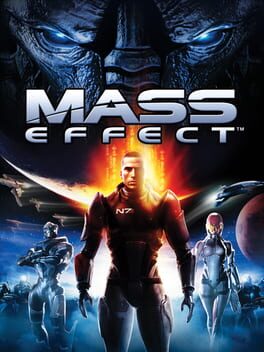
Overview
When Electronic Arts announced the abrupt shutdown of BioWare, the gaming world braced for a seismic shift. The studio, revered for sculpting narrative‑driven RPGs such as the Mass Effect saga, had been quietly shepherding its fifth main‑line entry toward a 2025‑ish launch before the decision to dissolve the development team was made. The fallout reverberated far beyond internal EA corridors, igniting debates about the future of legacy franchises, the stewardship of fan‑owned mythologies, and the commercial calculus of high‑budget live‑action adaptations. Yet, amid the turmoil, a parallel project – Amazon Prime Video’s Mass Effect television series – has been confirmed to remain on schedule, a development that underscores the growing separation between IP ownership and creative execution in the modern entertainment ecosystem.
Amazon’s foray into video‑game adaptations is not an isolated experiment; it is part of a broader strategic push to capture the lucrative “gamer‑viewer” demographic that streaming platforms have been courting since the early 2020s. The Prime Video slate now boasts a Fallout continuation, a God of War live‑action saga, a Tomb Raider series, and upcoming titles based on Life is Strange and Wolfenstein. By anchoring these projects to established, narrative‑rich universes, Amazon aims to leverage built‑in fan enthusiasm while diversifying its content portfolio beyond traditional scripted dramas. The Mass Effect series, therefore, sits at the nexus of a cultural moment where transmedia storytelling is becoming a cornerstone of platform competition, and its survival despite BioWare’s demise signals a shift toward IP‑centric development pipelines that can outlive the studios that originally birthed them.
What Happened?
In early 2024, MGM Studios, operating under the Amazon umbrella, green‑lit a brand‑new Mass Effect series that would diverge from the canonical Commander Shepard saga. Executive producer Mike Gamble, a veteran of the franchise’s narrative design, clarified that the show would chart a fresh storyline set after the original trilogy, deliberately avoiding a retread of the beloved hero’s arc. The creative team assembled for the venture includes showrunners Doug Jung – known for his work on The Cloverfield Paradox and Star Trek Beyond – and Daniel Casey, whose résumé features blockbuster entries such as F9: The Fast Saga and the cyber‑punk thriller Wardriver. Veteran producer Avi Arad, formerly at the helm of Marvel Studios, and Jessica Jones executive producer Karim Zreik also lend their expertise, suggesting a production pedigree that blends sci‑fi gravitas with mainstream appeal.
Following EA’s announcement that the internal BioWare team had been dissolved, industry observers expected the television adaptation to lose momentum, given the loss of direct studio advocacy and the potential legal entanglements surrounding the IP. However, sources speaking to IGN confirmed that Prime Video’s development pipeline remains intact, with all original creatives still attached. While Gamble’s precise role may be in flux – he served as a guiding voice from within BioWare – his continued involvement indicates that Amazon has secured the necessary licensing and narrative guidance to move forward independently of the original developer. No official release window has been disclosed, but the project’s persistence reflects Amazon’s confidence in the franchise’s marketability and its willingness to shoulder the creative risk without BioWare’s day‑to‑day input.
Analysis
The decision to press ahead with the Mass Effect series despite BioWare’s shutdown reveals a strategic decoupling of intellectual property from its originating studio, a trend that has accelerated since the mid‑2010s when publishers began bundling IP rights with broader multimedia ambitions. From a market perspective, Amazon can now treat the Mass Effect universe as a modular asset, licensing narrative elements to external creators while retaining control over distribution and monetisation. This model mirrors the success of franchises like The Witcher, where Netflix produced a hit series without direct involvement from CD Projekt Red beyond advisory roles. The key advantage for Amazon lies in mitigating the risk of development delays that often plague high‑budget game productions, allowing a more predictable content pipeline for its streaming calendar.
Nonetheless, the venture is not without technical and cultural hurdles. Translating a game world built on player agency, branching dialogues, and emergent storytelling into a linear television format demands careful condensation of lore without alienating hardcore fans. Moreover, the absence of BioWare’s narrative architects raises questions about the fidelity of world‑building – will the series capture the philosophical underpinnings of the Reapers, the nuanced politics of the Citadel, and the moral ambiguity that defined the original games? Competitors such as Netflix and Apple TV+ are simultaneously courting other high‑profile game IPs, meaning Amazon must deliver a product that not only satisfies existing fans but also proves accessible to newcomers, lest the adaptation be dismissed as a niche cash‑grab.
XPLog Opinion
At XPLog UK we view Amazon’s steadfast commitment to the Mass Effect series as a bellwether for the future of gaming adaptations: the era where a franchise’s destiny is no longer tethered to the fortunes of its original studio but is instead shepherded by media conglomerates with deep pockets and global distribution networks. While the loss of BioWare is undeniably a wound for the RPG community, the series’ continuation offers a silver lining – it demonstrates that beloved universes can survive corporate upheaval, provided the IP is managed with respect for its narrative heritage. Our hope is that Amazon will enlist former BioWare talent in advisory capacities to preserve the series’ philosophical core, thereby delivering a show that feels like an authentic extension of the Mass Effect mythos rather than a superficial cash‑in.
Final Thoughts
In sum, the Mass Effect television project stands as a litmus test for how streaming giants will navigate the increasingly complex terrain of game‑based storytelling. As Amazon forges ahead without BioWare’s direct hand, the series will likely set precedents for licensing structures, creative autonomy, and fan engagement strategies in the years to come. Keep an eye on Amazon’s quarterly updates and any forthcoming casting announcements – those will be the first tangible signals of how the ambitious narrative vision is being realised on screen, and whether the franchise can thrive in a new medium while honouring the legacy that made it a cultural touchstone.