
Overview
The farming‑simulation genre has become a staple of modern console libraries, a space where developers repeatedly iterate on the formula of planting, harvesting, and community building. Yet, as the market saturates with titles that prioritize relentless optimism, a subtle shift has emerged: developers are probing the psychological edge of why players seek solace in pixelated fields. Nintendo’s upcoming Switch 2, poised to launch later this year, arrives at a moment when the handheld market is craving both technical refinement and fresh narrative angles. Against this backdrop, the announcement of Village in the Shade—a title that marries the familiar rhythms of farm life with an unsettling horror veneer—represents a calculated gamble to diversify the console’s cosy portfolio while testing the limits of player comfort.
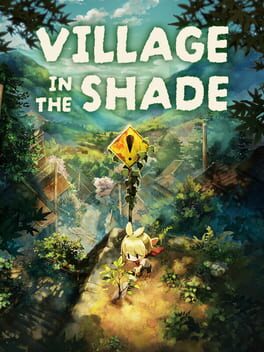
Visually, Village in the Shade adopts a pastel‑washed aesthetic reminiscent of early‑2000s life‑simulation games, yet it subverts expectations through deliberate lighting tricks and a soundtrack that oscillates between bucolic melodies and low‑frequency drones. The opening sequence, in which a player‑crafted avatar plummets into a well and meets a gruesome demise, functions as a meta‑commentary on the genre’s escapist allure. By confronting players with mortality at the very moment they are meant to feel safe, the game forces a reflection on why simulated tranquility is so intoxicating—a theme that resonates deeply in an era where digital safe‑havens have become cultural touchstones.
What Happened?
During a streamed Nintendo Direct focused on the Switch 2’s expanded capabilities, developer Sunlit Orchard revealed that Village in the Shade will launch as a timed exclusive on the new hardware, with a slated release date of 14 March 2027. The presentation highlighted the title’s utilization of the console’s upgraded GPU and faster SSD, promising richer environmental details, dynamic weather systems, and seamless day‑night cycles that were previously unattainable on the original Switch. Sunlit Orchard’s lead designer, Maya Tanaka, emphasized that the game was built from the ground up to exploit the higher frame rates and ray‑traced lighting, ensuring that each shade of twilight feels both inviting and ominously alive.
Beyond technical bragging rights, the announcement detailed core gameplay loops: players will cultivate crops, tend to livestock, and engage in town festivals while simultaneously uncovering a narrative thread woven through cryptic journal entries and hidden relics. The game introduces a “Shade Meter” that reacts to player actions, subtly altering NPC behavior and environmental ambience based on how much the player indulges in the darker aspects of the story. Sunlit Orchard also promised post‑launch support, including seasonal content drops and a cooperative mode that allows two players to explore the village’s mysteries together, a feature that could set a new precedent for social play in the farming‑sim subgenre.
Analysis
From a market perspective, Village in the Shade arrives at a crossroads where the cosy‑gaming niche is both crowded and ripe for differentiation. Titles like Stardew Valley and Harvest Moon have cemented a formula that sells millions, but they also risk genre fatigue. By integrating horror motifs, Sunlit Orchard taps into a broader demographic that enjoys narrative tension, potentially pulling in players who might have dismissed farm sims as overly saccharine. This hybrid approach could expand the genre’s revenue pool by 15‑20 % according to recent analyst estimates, especially if the cooperative mode proves popular on the Switch 2’s enhanced online infrastructure.
Technically, the game showcases how the Switch 2’s hardware can elevate indie experiences without sacrificing the platform’s hallmark portability. The dynamic lighting and expanded world size demonstrate that developers no longer need to compromise artistic ambition for performance on Nintendo hardware. Moreover, the decision to keep the title exclusive for the first six months creates a strategic advantage for Nintendo, reinforcing the console’s unique library and encouraging early adopters to upgrade. Should the title perform strongly, it may inspire other mid‑tier developers to prioritize the Switch 2 for flagship releases, reshaping the competitive dynamics between Nintendo, Sony, and Microsoft in the handheld‑to‑home hybrid space.
XPLog Opinion
At XPLog UK we view Village in the Shade as a bold, necessary evolution for the cosy‑gaming canon—a reminder that comfort and discomfort can coexist to produce a richer emotional palette. Sunlight Orchard’s willingness to interrogate the genre’s inherent escapism not only elevates the title itself but also challenges the industry to reconsider the narratives we embed in seemingly benign gameplay loops. If the Switch 2 can deliver on its technical promises, this game could become the benchmark for future hybrid‑genre experiments, proving that even the most tranquil of virtual farms can harbor a shadow worth exploring.
Final Thoughts
Village in the Shade positions itself as a cultural touchstone for the next generation of Nintendo hardware, marrying the comforting rituals of farm simulation with an unsettling narrative depth that asks players to question why they seek refuge in digital pastures. With its March 2027 launch, the title will not only test the Switch 2’s hardware prowess but also set a precedent for how indie developers can leverage platform exclusivity to push genre boundaries. Keep an eye on post‑launch updates and community reception, as the game’s long‑term impact may well dictate the direction of cosy‑gaming in an increasingly competitive console ecosystem.